Key takeaways
- Pick the concept first: zi char seafood, chilli crab and live seafood, oyster bar, or fish and chips. Each needs a different kitchen, supply chain and price structure.
- Live seafood tanks need space, power, drainage, water treatment and daily checks. SFA’s public retail guidelines do not set out tank rules, so confirm the set-up with SFA and your landlord before you build.
- SFA treats some seafood as high-risk at import. Chilled-shucked raw oysters and chilled crab meat cannot be imported, and live oysters only come from listed countries with a health certificate.
- SFA’s advisory says to keep ready-to-eat raw seafood below 5°C and not to serve thawed frozen oysters as raw oysters.
- Crustaceans and molluscs are on the allergen list. Build an allergen matrix and train staff before opening.
This guide is general information, not legal advice. Official rules quoted were taken from SFA, NEA, PUB and SPF pages checked in September 2026. Check the current position with each agency before you sign a lease.
Seafood has a special place in Singapore dining, from chilli crab and cereal prawns at a zi char table to a plate of oysters at a wine bar or fish and chips at a food court. Customers know their seafood, and they notice straight away when it is not fresh. That makes a seafood restaurant a supply chain business first: where you buy, how you store it, how you price it when the market moves, and how you keep raw and cooked food apart. The general steps for any F&B business are in our guide on how to open a restaurant in Singapore. This article covers what is specific to seafood: concept, live tanks, sourcing and import, raw seafood safety, market pricing, allergens, waste and odour, liquor, POS set-up, costs and a checklist.
Choose your seafood concept
| Concept | What sells | What to plan for |
|---|---|---|
| Zi char seafood | Crab, prawns, fish, clams and squid cooked in several styles, alongside tofu, vegetables and rice | Several wok stations, fast ticket flow, large shared tables and a long menu in sizes; see our Chinese restaurant guide |
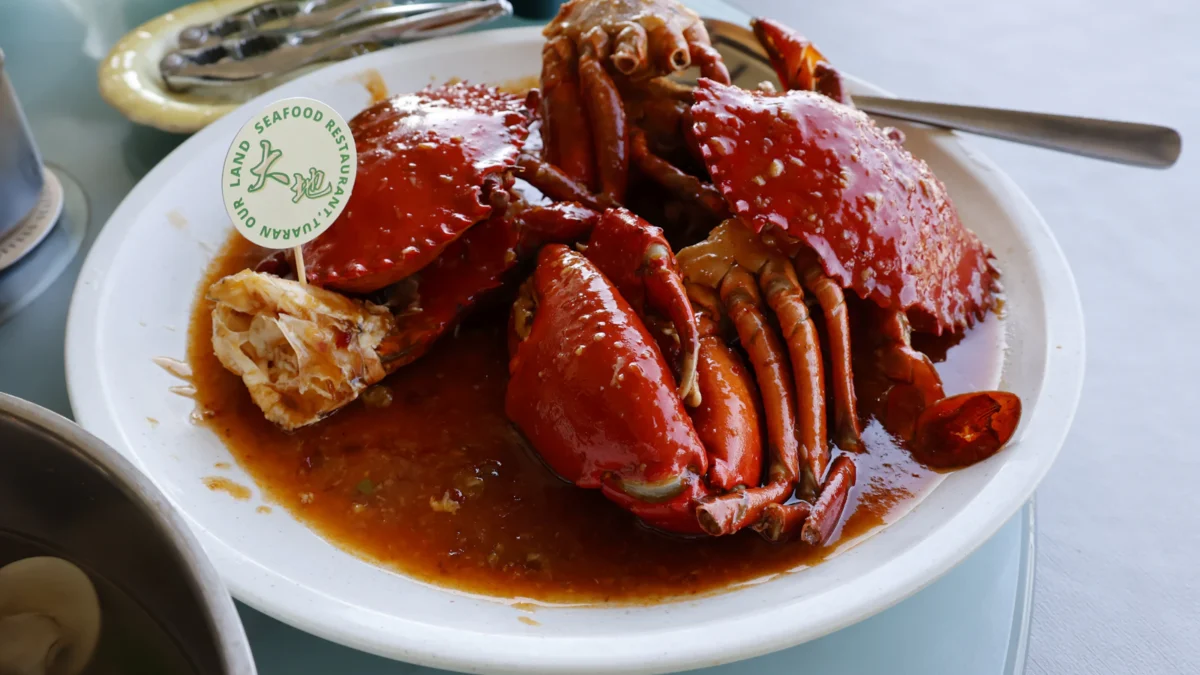
| Chilli crab and live seafood | Crab, lobster, fish and shellfish chosen from tanks and sold by weight at market price | Tank space and maintenance, reliable live supply, weighing at the table or pass, and clear pricing |
| Oyster and seafood bar | Raw oysters, crudo, seafood platters, wine and cocktails | Strict cold chain, approved oyster sources, shucking skills and a full liquor licence; see our bar POS page |
| Fish and chips | Battered fish, fries, sides and sauces | Fryers, oil management, fast counter or kiosk service and delivery packaging; see our Western food stall guide |
Write your concept in one line, such as “zi char seafood with live crab, family dinners, 80 seats”, and test every decision against it. The biggest fork is whether you will keep live seafood and whether you will serve anything raw. Each adds equipment, training and paperwork. A fish and chips shop that cooks everything from frozen or chilled fillets avoids both.
Premises, licences and fit-out
Check approved use, exhaust routes, gas supply, power and drainage before you sign. You need an SFA Food Shop Licence, which SFA lists at $195 a year; SFA reviews complete layout applications within 7 working days, and you renovate only after approval (SFA). Our Food Shop Licence guide and renovation checklist cover the details. PUB says all food establishments need a grease trap, approved by NEA and PUB before installation (PUB).
Wok stations and fryers produce heat, grease and smoke. NEA’s Code of Practice on Environmental Health says kitchen exhaust must discharge above the roof, or where that is not practical, at an outdoor point not facing adjacent buildings, with fumes treated by an air cleaning system so there is no visible smoke. SFA’s guidelines for licensed premises say the hood and entire duct must be degreased by a specialist at least once every 12 months, with records kept. If you use LPG, SCDF’s Fire Code clause 10.1 requires a gas-leak detection system linked to shut off the supply and sound a local alarm. Our kitchen equipment list covers woks, fryers and steamers.
Seafood kitchens also need more cold space than most. Plan separate chillers or clearly separated zones for raw seafood, ready-to-eat items and cooked food, a freezer for frozen stock, an ice machine, and a wet prep area with its own sink and drainage for cleaning fish and shellfish.
Live seafood tanks
Live tanks are part of the theatre of a crab restaurant, and they let you sell seafood at its freshest. They are also a small aquaculture operation inside a restaurant. Plan for:
- Space and loading. Tanks full of seawater are heavy. Ask your contractor and landlord to confirm floor loading and where the tanks can go.
- Water, power and drainage. Tanks need chilling, filtration and aeration running around the clock, a supply of prepared seawater, and a drain for water changes. Put them on a circuit your electrician has sized for the load, and plan what happens during a power cut.
- Daily checks. Record water temperature and condition every day, remove weak or dead stock straight away, and keep the tank area clean. Dead shellfish should not be cooked and sold as live.
- Separation. Tank water and the nets used in it should stay away from ready-to-eat food and prep surfaces.
- Supplier support. Some live seafood suppliers offer tank set-up and maintenance. Ask what they cover and who is responsible when stock dies.
SFA’s guidelines for licensed food retail premises, which we checked in September 2026, do not set out specific requirements for live seafood tanks. They do note that live animals such as pets are not permitted in food establishments, and they point to separate guidelines for premises that house, handle or slaughter frogs. Customers’ dogs in outdoor areas are a separate question, covered in our pet-friendly restaurant guide. Because there is no single public checklist for tanks, show the tanks on your layout plan and check with SFA when you submit it, and get the landlord’s written approval before you order them.
Sourcing seafood and import rules
Most seafood restaurants buy from licensed importers, wholesalers and fishery ports rather than importing themselves. Choose suppliers on freshness, consistency and delivery times, and keep at least one backup for your key species. Ask each supplier:
- Where each product comes from and how it is kept cold from landing to your door.
- Which items they sell as suitable for eating raw, and how those are handled.
- Delivery days, cut-off times and what happens when a catch or flight is short.
- How they price live and seasonal items, and how much notice you get of changes.
Keep invoices and delivery records. If a batch is ever recalled, you need to know when it arrived and which dishes used it.
If you import seafood yourself
SFA says you need a licence or registration to import food for commercial sale, plus a permit for every consignment. SFA’s fees page lists the Licence for Import/Export/Transhipment of Meat and Fish Products at $84 a year, and our import licence guide covers permit fees and TradeNet. SFA’s import requirements page says fish and fish products that are not high-risk and not under CITES can be imported from any country without a health certificate. The high-risk rules are where seafood restaurants need care:
- Chilled-shucked raw oysters, chilled cockle meat, chilled cooked prawns and chilled crab meat cannot be imported.
- Live oysters can only come from listed countries with a shellfish sanitation programme, such as Australia, France, Japan and New Zealand, with a health certificate.
- Live cockles can only be imported by licensed food processing establishments approved to shuck them.
- Frozen oysters, frozen cooked prawns and frozen crab meat need a health certificate for each consignment; for frozen oysters it must state they were tested and found “free of norovirus”.
- Some protected species, such as certain sharks and sea cucumbers, fall under CITES and need permits from NParks as well as the exporting country.
Approved sources change, so check SFA before every new product. Our supplier management guide covers contracts and backups.
Raw seafood and food safety
Oysters, sashimi, crudo and ceviche carry more risk than cooked seafood. SFA’s ready-to-eat raw fish page calls RTE raw fish “a high-risk food as it does not go through a cooking process”, and says food establishments should practise proper segregation of RTE raw fish from other raw food intended for cooking. SFA’s December 2024 advisory to food business operators gives specific practices:
- “Do not serve thawed frozen oysters as raw oysters.”
- Store or display RTE raw seafood “at below 5°C in chillers or immersed in food-grade ice”, and keep display time as short as possible.
- Do not handle RTE food with bare hands, and change disposable gloves regularly.
- Thaw frozen food in a chiller at 0 to 4°C, and cook food to an internal temperature of at least 75°C for 2 minutes.
- Store cooked and RTE food above raw food, and colour-code utensils for RTE and non-RTE food.
The same advisory encourages operators selling RTE raw fish dishes to adopt the Singapore Technical Reference TR 79:2020 for preparing ready-to-eat raw fish. SFA has also banned raw freshwater fish from all ready-to-eat raw fish dishes since 5 December 2015, so check that every fish on a raw menu is a saltwater species. For a raw fish bowl concept, see our poke bowl shop guide. Our Japanese restaurant guide covers raw fish handling in more depth.
For an oyster bar, that means oysters kept on ice below 5°C, shucked to order by trained staff, never from thawed frozen stock, and bought only from suppliers who can show the oysters came from approved sources. Every food handler needs WSQ Food Safety Course Level 1 and registration with SFA; our SFA inspection guide covers what inspectors check.
Market-price items, weighing and menu pricing
Seafood prices move with season, weather and exchange rates, so many seafood restaurants sell crab, lobster and live fish at market price, often by weight. That is fair to the business, but guests need to know what they will pay before the crab goes into the wok. Good practice:
- Show the current price per 100g or per kg clearly, on a board or in the menu, and update it when your cost changes.
- Weigh the live seafood in front of the guest, or tell them the weight and price before cooking, and write it on the order.
- Offer set sizes or set menus for guests who want a fixed price.
- Keep weighing scales calibrated and in working order.
Cooking styles are a natural fit for modifiers. ChaChaCha’s restaurant POS supports custom modifiers, so a crab order can carry the style (chilli, black pepper, salted egg, steamed), spice level, add-ons such as fried mantou, and allergy notes, all shown on the kitchen ticket. If you want to sell items at an open or market price, or by weight, ask us to confirm how that would work on your menu before you commit.
For fixed-price dishes, cost every recipe. Hypothetical example, for illustration only: a plate of cereal prawns uses prawns ($6.00), cereal and butter ($1.00), curry leaves, chilli and oil ($0.60). The plate costs $7.60. At $24 on the menu, food cost is about 32%. If your prawn cost rises to $8.00, food cost goes to about 40% at the same price. Use your own supplier prices and weigh portions; these numbers are not market prices. Our guides to menu pricing, menu engineering and the recipe costing template explain the method. ChaChaCha’s inventory module deducts ingredients by recipe with every sale and gives recipe costing per menu item, so you can see how a price rise hits every dish.
Allergens: crustaceans, fish and molluscs
A seafood menu is built on common allergens. Under the Food Regulations, prepacked food must declare crustacea and crustacean products, and fish and fish products; SFA’s food allergy page says the fish group also includes molluscs such as oysters, clams and scallops. Restaurant meals are not prepacked, but SFA says businesses selling non-prepacked food should still give allergen information to customers on request, for example on the menu or a standee.
- Hidden sources. Oyster sauce, fish sauce, belacan, dried shrimp, prawn stock and some chilli pastes turn up in dishes that do not look like seafood.
- Shared oil and woks. Fryer oil used for battered prawns carries crustacean and gluten. Say so honestly if a guest asks about fried items.
- Allergy modifiers. Set up modifiers such as “ALLERGY: shellfish” so servers select them rather than typing notes that may be missed.
Our allergen management guide has a matrix template and a front-of-house script.
Waste, odour and pests
Shells, heads, bones and trimmings smell quickly in Singapore’s heat, and they attract pests. Keep seafood waste in covered, lined bins, empty them at least daily as SFA’s guidelines require, and never leave bags on the ground. Some kitchens chill seafood waste until collection. Used fryer oil must go to an NEA-licensed Class B.1 collector, and PUB says grease traps should be cleaned by a licensed waste collector at least once every two weeks. If you open in a large mall or hotel, ask whether the building separates food waste under the Resource Sustainability Act. Our guides to restaurant waste management, reducing food waste and pest control cover the details.
Liquor, delivery and POS set-up
Liquor
Beer goes with zi char and wine goes with oysters. SPF’s licence classes page lists Class 1A (all liquor on the premises, 0600 to 2359hrs) at $880 a year, Class 1B (all liquor, to 2200hrs) at $660, and Class 2A (beer only, to 2359hrs) at $460. An oyster bar serving wine and cocktails needs an all-liquor class. SPF says processing takes about three weeks from a complete application on GoBusiness. Our bar guide covers conditions.
Delivery
Fried and wok dishes travel better than live seafood or oysters, so keep the delivery menu short. Grab’s Singapore merchant page lists an SFA licence with at least two months’ validity among the documents it asks for, and as of September 2026 states a 30% service fee on GrabFood orders. Price delivery items after fees and packaging, and read our takeaway packaging guide for sauce-heavy dishes.
POS
- Tables and groups. Table management, split bills and tabs suit large family tables sharing crab and ordering more as the night goes on.
- Kitchen routing. The kitchen display system routes wok dishes, fryer items, steamed fish and cold platters to the right station, with order prioritisation and prep timers. Kitchen tickets can print in English and 中文 through Epson cloud printing to several printers.
- Ordering and payments. QR ordering lets guests add rice and drinks without waiting for a server. PayNow, PayLah!, NETS, Visa/Mastercard and GrabPay are accepted, with split payments and automated reconciliation.
- Reliability and loyalty. The POS keeps taking orders if the internet drops and syncs later. Loyalty with points, stamps, vouchers, birthday rewards and WhatsApp marketing helps bring families back.
Pricing is quote-based, and AppsPOS, which powers ChaChaCha, is approved under the EDGE Grant; see our grant guide.
Costs and opening checklist
Costs to plan for
Costs vary too much by size, location and concept to give a meaningful figure, so plan by category and get written quotes: premises and deposits; renovation; kitchen (woks, fryers, steamers, hood, air cleaning, gas works, chillers, freezers, ice machine); live tanks and their chilling and filtration; licences (Food Shop Licence, liquor licence, any import licence); staff, including skilled wok chefs and shuckers; opening stock; and technology (POS, KDS, printers, QR ordering). Seafood also carries a higher risk of stock loss than most cuisines, so budget for some wastage in the first months while you learn your volumes. Use the POS cost calculator and our guide to the cost of opening a restaurant.
Seafood restaurant opening checklist
- Concept defined in one line, including whether you will keep live seafood and serve anything raw.
- Premises checked for exhaust, gas, power, drainage and floor loading; landlord approval for tanks in writing.
- SFA Food Shop Licence layout approved before renovation, with tanks and wet prep shown.
- Suppliers chosen for each key species, with backups, delivery schedules and raw-suitability confirmed in writing.
- Import rules checked for any product you bring in yourself, including high-risk seafood and CITES species.
- Raw seafood plan: below-5°C display, no thawed frozen oysters served raw, segregation and TR 79:2020 considered.
- Market-price display and weighing routine written, with scales calibrated.
- Menu costed by recipe and an allergen matrix written for crustaceans, fish and molluscs.
- Waste, used oil and grease trap collection arranged with licensed collectors.
- Liquor licence class chosen and applied for at least three weeks before opening.
- POS set up with cooking-style and allergy modifiers, kitchen routing, tables, QR ordering and payments.
Want to see how cooking-style modifiers and station routing would work for your seafood menu? Talk to us for a demo and a quote, and ask us to confirm how market-price items would be set up.