Key takeaways
- “Chinese restaurant” covers very different kitchens: Cantonese and dim sum, full-service zi char, Sichuan and mala, and banquet dining. Specialist concepts need their own plan too; see how to open a bak kut teh restaurant. Pick one and design the kitchen around it.
- Wok stations drive your exhaust, gas and fire safety plan. NEA requires fumes treated so there is no visible smoke, and SCDF fire safety works need a qualified person.
- Banquets and Chinese New Year sets depend on deposits, fixed menus and headcount deadlines. Plan reservations and pre-orders weeks ahead.
- SPF liquor licences take about three weeks to process; choose the class before you apply.
- Kitchen tickets in English and 中文 help cooks read orders quickly at the wok and steamer.
This guide is general information, not legal advice. Official rules quoted were taken from SFA, NEA, PUB, SCDF, SPF and MOM pages checked in September 2026. Check the current position with each agency before you sign a lease or hire staff.
Chinese food is the backbone of eating out in Singapore, from zi char dinners and weekend dim sum to wedding banquets and reunion dinners. That gives a new restaurant a large market, and very experienced customers. Our eating-out spending statistics show how much Singapore households spend on meals out. The general steps are in our guide on how to open a restaurant in Singapore. This guide covers what is specific to a Chinese kitchen: the concept, woks and exhaust, steaming, banquets and deposits, Chinese New Year, liquor, chefs, POS set-up and costs. For a Hong Kong-style café with set meals and milk tea, see how to open a cha chaan teng.
Choose your Chinese restaurant concept
| Concept | Signature items | What to plan for |
|---|---|---|
| Cantonese and dim sum | Har gow, siu mai, cheong fun, roast meats, soups, seafood | Early-morning prep, steaming capacity, a skilled dim sum chef, weekend family peaks |
| Zi char (full-service) | Long menu of wok dishes, seafood, tofu, vegetables in several sizes | Multiple wok stations, fast ticket flow, shared dishes and add-on orders; see our mala and zi char stall guide |
| Sichuan and mala | Mala xiang guo, boiled fish, spicy stir-fries, sometimes hotpot | Chilli oil and spice prep, spice-level modifiers, strong extraction; for hotpot, see our hotpot guide |
| Banquet and fine dining | Set menus, whole fish, abalone, suckling pig, private rooms | Large tables and rooms, deposits, event coordination, wine and liquor service |
Many restaurants combine two, such as dim sum at lunch and zi char or banquet sets at dinner. If tea is the focus, with dim sum or snacks alongside, see how to open a Chinese tea house. That works if the kitchen can switch cleanly. Write a one-line description, such as “Cantonese, dim sum lunch and seafood dinner, private rooms for 30”, and use it on your menu, Google Business Profile and delivery listings. If you want to serve Muslim diners, a halal Chinese kitchen is a different build; read our halal restaurant guide first.
Premises, licences and liquor
Check approved use, exhaust routes, gas supply and power before you sign. You need an SFA Food Shop Licence, which SFA lists at $195 a year; SFA reviews complete layout applications within 7 working days, and you renovate only after approval (SFA). Our Food Shop Licence guide and lease guide cover the details. PUB says all food establishments need a grease trap approved before installation (PUB); wok washing water and oil-heavy dishes load it quickly.
Most Chinese restaurants serve beer, wine or spirits with dinner and banquets. Liquor licensing is run by the Singapore Police Force. SPF’s licence classes page lists Class 1A (all liquor, 0600 to 2359hrs) at $880 a year and Class 1B (all liquor, 0600 to 2200hrs) at $660 a year, with beer-only classes 2A and 2B at $460 and $285. Its application page says processing takes about three weeks from receipt of a complete application on GoBusiness, with land authority approval among the documents. Geylang and Little India are Liquor Control Zones with shorter trading hours. Our bar guide covers classes and conditions in full. If guests bring their own wine to banquets, decide your corkage policy and put it on the booking confirmation.
Wok stations, exhaust and fire safety
Wok hei needs very high heat, which produces smoke, grease and noise. This is the biggest design decision in a Chinese kitchen.
- Exhaust. NEA’s Code of Practice on Environmental Health says kitchen exhaust must discharge above the roof, or where that is not practical, at an outdoor point not facing adjacent buildings, with fumes treated by an air cleaning system so there is no visible smoke. Your hood length and extraction rate limit how many wok burners you can run.
- Cleaning. SFA’s guidelines for licensed premises say the hood and entire duct must be degreased by a specialist at least once every 12 months, with records kept. Busy wok lines may need more.
- Hood suppression. SCDF’s Fire Code 2023, clause 6.5 lists wet chemical suppression systems for kitchen hoods among fixed automatic fire extinguishing systems. Whether you need one depends on the premises, so confirm with your qualified person and landlord.
- Gas. Wok ranges usually run on piped gas or LPG, and gas work must be done by a licensed gas service worker. Our restaurant gas supply guide compares the two. For LPG, SCDF’s Fire Code clause 10.1 requires a gas-leak detection system linked to shut off the supply and sound a local alarm, and says a fixed kitchen fire suppression system, if installed, must automatically shut off the LPG supply when activated.
- Approvals. SCDF’s plan approval page says fire safety works need approved plans submitted by a qualified person.
Plan wok ranges with a water tap and drain for wok washing, and think about heat: some kitchens trial induction woks for secondary stations to reduce heat load, though cooks need time to adjust. Our kitchen equipment list compares gas and induction, and our renovation checklist puts the works in order.
Dim sum and steaming equipment
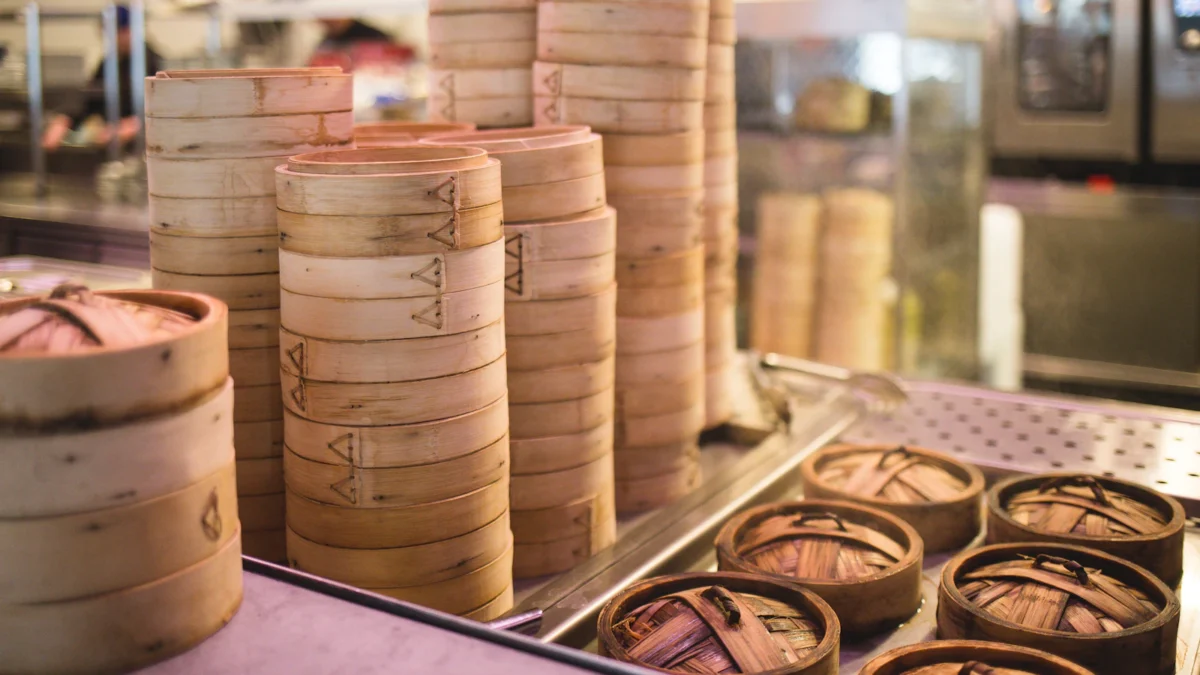
A dim sum kitchen is built around steam. The main options are gas steamer stoves with stacked bamboo or metal baskets, and electric or gas steam cabinets for larger batches. Whichever you choose, plan for:
- Water and drainage. Steamers need a water supply and a drain, and descaling keeps them working.
- Extraction. Steam and heat still need to be removed; ask your contractor to size the hood for steamers as well as woks.
- Cold storage. Most dim sum is made ahead and held chilled or frozen, so freezer and chiller space often matters more than people expect.
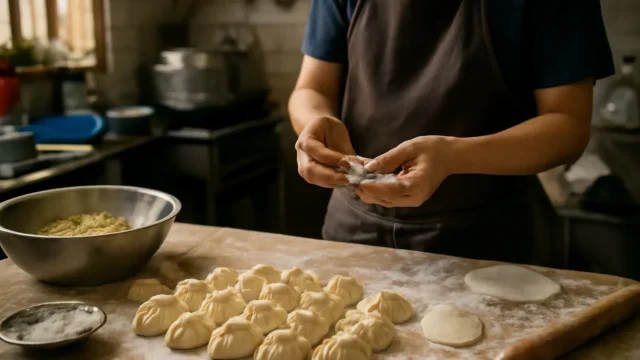
- Prep space. Wrapping dumplings and rolling pastry needs clean bench space away from the wok line. For a shop built entirely around dumplings, see how to open a dumpling shop.
- Service style. Trolleys look traditional but need floor space and staff. Most outlets now use an order sheet or QR ordering, where guests tick items and the order goes straight to the steamer and fryer stations.
Roast meats (siu mei) add ovens or roasting cabinets, a chopping station and more extraction. Decide early whether you roast in-house or buy in. For a stall built around siu mei, see our roast meat stall guide.
Banquets, set menus and deposits
Banquets can fill a restaurant on a quiet weekday, but they tie up tables, kitchen capacity and stock. A few rules make them manageable:
- Fixed set menus by table. Offer two or three sets for tables of ten, priced per table, with an optional upgrade course. Sets are easier to cost, prep and serve than à la carte for a large group.
- Deposit and final headcount. Take a deposit to confirm the booking, set a final headcount deadline and write your cancellation terms on the confirmation.
- Supplier lead times. Whole fish, live seafood, abalone and suckling pig need confirmed orders; tie supplier orders to the headcount deadline.
- Room and service plan. Plan the course timing and how many servers each room needs.
For taking bookings and deposits online, compare options in our restaurant reservation system comparison, and see our guide to reducing no-shows. For how banquet deposits and bookings would be handled within ChaChaCha, ask us to confirm for your setup. What we can confirm is the in-restaurant side: table management, split bills and tabs, and split payments.
Chinese New Year and other peaks
For many Chinese restaurants, Chinese New Year is the biggest period of the year. MOM’s public holidays page lists Chinese New Year on 6 and 7 February 2027. Typical demand includes:
- Reunion dinners on the eve, often large family tables booked weeks in advance, with fixed set menus for eight or ten people.
- Lo hei and yu sheng, served as a starter at dine-in meals and sold as takeaway kits through the fifteen days.
- Takeaway sets such as poon choi, braised dishes and whole fish.
- Company lo hei lunches in the weeks after the holiday.
Open reunion dinner bookings early, take payment or a deposit on pre-orders, offer fixed pickup slots and decide early whether you close or run shorter hours on the first days. Price any festive surcharge clearly on the menu and confirmation. Mid-Autumn, Christmas and wedding season bring their own peaks. Our festive season playbook has a timeline.
Hiring chefs and kitchen staff
A wok chef, a dim sum chef and a roast meat chef are different skills, and good ones are in demand. Hire the head chef before you commit to a lease.
- Work Permits. MOM’s Services sector requirements list restaurants among Services business activities. As set out in our guide to hiring foreign workers, Services Work Permit sources are Malaysia, the PRC and North Asian sources, with Non-Traditional Sources allowed only for occupations on MOM’s NTS Occupation List. MOM’s COS 2026 factsheet lists cooks among those occupations, with an 8% sub-quota and a fixed monthly salary of at least $2,000.
- Quota. Services Work Permit holders can make up at most 35% of your total workforce, and levies rise by tier.
- S Pass. For a senior chef, MOM’s S Pass eligibility page sets the minimum qualifying salary at $3,300 a month for most sectors, rising with age, and $3,600 for new applications from 1 January 2027.
- Food safety. Everyone who prepares or handles food needs WSQ Food Safety Course Level 1 and SFA registration (SFA).
Check with MOM before you make any offer. Front-of-house staff for banquets need to explain set menus, allergens and corkage. Decide the rules first with our guide to setting a corkage policy. Our staff training checklist helps.
POS setup for a Chinese restaurant
- Kitchen tickets in English and 中文. Many Chinese kitchen teams read Chinese more comfortably. ChaChaCha prints kitchen tickets in English or Chinese, and the interface runs in both.
- Station routing. The kitchen display system routes wok dishes to the wok, dim sum to the steamer and roast meats to the chopping board, with order prioritisation and prep timers. Epson cloud printing sends tickets to several printers if a station prefers paper; our KDS vs printer guide compares the two.
- Sizes and modifiers. Set small, medium and large as options, and requests such as less oil, no MSG or spice levels as custom modifiers.
- Tables and bills. Table management, tabs and split bills suit families adding dishes through the meal and groups splitting the bill between cards and PayNow.
- QR ordering and queues. Dine-in guests can scan, order and pay, which suits long dim sum menus, and a queue system with SMS notifications and a digital queue display helps at weekend peaks.
- Payments and loyalty. PayNow, PayLah!, NETS, Visa/Mastercard and GrabPay, with split payments and automated reconciliation; loyalty with points, stamps, vouchers, birthday rewards and WhatsApp marketing.
The POS keeps taking orders if the internet drops and syncs later. See our restaurant POS page.
Costs to plan for
Costs vary too much by size and location to give a meaningful figure, so plan by category and get written quotes: premises and deposits; kitchen (wok ranges, steamers, roasting equipment, hood, air cleaning, suppression, gas works, cold storage); licences (Food Shop Licence, liquor licence); staff; and technology (POS, KDS, printers, QR ordering). Use the POS cost calculator and our guide to the cost of opening a restaurant.
Hypothetical example, for illustration only: a ten-person banquet set with eight courses has an ingredient cost of $300 for the table, including a whole steamed fish and a braised abalone course. Priced at $888 for the table, food cost is about 34%. If seafood prices rise by $40 for the table, food cost moves to about 38% unless you adjust the price or swap a course. Use your own supplier quotes. ChaChaCha’s inventory module deducts ingredients by recipe with every sale and gives recipe costing per menu item, and our menu pricing guide explains the method. On grants, AppsPOS, which powers ChaChaCha, is approved under the EDGE Grant; see our grant guide. Pricing is quote-based.
Chinese restaurant opening checklist
- Concept chosen and described in one line; dim sum, zi char, Sichuan or banquet.
- Unit checked for approved use, exhaust route, gas, grease trap and power.
- Wok and steamer line sized against hood capacity; suppression and LPG safety confirmed with a qualified person.
- SFA Food Shop Licence layout approved before renovation.
- Liquor licence class chosen and application submitted at least three weeks before opening.
- Head chef hired; foreign hires checked against MOM source, quota and salary rules.
- Menu costed by recipe; banquet sets priced with deposit and headcount terms written.
- Reservation and deposit process chosen for banquets and reunion dinners.
- POS set up with 中文 kitchen tickets, station routing, modifiers, QR ordering and payments.
- Soft launch run with a full dim sum lunch and a banquet table.
Want to see how bilingual tickets and station routing would work on your menu? Talk to us for a demo and a quote.