Key takeaways
- A bak kut teh business usually starts either as a stall in a coffee shop (SFA Food Stall Licence, $32 a year) or as its own restaurant (SFA Food Shop Licence, $195 a year), often in a shophouse.
- URA says restaurants in shopping centres and commercial buildings need no planning permission, while shophouses are assessed case by case. Check the unit’s approved use before you sign.
- Broth is the product. Batch it to a written recipe, hold it hot, and cool any leftover quickly in small portions. Our guide to standard recipe cards shows what to write down.
- Free soup refills, tea sets and late-night hours shape how you staff the floor and set up your POS.
This guide is general information, not legal or food safety advice. Fees and rules come from SFA, URA and MOM pages we checked in September 2026. Confirm current requirements with each agency before you sign a lease.
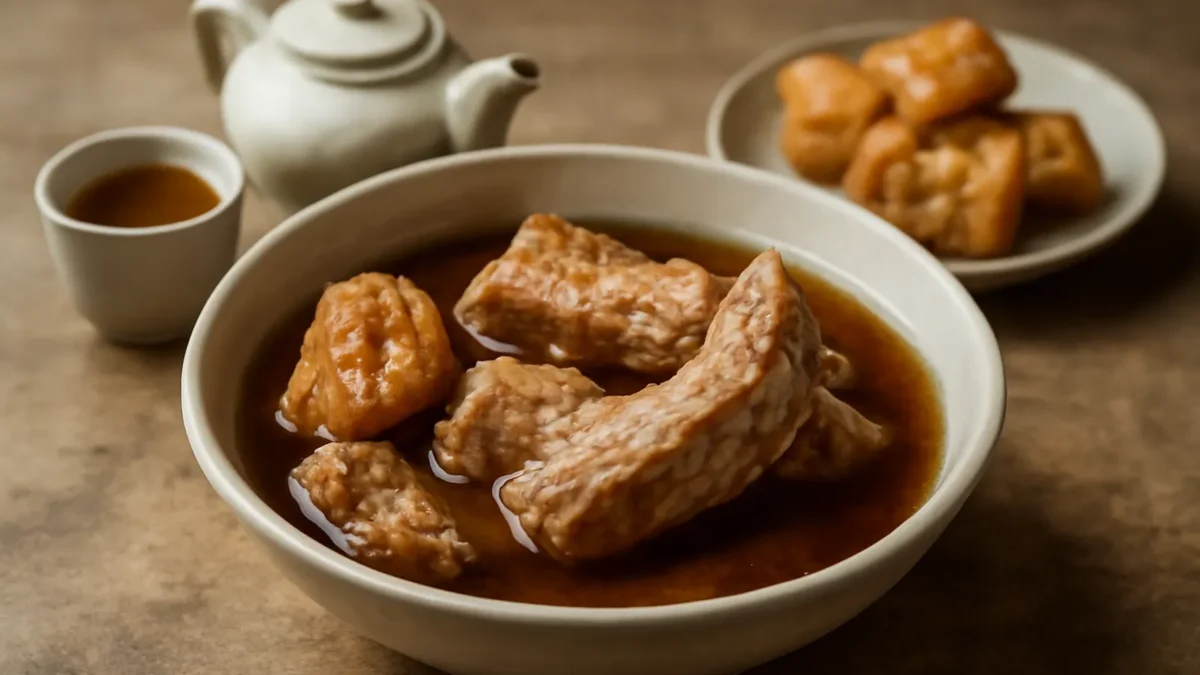
Bak kut teh looks like a simple menu: pork ribs in broth, rice, you tiao, braised sides and Chinese tea. The operation behind it is more demanding. The broth has to taste the same every day, pots run for hours, regulars expect their soup topped up without asking, and many outlets trade late into the night. Whether you prefer the peppery Teochew style or a darker herbal broth, the business decisions are similar. This guide covers the choice between a coffee shop unit and a shophouse restaurant, licences, broth batching, refills and table service, tea sets, late-night trade, menu and POS setup. For the wider licensing picture, see our Chinese restaurant guide.
Shophouse restaurant or coffee shop unit
Coffee shop stall
Many bak kut teh brands start as a stall in a coffee shop. You rent from the coffee shop operator, share its seating and drinks stall, and apply for your own Food Stall Licence. The operator’s customers give you some trade from day one, and your costs are lower than a full restaurant. The trade-offs are less control over seating, hours and the drinks menu, and less room for the tea service many customers expect. Ask the operator whether you may serve your own tea, run late hours and collect your own payments.
Shophouse or standalone restaurant
A shophouse gives you your own dining room, a proper kitchen for large stock pots, and your own brand at street level. According to URA’s criteria for restaurant use, restaurants in shopping centres and commercial buildings do not need planning permission. Shophouses outside problem areas are evaluated case by case, and clearance from the Land Transport Authority may be required. If the unit is in a conservation area, read our conservation shophouse guide before you commit, because signage and alterations have their own rules.
Before signing any lease, ask the landlord for the approved use of the unit and check whether a kitchen exhaust suitable for long simmering is already in place. A shophouse that was a shop or office may need a change of use and new kitchen works, which adds time before you open.
Licences and the layout plan
SFA’s licensing page treats restaurants and coffee shops as Food Shops, and individual units inside a coffee shop as Food Stalls. Its fees page sets out the costs and steps:
| Format | SFA licence | Fee | What you submit |
|---|---|---|---|
| Stall in a coffee shop or food court | Food Stall Licence | $32 a year | Tenancy agreement, IRAS stamp duty certificate, layout plan |
| Your own restaurant | Food Shop Licence | $195 a year | Layout plan with a metric scale, kitchen equipment and infrastructure (exhausts, sinks, wash basins) and the boundary of the dining area |
For a Food Shop Licence, SFA says it reviews complete applications within seven working days and notifies you of the approved layout within seven working days. You then renovate according to the submitted layout. Incomplete applications are rejected, and licences are not transferable, so a new company taking over an existing bak kut teh shop needs its own licence. Our Food Shop Licence guide goes through the process step by step.
Everyone who handles food must hold the WSQ Food Safety Course Level 1 certificate, including part-time and late-shift staff. SFA also requires ingredients to come from licensed sources, so buy pork, herbs, you tiao and braised items from licensed suppliers.
Broth batching: cooking, holding and cooling
The broth is what customers come back for, and it is also where most kitchen hours go. A few habits keep it consistent and safe:
- Write the recipe down. Weights of ribs, garlic, pepper or herbs, water and cooking time per pot. A written recipe lets someone other than the owner cook the soup.
- Batch to expected sales. Use your POS sales by day and hour to decide how many pots to start and when. Starting a second pot before the dinner peak is better than running out at 8pm.
- Hold hot. SFA’s December 2024 advisory says ready-to-eat food should not stay between 5°C and 60°C for more than four hours. Keep serving broth at a simmer.
- Cool leftovers quickly. The same advisory says to divide large amounts of food into smaller portions for quicker cooling and refrigerate immediately. Do not leave a full stock pot to cool overnight on the stove.
- Cook meat through. SFA’s guide is an internal temperature of at least 75°C for two minutes. A probe thermometer settles any doubt with thick ribs.
Recipe-level stock deduction helps here. With ChaChaCha, each bowl sold deducts ribs and other ingredients by recipe, and recipe costing shows what each bowl costs you. See inventory management.
Refills and table service
Free soup refills are part of the bak kut teh experience in many outlets. They are good for loyalty but add walking for staff. Plan for them:
- Decide the refill policy. Unlimited refills of soup only, or a set number? Write it on the menu so staff do not have to judge.
- Assign sections. Give each server a group of tables to watch for empty bowls and teapots.
- Keep a refill station near the floor. A hot-holding pot close to the dining area saves trips to the kitchen.
- Use table management. ChaChaCha’s table management shows which tables are seated and which bills are open, so servers can focus on the ones that need attention.
QR ordering helps too. With QR ordering, diners scan, order and pay at the table, so staff spend more time on refills and clearing and less on taking orders. Add-ons like an extra bowl of rice or more you tiao can be ordered straight from the table.
Tea sets and the tea station
Many bak kut teh restaurants serve Chinese tea brewed at the table, with a kettle or hot water flask, a tea set and a choice of leaves. If tea itself is the draw, read opening a Chinese tea house in Singapore. It adds atmosphere and margin, and some work:
- Price it clearly. Charge per person, per pot or per set, and state any charge for hot water top-ups.
- Keep the tea list short. Three or four teas are easier to stock and explain than ten.
- Set up the POS for it. Add the tea as an item with modifiers for leaf type, and make sure it prints to the right station.
- Train staff. A short guide on how to set the tea tray and refill the kettle keeps it consistent.
Retail tea leaves or packaged spice mixes at the counter can also add revenue. If you pack them yourself, read the SFA labelling rules for prepacked food before you start.
Late-night trade: staffing and hours
Bak kut teh is a popular supper dish, and some outlets stay open well past midnight. Late hours bring extra sales but also extra costs and rules to plan for. Our late-night restaurant guide covers the wider issues, including noise and neighbours.
Staffing is the main one. For employees covered by Part IV of the Employment Act, MOM’s hours of work page sets normal hours at up to 44 a week, a maximum of 12 hours a day, overtime capped at 72 hours a month and paid at least 1.5 times the hourly basic rate, and one rest day a week. Split the day into two shifts rather than stretching a single team from lunch to 2am. Our staff roster guide shows how.
Check that late trade actually pays. Use hourly sales from your POS reports to see which hours cover staff and utilities. If the last two hours are quiet most nights, close earlier on weekdays and stay open later only on Fridays and Saturdays.
Menu, sides and ordering
A focused menu makes a bak kut teh kitchen faster. Most outlets serve a few cuts of pork ribs, a few braised sides (such as pig trotters, tau pok, salted vegetables or peanuts), you tiao, rice, vegetables and drinks. Keep it tight:
- Offer ribs by cut and size, and set sets for one or two people with rice and a side.
- Limit braised sides to the ones that sell. Check item sales monthly and drop the slow movers.
- Show your menu in English and Chinese. ChaChaCha’s interface and kitchen tickets work in English and 中文, which helps if your kitchen team prefers Chinese.
Our menu engineering guide shows how to find which items earn the most.
POS setup for a bak kut teh restaurant
A POS for bak kut teh needs to handle table service, add-ons and long evenings. With ChaChaCha you get:
- Table management, split bills and tabs for groups that order more as the night goes on.
- Custom modifiers for cuts, soup style, extra pepper and tea choices.
- A kitchen display system with station routing, so soup, braised items and drinks go to the right place. See KDS.
- Offline mode, so orders continue if the internet drops during a busy supper service.
- Loyalty with points, stamps and birthday rewards for regulars. See CRM and loyalty.
- Reports for checking sales, and Xero integration for accounting.
For restaurant-specific options, see our restaurant POS page. Pricing is quote-based, so contact us for a quote. Hardware is supplied by AppsPOS as part of the package.
Opening checklist
- Choose coffee shop stall or restaurant, and check the unit’s approved use with the landlord and URA.
- Submit your SFA licence application with a complete layout plan.
- Get WSQ Food Safety Course Level 1 for all food handlers.
- Line up licensed suppliers for pork, herbs, you tiao and sides.
- Write the broth recipe, batch plan and cooling steps.
- Set refill, tea and service charge policies and print them on the menu.
- Plan shifts that follow MOM’s hours limits if you trade late.
- Set up the POS with tables, modifiers, KDS routing and loyalty.
Budgeting for a bak kut teh restaurant
Costs vary too much by site to give a typical total, so list each category and get written quotes. The licence fees below come from SFA; everything else depends on your unit and concept.
| Category | What it includes | Notes |
|---|---|---|
| Licence | Food Stall Licence ($32 a year) or Food Shop Licence ($195 a year) | From SFA’s fees page |
| Premises | Deposit, advance rent, stall fee if in a coffee shop | A shophouse may need change of use and exhaust works |
| Kitchen | Large stock pots, high-output burners, exhaust, chillers, rice warmers | Long simmering means heavy gas and exhaust use |
| Dining room | Tables, chairs, tea sets, kettles, a refill station | Tea service adds crockery and breakage |
| Staff | Broth cook, kitchen help, servers, food safety courses | Late hours mean two shifts |
| Ingredients | Pork ribs, garlic, pepper or herbs, sides, tea leaves | Pork prices move; cost each bowl by recipe |
| Technology | POS, KDS or printers, QR ordering, payment terminals | Plan cabling during renovation |
| Working capital | Wages, rent and stock for the first slow months | Keep a buffer while regulars build up |
For the technology line, try our POS cost calculator, and check grant eligibility before you sign for equipment or systems.