Key takeaways
- Food waste is a cost problem before it is an environmental one. Every binned portion is ingredient, labour and energy cost with no sale attached.
- Under the Resource Sustainability Act, mandatory food waste segregation applies to large premises such as malls and hotels with more than 3,000m² of F&B area. Most standalone restaurants and cafés are not directly covered, but mall tenants may be asked to take part.
- Start by measuring: a simple daily waste log split into spoilage, prep waste, overproduction and plate waste shows where the money goes.
- Par levels, first-in-first-out (FIFO) storage, standard portions and a tighter menu cut most avoidable waste.
- Use sales by item and by hour to prep to real demand, not to habit.
- Since 1 January 2025, the Good Samaritan Food Donation Act 2024 protects donors who meet SFA’s conditions. Follow SFA’s donation guidelines before giving surplus away.
Singapore throws away a lot of food. The National Environment Agency’s food waste page reports that about 790,000 tonnes of food waste were generated in 2025, around 11% of all waste, and only 18% was recycled. Households, manufacturers and retailers all contribute. For a restaurant or café, the issue is simpler: food you throw away is money you spent and never earned back.
This guide covers the regulations that actually apply to F&B businesses, then the practical steps, from measuring waste to prepping by data and donating surplus safely.
Why food waste matters for margins
Food cost is usually one of the two biggest costs in an F&B business, alongside labour. Waste pushes up your actual food cost compared with your theoretical food cost, which is what your recipes say each dish should cost. If your menu is costed at one percentage and your stock take says another, the gap is usually a mix of waste, over-portioning, errors and theft. Our guide to restaurant food cost in Singapore explains how to calculate both.
Waste costs more than the ingredients:
- Labour: someone washed, cut, cooked and plated food that was then thrown away.
- Energy and gas: cooking and chilling food that nobody eats.
- Disposal: more waste can mean more or larger bins and collections, depending on your waste contract.
- Cash flow: stock sitting in the chiller until it spoils is cash sitting there too.
Cutting waste often improves profit more than a price increase, and customers don’t notice it.
Know what’s covered by regulation
Singapore’s Resource Sustainability Act (RSA, 2019) makes certain large commercial and industrial premises segregate their food waste for treatment and report on it. According to NEA, the thresholds are:
| Premises | Covered if |
|---|---|
| Shopping malls | F&B area of more than 3,000m² |
| Hotels | F&B and function areas of more than 3,000m² |
| Single-user factories (large food manufacturers) | Food manufacturing operation area of more than 750m² |
| Multi-user factories | More than 20,000m² gross floor area and more than 20 food tenants |
Timing. For new buildings whose plans were submitted from 1 January 2021, NEA says segregation, treatment and reporting started in March 2024. For existing buildings, NEA says the requirements will start in phases alongside the completion of the food waste treatment facility at Tuas Nexus (the Integrated Waste Management Facility). As of NEA’s page last updated in June 2026, we found no fixed start date for existing buildings, so check NEA’s food waste management page for updates.
What this means for you. The legal duty generally sits with the owner or operator of the covered premises, such as the mall or hotel. A standalone restaurant, shophouse café or coffee shop is not directly covered by these thresholds. If you’re a tenant in a covered mall or hotel, expect your landlord or building manager to ask you to separate food waste into designated bins. NEA’s Food Waste Segregation and Treatment Guidebook explains how that works in practice. Even if the law doesn’t cover you, the same principle of separating and measuring waste is where cost savings begin.
Measure your waste
You can’t reduce what you don’t measure. A waste log doesn’t need special equipment. A kitchen scale, a clipboard or shared spreadsheet, and ten seconds per entry is enough.
Log each item you throw away with the date, item, weight or quantity, reason and who logged it. Group the reasons into four categories:
- Spoilage: stock that expired, went off or was stored wrongly before use.
- Prep waste: trimmings, peelings, dropped or burnt items, and mistakes during prep.
- Overproduction: food prepared or cooked that was never sold, such as the end-of-day tray of rice or unsold pastries.
- Plate waste: food customers left behind.
Run the log for two to four weeks before changing anything. Patterns show up quickly: Monday spoilage from over-ordering for the weekend, a dish that always comes back half-eaten, or a batch recipe that makes more than you sell. Put a cost on each entry (quantity times unit cost) so the team sees dollars as well as kilos.
Make logging easy. Keep the sheet next to the bin, use simple item names and let any staff member log. Review the totals weekly with your chef or supervisor.
Buying and stock control
Much food waste is decided when you place the order, before anyone cooks. NEA’s Food Waste Minimisation Guidebook for Food Retail Establishments recommends ordering in bulk only after assessing demand, and labelling stock when it’s received. In practice:
- Set par levels. A par level is the quantity of each item you should have on hand to cover usage until the next delivery, plus a small buffer. Order up to par, not by feel. Review pars monthly and before public holidays.
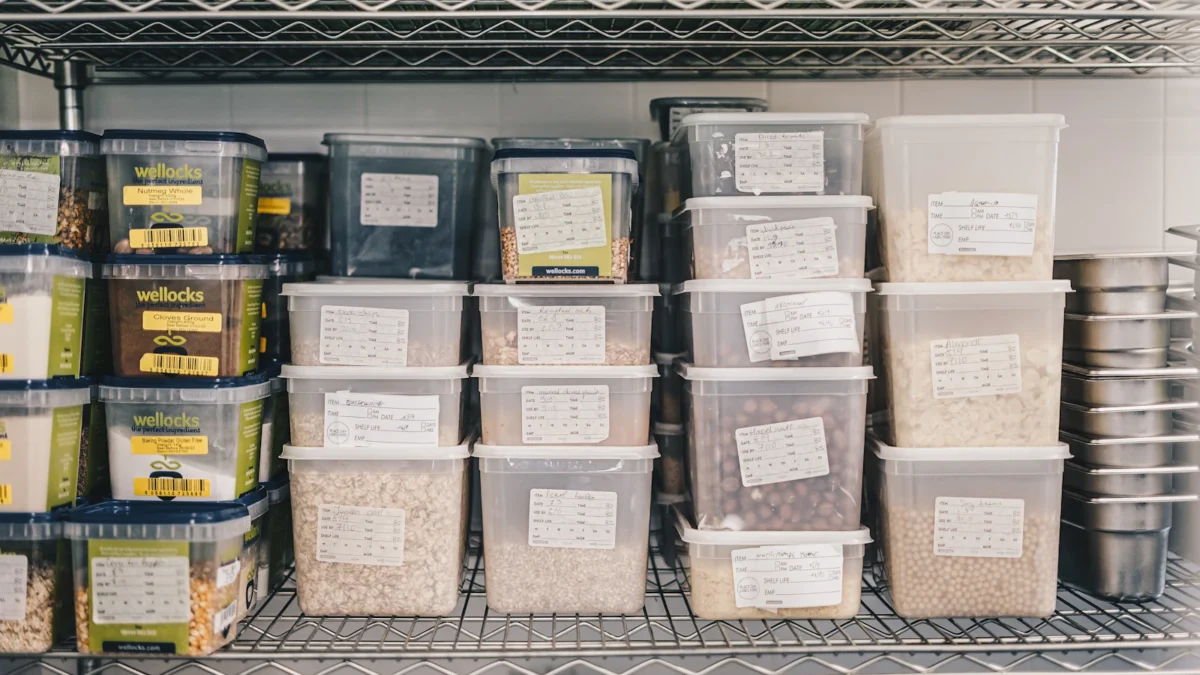
- Use FIFO: first in, first out. New deliveries go behind older stock. Label everything with the item, date received and use-by date.
- Check deliveries at the door. Reject short-dated, damaged or out-of-temperature goods before they become your problem.
- Order more often, in smaller amounts, for perishables. If your supplier delivers several times a week, smaller orders of herbs, leafy greens, seafood and dairy usually waste less than one big order.
- Match orders to your menu. Buying an ingredient for a single slow-selling dish is a common cause of spoilage.
- Do regular stock takes. Weekly counts on high-value and perishable items show waste much sooner than a monthly count.
An inventory management system that deducts ingredients as dishes are sold makes par levels and variance tracking much easier than a paper count.
Prep and portion control
Prep and portioning are where daily habits affect waste most.
- Prep lists by day. Write a daily prep list with quantities based on expected covers, not a fixed “same as always” list.
- Batch cook in smaller rounds. For rice, sauces and fried items, cooking in smaller batches through service cuts end-of-day overproduction.
- Standard recipes and portion tools. Use scoops, ladles, scales and portion cups so every plate gets the same amount. Over-portioning is waste you pay for even when the customer finishes the plate.
- Use trim. Vegetable offcuts can go into stocks and staff meals, bread ends into croutons or bread pudding, and fruit trim into drinks, within your food safety rules.
- Store prepped food properly. Covered, labelled, dated containers at the right temperature last longer and are easier to rotate.
- Train staff. NEA’s guidebook suggests training staff on portion sizes and menu ingredients so they can advise customers. A server who can say “the regular size is quite large” prevents plate waste.
Menu design to reduce waste
Your menu decides how many ingredients you stock and how predictable demand is.
- Cross-use ingredients. Build dishes that share core ingredients so slow sellers draw on stock that fast sellers also use.
- Cut dishes that don’t sell. A dish that sells a few times a week but needs its own perishable ingredients is a waste risk. Use item sales reports to find these.
- Offer portion options. NEA’s guidebook suggests more portion choices, such as small and regular sizes or less rice, to reduce plate waste. Many customers will choose less rice if asked.
- Run specials to use surplus. A daily special that uses stock nearing its use-by date turns likely waste into sales.
- Rethink garnishes and sides. If plate waste shows the same side coming back untouched, make it optional.
For bakeries and cafés with display cabinets, overproduction is usually the biggest category. Bake to a daily plan, bake smaller rounds in the afternoon, and track what’s left at closing. Our bakery POS page shows how item-level sales tracking supports this.
Using data: prep to demand
Most kitchens prep from memory: “Saturdays are busy, make extra.” Your POS already has better information.
- Sales by item. Know how many of each dish you sell on each day of the week. Set prep quantities from the average plus a sensible buffer, not the busiest day you remember.
- Sales by hour. Knowing when orders come in lets you batch cook to match. If your own data shows most of a dish sells in the lunch window, prep for that window and cook smaller batches later.
- Trends and seasonality. Compare the same week last month or last year, and account for school holidays, public holidays and weather-sensitive items.
- Variance reports. Compare theoretical usage (from sales and recipes) with actual usage (from stock takes). A large gap on one ingredient points to waste, over-portioning or recording errors.
ChaChaCha’s reports and inventory management are built to give you this kind of sales and stock data, so prep and ordering can follow real demand. Whatever system you use, look at these numbers each week. A report that nobody reads won’t reduce waste.
Donating surplus food
Some surplus is unavoidable, and donating it is better than throwing it away. Since 1 January 2025, the Good Samaritan Food Donation Act 2024 has protected food donors and intermediaries from liability, provided they meet the conditions set out by the Singapore Food Agency:
- The food was not unsafe or unsuitable when it left your control.
- You told the recipient about any special handling requirements.
- You told the recipient about any time limits for safe consumption.
- You took all reasonably practicable measures to comply with food safety and hygiene laws.
SFA’s Guidelines for Food Donation give practical detail. Key points for restaurants and cafés:
- Not suitable for donation include food previously served to consumers (including buffet food, even if untouched), food past its date mark, and food with any sign of spoilage.
- Generally suitable: intact packaged dry goods, and bakery items that have not been served to the public and do not need temperature control (for example bread, or cakes and muffins without cream, custard or meat fillings).
- Needs extra care: packed meals, hot food, frozen items and dairy. The guidelines say to keep hot food above 60°C, chilled food at 4°C or below and frozen food at -18°C or below. Food kept at room temperature should be delivered promptly so it can be eaten within 4 hours of cooking.
- Give information: tell recipients when to consume the food and how to store it, and include reheating instructions for cooked food if it won’t be eaten immediately.
SFA has also noted that once the Food Safety and Security Act takes effect, supplying unsafe food, including donated food, will be an offence. Work with an established food charity or food rescue group that has its own checks, and keep a simple record of what you donated and when.
Food waste reduction checklist
- Run a waste log for two to four weeks, split into spoilage, prep, overproduction and plate waste, with a cost on each entry.
- Check whether your building is covered by RSA food waste segregation, and ask your landlord what’s expected of tenants.
- Set par levels for your top perishable items and review them monthly.
- Label all stock on receipt and store FIFO.
- Write daily prep lists based on sales by item and day of week.
- Batch cook high-volume items in smaller rounds matched to your busy hours.
- Standardise recipes and use portion tools.
- Remove or rework slow sellers that need their own perishable ingredients.
- Offer portion choices such as less rice or a smaller size.
- Run a weekly theoretical vs actual usage check on key ingredients.
- Set up a donation arrangement that follows SFA’s guidelines.
- Review the numbers with your team every week and share the savings.
If you want sales and stock data you can prep and order from, get in touch and we’ll show you how the reports work for your menu.