Key takeaways
- Pick the concept first: omakase, sushi and sashimi, ramen, izakaya or donburi. Raw fish bowls in a fast-casual format are covered in our poke bowl shop guide. It decides your fit-out, chefs, menu pricing and POS setup.
- SFA treats ready-to-eat raw fish as high-risk. Its advisory says to store or display raw seafood below 5°C and encourages sushi and sashimi operators to adopt TR 79:2020.
- Raw freshwater fish has been banned from all ready-to-eat raw fish dishes in Singapore since 5 December 2015.
- Import only if you hold the right SFA licence and permits. Most restaurants buy Japanese seafood through licensed importers.
- Sake is not beer, so a beer-only liquor class will not cover it. Choose the SPF class that fits your drinks list and hours.
This guide is general information, not legal or professional advice. Requirements were taken from official pages in September 2026 and change over time. Check with SFA, SPF, MOM and a qualified professional for your specific situation.
Japanese food is a well-established category in Singapore, which means guests know what good looks like. A Japanese restaurant has to get the basics of any restaurant right, which our guide on how to open a restaurant in Singapore covers, and then handle what is specific to the cuisine: raw fish safety, cold chain sourcing, specialist equipment, skilled chefs and a menu that may run from a single-price omakase to dozens of à la carte skewers. This guide focuses on those differences.
Choose your Japanese concept
Most Japanese restaurants fall into one of five formats. Each has different demands.
| Concept | Service style | What it demands |
|---|---|---|
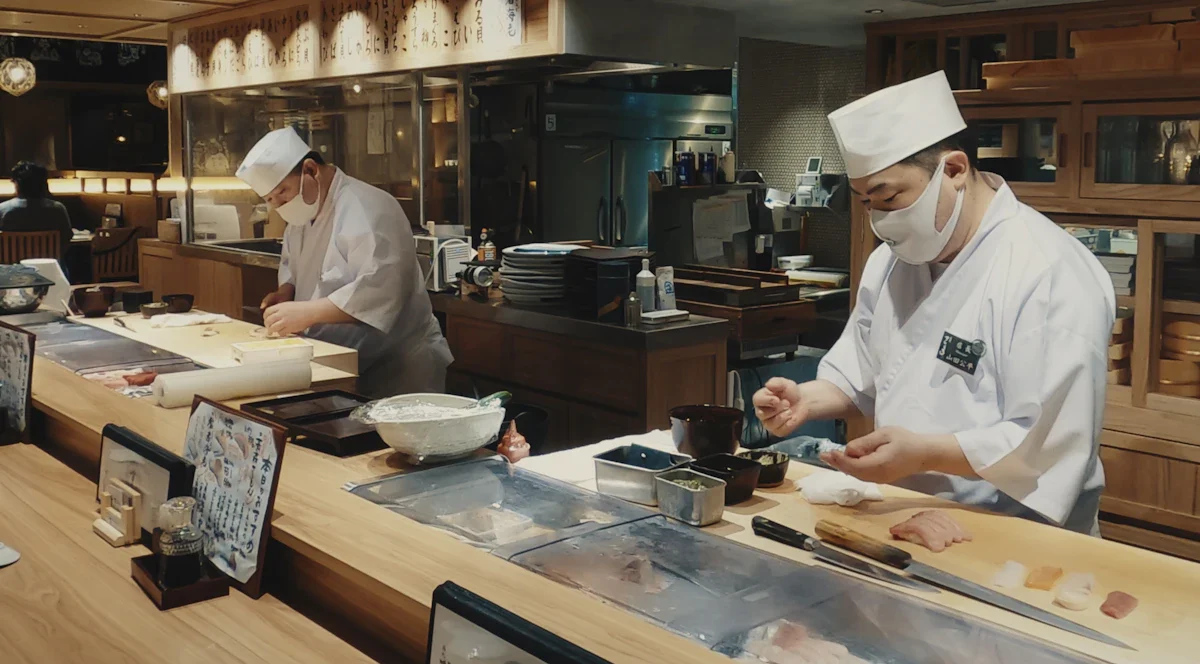
| Omakase | Chef-led set courses at a counter, often with fixed seatings | Highly skilled sushi chefs, premium seafood, reservations and deposits, few seats and a high spend per guest |
| Sushi and sashimi à la carte | Table or counter ordering, sometimes conveyor or tablet ordering | Large raw fish volume, strict cold chain, fast plating and many small items per order |
| Ramen | Short menu, quick turns, often counter seating | Broth production (long simmering), noodle boilers, tight ticket times and good extraction |
| Izakaya | Many small plates and drinks, longer sittings | Grill and fryer stations, a broad drinks list including sake, running tabs and split bills |
| Donburi and bento (fast casual) | Counter, kiosk or QR ordering, takeaway and delivery | High volume, consistent portions, efficient rice production and delivery packaging |
Decide early whether you will serve raw fish at all. A ramen shop or donburi bar that serves only cooked toppings avoids the most demanding part of Japanese food safety. An omakase or sushi concept is built around it.
Raw fish food safety: what SFA says
SFA’s ready-to-eat raw fish page calls RTE raw fish “a high-risk food as it does not go through a cooking process”. It says raw fish has a higher germ count that can increase with poor hygiene, and that eating it also carries a risk of parasitic disease, giving herring worm disease as an example. SFA says importers “should source RTE raw fish from suppliers that adopt proper cold chain management and hygienic handling practices”, and that suppliers and retail food establishments “should also practise proper segregation of RTE raw fish from other raw food intended for cooking”.
SFA’s December 2024 advisory to food business operators gives specific practices for RTE raw fish and seafood:
- Wash hands after touching raw food and before preparing RTE food. Do not handle RTE food with bare hands, and change disposable gloves regularly.
- Operators preparing and selling RTE raw fish dishes such as sushi and sashimi “are also encouraged to adopt the Singapore Technical Reference (TR) 79:2020 Code of Practice for the Preparation of Ready-to-Eat Raw Fish”. It is available to buy from the Singapore Standards eShop.
- “Do not serve thawed frozen oysters as raw oysters.”
- Store or display RTE raw seafood “at below 5°C in chillers or immersed in food-grade ice”, and keep display time as short as possible.
The same advisory covers general practices that apply to every Japanese kitchen: thaw frozen food in a chiller at 0 to 4°C, cook to an internal temperature of at least 75°C for 2 minutes, keep ready-to-eat food out of the 5 to 60°C danger zone for more than 4 hours, store cooked and RTE food above raw food, and colour-code utensils for RTE and non-RTE food.
No raw freshwater fish
SFA’s page on GBS and raw freshwater fish explains that a 2015 outbreak was linked to raw Asian bighead carp and snakehead, and that this “led to a ban in the use of raw freshwater fish in all RTE raw fish dishes in Singapore with effect from 5 December 2015”. Check that every fish on your raw menu is a saltwater species.
Parasites
SFA names parasites as a risk but its public pages do not set out a specific treatment method for restaurants. Ask your supplier in writing how the fish has been handled for raw consumption and whether it is sold as suitable for eating raw, and use TR 79:2020 as your reference. Your food safety consultant can help you build this into your food safety plan. Every food handler also needs WSQ Food Safety Course Level 1 and registration with SFA; see our SFA inspection guide for what inspectors check.
Sourcing Japanese ingredients
Many Japanese restaurants want fish flown in from Japanese markets, along with Japanese rice, seasonings and sake. You can buy these from licensed importers, or import them yourself. SFA says traders must be licensed or registered to import food for commercial sale, with a permit for every consignment. Seafood falls under the Meat and Fish Products licence, and some items are classed as high-risk: for example, SFA only allows live oysters from listed sources, which include specific Japanese prefectures, and frozen oysters need a health certificate stating they are “free of norovirus”. Pufferfish can only come from SFA-accredited establishments. Our guide to the SFA food import licence covers the licence, TradeNet permits, fees and when importing directly makes sense.
For most new restaurants, a licensed importer is the practical starting point. When choosing one, ask:
- Which fish they sell as suitable for raw consumption, and how it is handled and stored.
- Delivery days and cut-off times, since omakase menus often depend on specific arrivals.
- How they maintain cold chain from airport to your door.
- Whether they can provide origin and batch details for traceability.
Keep supplier invoices and delivery records. If a batch is ever recalled, you need to know when it arrived and which dishes used it.
Kitchen and counter equipment
Beyond a standard commercial kitchen (see our kitchen equipment list), Japanese concepts usually need some specialist items. Your exact list depends on the concept:
- Sushi display chillers (neta cases) on the counter, to keep cut fish below 5°C in view of guests.
- Separate chillers or zones for RTE raw fish and raw food for cooking, in line with SFA’s segregation guidance.
- Commercial rice cookers and rice warmers, sized for peak service. Sushi rice, donburi and bento all depend on consistent rice.
- Ramen stations: noodle boilers with portioned baskets, stock pots and burners for long-simmered broth, and chilled storage for tare and toppings.
- Grills and fryers for yakitori, robata, tempura and katsu. Charcoal grills need landlord approval and proper extraction.
- Knives and boards: colour-coded boards and dedicated knives for raw fish.
- Ice machines for food-grade ice to hold seafood and for drinks.
- Sake and drinks storage, including chilled storage for sake that needs it.
Ramen broth and grills add heat, steam and fumes. Plan extraction and grease traps early, and check exhaust risers before you sign a lease. Our renovation checklist covers SFA layout approval and landlord requirements.
Licences: Food Shop Licence and sake
You need an SFA Food Shop Licence, applied for on GoBusiness with a layout plan, which SFA lists at $195 a year on its fees page. Our Food Shop Licence guide walks through it.
For sake, shochu, whisky, highballs or beer, you need a liquor licence. SPF’s licence classes page lists these for drinking on the premises:
| Class | What it covers | Hours | Fee per year |
|---|---|---|---|
| 1A | All liquor, including beer, consumed on the premises | 0600 to 2359hrs | $880 |
| 1B | All liquor, including beer, consumed on the premises | 0600 to 2200hrs | $660 |
| 2A | Beer only, consumed on the premises | 0600 to 2359hrs | $460 |
Sake is not beer, so an izakaya or sushi bar with sake needs a class that covers all liquor. Apply through GoBusiness and check current fees on SPF’s page. Our guide to opening a bar covers liquor licensing in more depth. If you plan to import sake yourself, Singapore Customs lists intoxicating liquors as dutiable goods, so duty and GST apply on import.
If you plan a distinctive restaurant name or logo, consider registering a trademark before you print signage.
Hiring skilled Japanese chefs
Sushi and omakase depend on chefs with years of fish-cutting and rice skills, and those chefs are in demand. Ramen and donburi concepts can train staff to a system more quickly, which makes them easier to scale. Our ramen shop guide covers broth production, noodles and kiosk ordering in detail. For a smaller hawker-style format, read our guide to opening a noodle stall.
- Head chef first. For omakase, the chef is the concept. Secure them before committing to a lease.
- Foreign hires. Our guide to hiring foreign workers in F&B covers Work Permit sources, quotas and levies, and S Pass salary rules. MOM’s Services Work Permit sources, as set out in that guide, do not include Japan, so a chef from Japan would usually need a different pass, such as an S Pass, if they meet its criteria. Check with MOM before you make an offer.
- Front of house. Staff should be able to explain fish, preparation styles and sake, and handle allergy questions. Fish, crustacea, soy and gluten (soy sauce often contains wheat) turn up across Japanese menus; our allergen guide explains SFA’s allergen list and how to build a menu allergen matrix.
- Language. Mixed-language kitchens are common. ChaChaCha’s POS interface and kitchen tickets can be shown in English or Chinese. For Japanese-language tickets, ask us to confirm.
Menu engineering: omakase vs à la carte
The two models manage food cost in very different ways.
Omakase
A fixed-price set menu lets the chef buy the day’s best fish and use it across courses, which can reduce waste. The risk is no-shows: fish bought for a seating spoils if guests do not turn up. Most omakase counters use reservations with deposits and fixed seating times. Our guide to TableCheck alternatives compares reservation tools that take deposits. Cost the full course, not individual items.
Hypothetical example, for illustration only: if a 12-course menu uses ingredients that cost you $60 per guest and you price the menu at $200, your food cost is 30%. If one seat of eight is a no-show and the fish cannot be reused, the food cost for that seating rises, because you paid for eight portions and sold seven. Use your own supplier prices and portion weights to run this for your menu.
À la carte and izakaya
Many small items mean many prices to set and track. Group items by margin: some premium sashimi will run a high food cost and act as a draw, while rice, noodles, fried items and drinks can carry higher margins. Review item sales and margins monthly and remove slow sellers that tie up perishable stock. Our guide to upselling covers add-ons such as extra toppings and sake pairings.
ChaChaCha deducts ingredients by recipe with every sale and gives recipe costing per menu item, which makes it easier to see the true cost of a sashimi platter or ramen bowl when fish prices move. See inventory management.
POS setup for a Japanese restaurant
Match the POS setup to your service style:
- Course pacing (omakase and izakaya). ChaChaCha’s kitchen display system has station routing, order prioritisation and prep timers, so the sushi counter, grill and hot kitchen each see their own items and how long they have been waiting. Coursing with hold-and-fire lets you send each course to the kitchen when the table is ready.
- Modifiers. Ramen noodle firmness, broth richness, extra toppings, “no wasabi”, allergy notes and spice levels all work as custom modifiers that print on tickets or show on the KDS.
- Table management. Izakaya tabs run for hours; table management, tabs and split bills help groups settle at the end.
- QR ordering. QR ordering suits izakaya refills and ramen shops: guests scan, order and pay, which frees staff for service.
- Fast casual. Donburi and bento concepts can use a self-order kiosk with a built-in card terminal, pre-order QR (order, pay, collect), and GrabFood integration via our delivery integration.
- Queues. Popular ramen shops often have queues. The queue system sends SMS notifications and shows a digital queue display.
- Payments. PayNow, PayLah!, NETS, Visa/Mastercard and GrabPay, with split payments.
For reservations, deposits or omakase seating slots, ask each vendor, including us, to confirm in writing what is included. Compare options in our guide to the best restaurant POS systems in Singapore. AppsPOS, which powers ChaChaCha, counts Itacho Sushi among its clients.
Costs and grants
Costs vary too much by concept, size and location to give a reliable figure, so budget by category and get written quotes. Compared with a general restaurant, Japanese concepts often put more weight on:
- Counter build: a sushi counter in quality timber with built-in display chillers.
- Cold chain: chillers, freezers, display cases and ice machines.
- Specialist equipment: rice cookers, noodle boilers, grills and fryers, plus knives.
- Seafood: premium, often air-flown fish, with waste risk on unsold stock.
- Chef salaries: skilled sushi chefs command higher pay.
- Licences: Food Shop Licence ($195 a year per SFA) and a liquor licence.
- Technology: POS, KDS, QR ordering and payment terminals. See our POS cost guide or POS cost calculator.
Enterprise Singapore’s EDGE Grant page says PSG, EDG and MRA are combined into the EDGE Grant from 30 September 2026, with support of “up to 70% for SMEs” that differs by activity. Eligibility conditions apply. AppsPOS has been a PSG pre-approved vendor and is approved under the EDGE Grant. See our grant guide for POS systems, and our restaurant cost guide for wider budgeting.
Opening checklist
- Choose the concept (omakase, sushi, ramen, izakaya or donburi) and decide whether you will serve raw fish.
- Secure your head chef, and check work pass options with MOM if hiring from overseas.
- Shortlist units; check exhaust, grease trap, power and space for a counter and display chillers.
- Submit your layout to SFA for the Food Shop Licence before renovating.
- Apply for the right liquor licence class if you will serve sake or other alcohol.
- Choose licensed seafood suppliers, or get an SFA import licence if you will import directly.
- Buy TR 79:2020 and build raw fish handling, segregation and below-5°C display into your food safety plan. Confirm no freshwater fish is served raw.
- Register every food handler with SFA and train staff on fish, sake and allergens.
- Cost every dish and course; set omakase deposits and no-show rules.
- Set up the POS: menu, modifiers, KDS stations, tables, QR ordering and payments.
- Run mock services to test ticket flow, rice and broth timing and cold holding.
If you would like help planning POS, kitchen display and QR ordering for a Japanese restaurant, contact us. Pricing is quote-based.