Key takeaways
- Open through NEA’s monthly hawker e-Tender ($500 deposit per bid) or rent from a coffee shop or food court operator. SFA lists the Food Stall Licence at $13 a year for hawker stalls and $32 a year for coffee shop and food court stalls.
- SFA says licensed food businesses may only obtain food from other licensed food businesses, so buy fresh noodles, wanton skins and fishballs from licensed suppliers, not home-based makers.
- For bak chor mee, SFA’s guidance is to cook minced meat to at least 72°C, or until it is completely grey-brown, and to keep raw mince cold and use it quickly.
- Noodle stalls live on options: dry or soup, noodle type, chilli level, no vinegar. Write them down as modifiers so orders reach the cook the same way every time.
- Split order-taking from cooking, prepare toppings before lunch, and use a queue system and SGQR payments to keep the line moving.
This guide is general information, not legal or food safety advice. Rules and fees come from NEA and SFA pages as fetched or summarised in our existing guides in September 2026. Check each agency’s current page before you commit money.
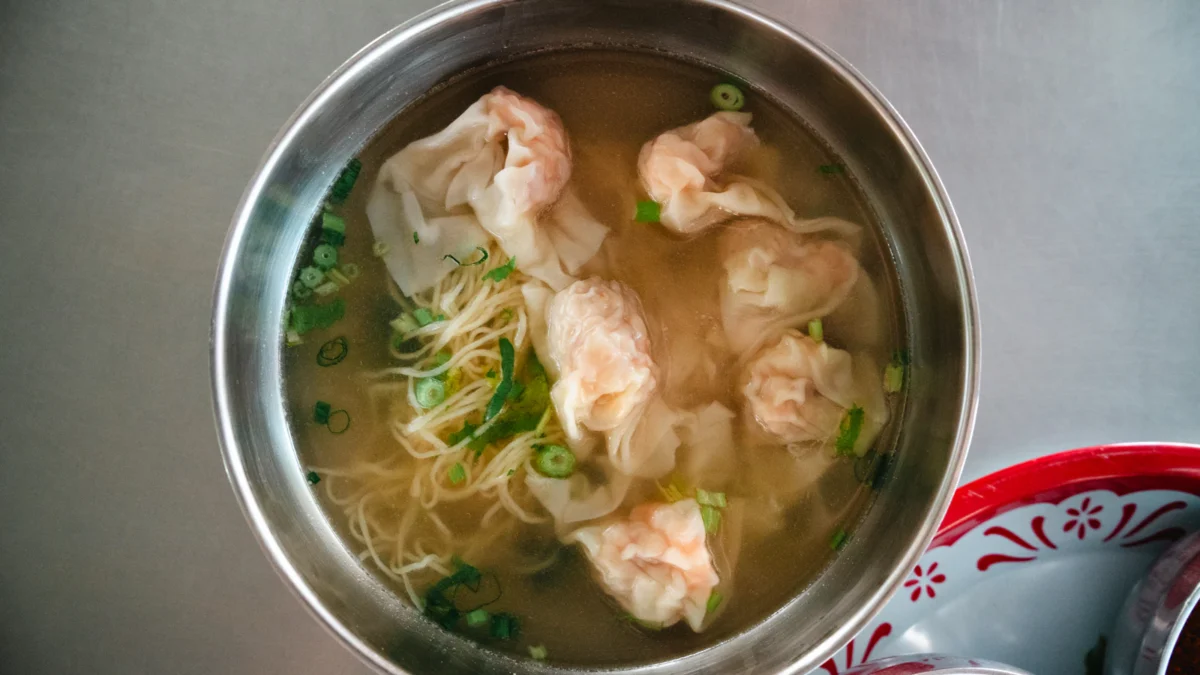
Wanton mee and bak chor mee are lunch staples in Singapore, and a good noodle stall can build a queue that lasts for years. The dishes look simple: blanch the noodles, toss them in sauce, add toppings. The work is in the details customers notice straight away, such as springy noodles, a clear soup, a chilli with character and a sauce balanced with just enough vinegar. Behind the counter, the same stall has to handle raw minced pork safely, cook dozens of bowls an hour, and get a long list of personal preferences right. This guide covers where to open, licences, sourcing noodles, broth and sauces, minced pork safety, equipment, modifiers, lunch speed, pricing, payments and a checklist. If you would rather build a menu around sliced fish and a clear broth, see how to open a fish soup stall. For the general process, start with our hawker stall guide.
Hawker centre, coffee shop or food court
NEA hawker centre stall
NEA rents out vacant stalls in the centres it manages through a monthly e-Tender. As covered in our hawker stall guide, the tender typically runs from the 13th to the 26th of each month and you pay a $500 tender deposit per stall you bid for. NEA’s Becoming a Hawker page says you must be a Singapore Citizen or PR aged 21 or above, among other conditions, and that one person can rent at most two cooked food stalls. Read what each stall may sell in the Tender Notice before you bid. Look at the stall itself too: a noodle stall needs a good sink, enough gas for a boiler running all day, and room for a chiller.
NEA’s Hawker Business Calculator lets you test whether rent, ingredients and bowls per day add up. Run it with a realistic lunch figure and a quiet afternoon, not a single hopeful daily average.
Coffee shop stall
Coffee shop operators rent stalls to individual hawkers, and many like to have one noodle stall in the mix. Ask whether you will be the only wanton mee or bak chor mee stall, what the stall fee covers (water, electricity, gas, cleaning and dishwashing), and whether you collect your own payments. Our kopitiam guide lists what a stallholder agreement should cover.
Food court stall
Mall and office food courts bring steady weekday lunch traffic. Operators usually set rules on menus, prices, opening hours and payment collection, and some run a central payment system. Read the agreement and ask which system you must use before you plan your counter.
Licences and training
SFA’s list of businesses that need a licence and its fees page set out the Food Stall Licence:
| Where you trade | SFA licence | Fee and how to apply |
|---|---|---|
| NEA-managed hawker centre | Food Stall Licence | $13 a year for hawker stalls; NEA helps you apply as part of tenancy administration |
| Centre run by an NEA-appointed operator | Food Stall Licence | You apply to SFA yourself |
| Coffee shop or food court stall | Food Stall Licence | $32 a year; the stallholder applies with the tenancy agreement and IRAS Certificate of Stamp Duty |
NEA says you must hold the Food Safety Course certificate before the Food Stall Licence is issued for a cooked food stall. Everyone who cooks, wraps wanton or handles raw pork should complete WSQ Food Safety Course Level 1, including part-time staff. Our SFA inspection guide explains what inspectors check.
If you later want your own shop rather than a stall, you would need an SFA Food Shop Licence, which SFA lists at $195 a year. Our Food Shop Licence guide covers that route.
Sourcing noodles, wanton skins and toppings
Most noodle stalls buy fresh noodles rather than making them. Mee pok, mee kia, egg noodles and wanton skins usually come from noodle manufacturers that deliver daily or several times a week. The rule that matters is on SFA’s licensing page: licensed food businesses “may only sell or supply food that is prepared on their licensed premises or obtained from other licensed food businesses”, and are not allowed to obtain food, including raw materials and ingredients, from non-licensed businesses such as home-based or online food businesses. So:
- Buy from licensed suppliers. Ask each supplier for their SFA licence details and keep them on file with their invoices.
- Taste and test before you commit. Cook each noodle for your exact timing and sauce, including after it has sat in the chiller overnight. Texture changes between batches and suppliers.
- Agree delivery days and storage. Fresh noodles and wanton skins need chilled storage. Ask the supplier how long each product keeps and how it should be stored, and rotate first in, first out.
- Keep a backup supplier. No noodles means no business that day.
- Bought-in toppings. Fishballs, fish cake, meatballs and char siew are often bought in. If you would rather roast your own, read our char siew stall guide. For a stall built around items like these, see our guide to opening a yong tau foo stall. The same licensed-source rule applies. If you import directly, you need SFA import licences and permits; our SFA food import licence guide explains when that makes sense, which for one stall is rarely.
Buy minced pork, pork bones, liver and prawns from licensed meat and seafood suppliers. SFA’s consumer advice is to buy minced meat from SFA-approved businesses; as a business, check deliveries arrive cold, smell fresh and come in intact packaging, and reject anything that fails.
Minced pork and food safety
Bak chor mee is built on minced pork cooked to order in a small basket or ladle, often alongside liver and meatballs. That makes it a higher-risk dish than it looks. SFA’s page on E. coli O157 in minced meat explains that in minced meat, bacteria can be mixed deep into the meat, where they are protected from heat. Its guidance:
- “Cook minced meat to a temperature of at least 72°C, or when its colour is completely grey-brown”, and use a meat thermometer.
- Store minced meat in the refrigerator below 4°C and use it within two days, or freeze it.
- Use separate utensils and cutting boards for raw and cooked meat, and wash hands before and after handling mince.
SFA’s December 2024 advisory for food businesses adds that food should reach an internal temperature of at least 75°C for 2 minutes, that frozen food should be thawed in a chiller at 0 to 4°C, that cooked and ready-to-eat food should be stored above raw food, and that ready-to-eat food should not stay in the 5 to 60°C danger zone for more than 4 hours.
How noodle stalls put this into practice:
- Portion mince into small containers in the chiller and bring out only what you need for the next stretch of service, rather than leaving a large tray of raw pork on the counter.
- Cook each portion fully in boiling liquid. Break up the mince so no pink clumps remain, and probe a sample at the start of each service and whenever a new cook takes over.
- Treat liver the same way. Slice it thin so it cooks through quickly.
- Keep raw and cooked apart. Use different colours of ladle, strainer and container for raw pork and for cooked toppings, and never put cooked char siew back on a board used for raw meat.
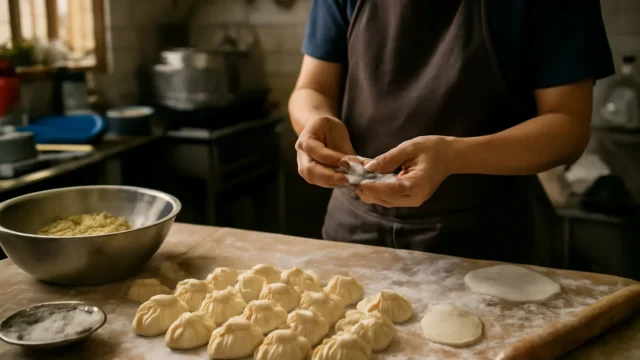
- Wanton wrapping. Wrap wanton in a cool area, chill them straight away, and cook them fully. Frozen wanton should be thawed in the chiller or cooked from frozen.
Broth, sauces, chilli and vinegar
Customers judge a noodle stall on its sauce as much as its noodles. Consistency comes from written recipes and batch prep.
- Soup. Pork bone or anchovy stock is usually simmered for hours before opening. Keep soup for service hot, at a steady simmer. If you make stock ahead, cool it quickly in shallow containers and chill it, because large pots of broth cool slowly and sit in the danger zone for too long. For a pork rib soup concept, see how to open a bak kut teh restaurant.
- Dry noodle sauce. Most stalls use a mix of lard or shallot oil, soy sauces, oyster sauce and seasoning. Measure it with a fixed ladle per bowl, not by eye, so taste and cost stay constant.
- Chilli. Sambal or chilli paste is made in batches. Make amounts you will use, store it covered in the chiller, and date every container. Keep a small working pot at the counter and top it up from the chiller.
- Vinegar. Black vinegar gives bak chor mee its sharpness. Use a squeeze bottle or measured spoon, and decide whether a standard bowl includes it.
- Garnishes. Spring onion, fried shallots, lard crisps and dried sole are added cold. Keep them covered and use a clean spoon, not hands.
You do not need food labels on bowls served at the stall. SFA’s labelling requirements apply to prepacked food, and food prepared when customers place orders is non-prepacked. If you bottle your chilli for sale, that product is prepacked and needs a compliant label, including allergens.
Allergens still matter. Egg noodles and wanton skins usually contain wheat and egg, wanton and prawn toppings contain crustacean, fishballs contain fish, and soy and oyster sauce contain soy and often wheat. SFA’s food allergy page lists the allergens prepacked food must declare, and SFA says businesses should give allergen information on request. Check your supplier labels and keep a simple allergen matrix; our allergen management guide has a template.
Equipment and layout
A noodle stall is built around one piece of kit: the noodle boiler. Plan the rest around the cook’s hands.
- Noodle cooker or boiler with several baskets, so you can blanch more than one bowl at a time, and a burner strong enough to bring water back to the boil quickly after each batch.
- Soup pot on its own burner, kept hot through service.
- Cold water tub for rinsing noodles if your style needs it, with water changed regularly.
- Chopping board and cleaver for char siew, kept for cooked food only, plus a separate board for raw prep.
- Chiller with a thermometer, placed so the cook can reach mince, wanton and garnishes without walking.
- Bowl station: sauce pots, ladles and bowls lined up in the order the cook works.
- Probe thermometer, and a notebook or sheet to record readings.
Check the stall’s gas supply, power, sink and exhaust before you buy. Our commercial kitchen equipment list covers buying questions and maintenance.
Modifiers: dry or soup, chilli, no vinegar
A single noodle dish can be ordered dozens of ways: mee pok or mee kia, dry or soup, chilli or no chilli, more vinegar, no vinegar, no liver, extra wanton, add egg, small or large, takeaway. When the person taking the order shouts it to the cook, mistakes are common, and every remade bowl costs noodles, toppings and time.
Write your options down as a fixed list, then keep them in the same order on your menu board, your order slips and your system. With ChaChaCha’s custom modifiers, you can set up groups such as noodle type, dry or soup, chilli level, vinegar, size and add-ons such as extra wanton on each dish, so the cashier picks options instead of typing notes. Orders print on kitchen tickets in English or 中文 in the same layout each time, and if you run two cooks or a separate soup station, the kitchen display system routes each order to the right station.
Keep the menu short. Two or three core dishes done well, in two sizes, with a handful of add-ons, is easier to cook fast and easier for customers to order.
Speed during the lunch rush
A popular noodle stall can have 20 people waiting at 12.15pm, and the boiler is the bottleneck. Ways to keep it moving:
- Split the jobs. One person takes orders and payment, another cooks. The cook should not handle money.
- Prep before the rush. Wanton wrapped, char siew sliced, sauces portioned, garnishes ready and mince in small containers.
- Batch similar orders. Blanch several portions of the same noodle together and plate them in a line.
- Use a queue system. ChaChaCha’s queue system sends SMS notifications and shows numbers on a digital queue display, so customers can sit down instead of standing at the stall. Our queue management comparison covers other options.
- Let office regulars pre-order. With QR pre-ordering, customers order and pay on their phones, then collect when the bowl is ready. See QR ordering.
Pricing and payments
Pricing noodles at hawker price points
Noodle bowls are heavily compared on price, so know your cost per bowl and per add-on before you set prices.
Hypothetical example, for illustration only: a standard bak chor mee uses fresh noodles ($0.30), minced pork ($0.60), liver and a meatball ($0.40), sauce, vinegar and lard ($0.20), chilli and garnish ($0.10), soup ($0.10) and gas ($0.10). The bowl costs $1.80. At a hypothetical $5.00, that is 36% of the price before rent, labour and utilities. A large bowl that adds $0.60 of cost needs to carry at least that much extra in price, and a takeaway container and bag might add $0.20. Use your own supplier prices and weigh real portions; these numbers are not market prices.
- Price every add-on. Extra wanton, egg, more noodles and a larger size should each cover their own cost.
- Watch portion creep. A generous extra scoop of mince in every bowl can erase your margin over a month.
- Review prices when pork moves. Our menu pricing guide and recipe costing template explain the method. ChaChaCha’s inventory module deducts ingredients by recipe with every sale and gives recipe costing per menu item.
Payments and POS
Hawker payments need to be quick. An SGQR code lets customers pay by PayNow and many e-wallets from one label. CDC Vouchers are redeemed through the RedeemSG Merchant app; check the scheme’s merchant FAQ for current rules, including that you cannot give cash change on a voucher.
For a one-person stall with a very short menu, SGQR and cash may be enough; our hawker POS vs SGQR guide explains the trade-off, and our hawker POS comparison lists options. A POS starts to help when two people work the counter, when modifiers cause wrong bowls, or when you want sales by hour to plan prep.
ChaChaCha payments cover PayNow, PayLah!, NETS, Visa and Mastercard and GrabPay, with split payments and automated reconciliation. The system keeps taking orders if the internet drops and syncs later. See our hawker POS and food court POS pages. Pricing is quote-based; our grants page explains current support.
Noodle stall checklist
- Choose the route: NEA tender, coffee shop or food court, with the agreement in writing.
- Test the numbers with NEA’s Hawker Business Calculator, using realistic bowls per hour at lunch.
- Complete WSQ Food Safety Course Level 1 for everyone who cooks or handles raw pork, and arrange the Food Stall Licence.
- Line up licensed suppliers for noodles, wanton skins, pork and toppings, with backups.
- Write recipes for soup, dry sauce and chilli, with measured ladles per bowl.
- Set minced pork rules: small portions out of the chiller, cooked through, probe checks recorded, separate utensils.
- Build an allergen matrix from supplier labels for wheat, egg, crustacean, fish and soy.
- Fix your modifier list: noodle type, dry or soup, chilli, vinegar, size, add-ons.
- Cost every bowl and add-on, and set prices.
- Put up an SGQR code, register for CDC Vouchers, and decide whether you need a POS and queue system.
Want to see how noodle modifiers, SMS queue numbers and recipe costing work at a hawker counter? Contact us for a demo, or estimate your setup with the POS cost calculator.