Key takeaways
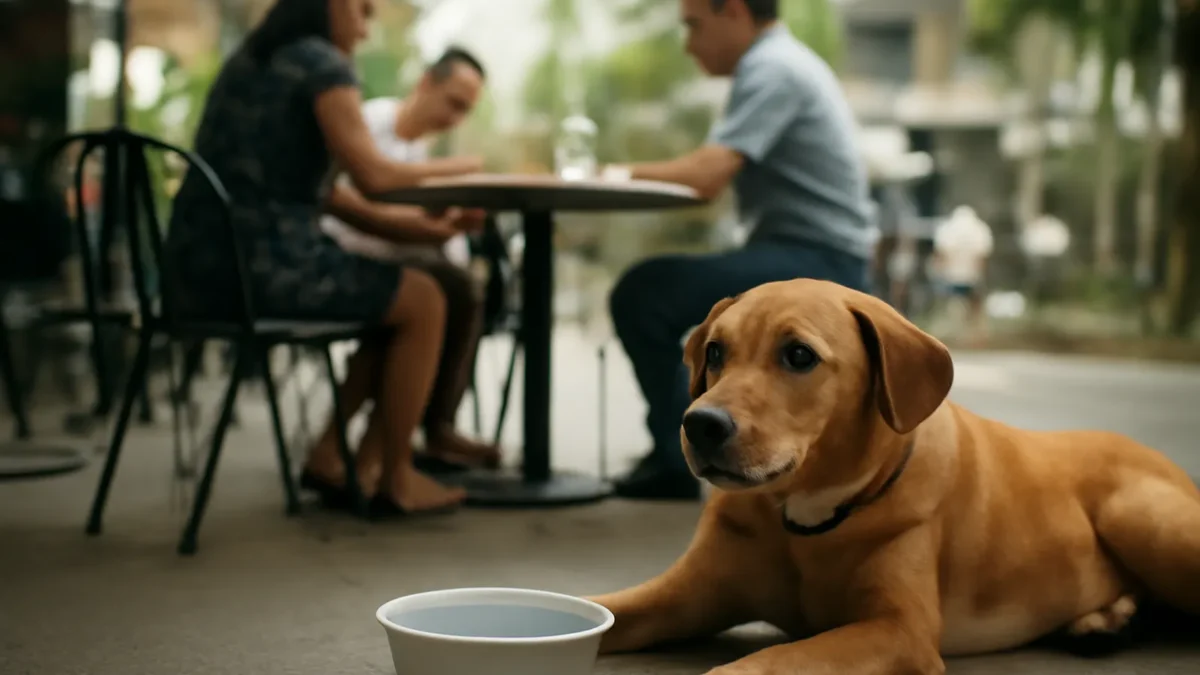
- Since 1 January 2025, SFA says food businesses not serving pet food no longer need extra SFA approval to let diners bring pets to their Outdoor Refreshment Area (ORA).
- Indoors is different. Under the food hygiene regulations, pets are not allowed inside a food establishment unless it holds a pet cafe licence.
- Serving pet food, such as dog treats or pup cups, still needs a pet cafe licence with separate prep areas, utensils and storage. Selling pet supplies as a retailer is a different business; see our guide to opening a pet shop.
- Pets are not allowed at hawker centres or their ORAs, and pet dogs are not permitted at halal-certified premises, including ORAs.
- SFA encourages clear signs, hand sanitisers and directions to a handwash basin. Add your own house rules on leashes, water bowls and cleaning.
This guide is general information, not legal advice. Rules quoted were taken from SFA, MUIS and AVS pages linked below, checked on 28 September 2026. Confirm your own set-up with SFA before you advertise as pet-friendly.
Dog owners in Singapore plan weekends around places that welcome their pets, and they come back when the experience is good. Getting it right means knowing exactly where pets may go, what licence you need and how to keep other diners comfortable. This guide covers the rules and the day-to-day practicalities for restaurants and cafes. If you are still planning the business, start with our guide on how to open a cafe in Singapore.
What the rules say: ORAs versus pet cafes
There are two routes to being pet-friendly:
| Route | Where pets can be | What SFA requires |
|---|---|---|
| Pets at your ORA, no pet food served | Only the Outdoor Refreshment Area | No additional SFA approval from 1 January 2025; good practices encouraged |
| Pet cafe licence | The licensed premises, under the pet cafe conditions | Convert to a pet cafe licence and meet extra pre-licensing requirements |
SFA’s news release of 2 December 2024 says that with effect from 1 January 2025, retail food businesses no longer need additional approval to let patrons bring pets for dine-in at ORAs, if they are not serving pet food. In a 2025 reply to a forum letter, SFA said it had assessed the food safety and zoonotic transmission risks as low.
Indoors is a separate matter. An SFA and Guide Dogs Singapore joint circular explains that under the Environmental Public Health (Food Hygiene) Regulations, live animals such as pets are not permitted in a food establishment, with the exception of pet cafes.
What counts as an Outdoor Refreshment Area
SFA’s guidelines for pets at ORAs define ORAs as refreshment areas outside the main structure of the building or food premises that are not enclosed, even if under shelter. They must be accessible without going through the food premises.
That definition matters in practice:
- A covered but open-sided terrace can count; a glass-enclosed patio is unlikely to.
- If diners with dogs would have to walk through your indoor dining room to reach the outdoor seats, the area may not qualify. Plan a separate entrance or path.
- Your outdoor seating itself needs the right approvals from the landlord and land agency. Our alfresco dining guide covers those approvals, and your lease may have its own rules on animals.
If you are unsure whether your terrace qualifies, send SFA photos and a layout before you promote it.
Where pets are still not allowed
- Hawker centres. SFA says pets are still not allowed at hawker centres and their ORAs island-wide, because they are communal spaces.
- Halal-certified premises. SFA’s release says pet dogs continue not to be permitted at halal-certified premises, including ORAs. The MUIS Halal Certification Conditions for Eating Establishments (version 4.1, effective 9 March 2026) state the same. If you hold or plan to apply for MUIS certification, a dog-friendly terrace is not an option; see our halal certification guide.
- Indoors, without a pet cafe licence. As above.
- Your own pets. SFA says food business operators may not exhibit their own pets within the food premises without prior approval from NParks, as that would contravene the Animals and Birds Act. A resident shop dog or cat needs NParks’ say-so first.
Pet cafe licence: when you serve pet food
Pup cups, dog-safe cakes and treats are popular, but serving pet food changes the licensing. SFA’s requirements page says businesses that intend to serve pet food must convert to a pet cafe licence, because handling human and pet food on the same premises raises cross-contamination concerns. The extra pre-licensing requirements include:
- A separate preparation area for pet food, segregated from human food by a partition.
- Separate utensils and crockery for preparing, cooking and serving pet food.
- Separate cabinets or refrigerators for pet food storage.
- At least one wash hand basin in the refreshment area, with soap, paper towels or a hand dryer, a litter bin, and a delayed-action or sensor tap.
- Prescribed signs at the entrance, dining area and handwash points, using SFA’s exact wording, such as “All pets are to be properly restrained at all times. Dogs are to be leashed at all times.”
Plan these into the layout before renovation, because a partitioned prep area is hard to add later. The general Food Shop Licence process, which SFA lists at $195 a year, is covered in our Food Shop Licence guide.
Setting up a pet-friendly ORA
SFA strongly encourages three good practices for ORAs that welcome pets:
- Enough clear signs telling diners that pets are allowed only in the ORA, so people with allergies or a fear of dogs can choose where to sit.
- Signs directing diners to the nearest handwash basin, so they can wash after touching pets and before eating.
- Enough hand sanitisers at the ORA.
Beyond that, practical touches make the area work:
- Tables spaced so a dog can lie down without blocking the path for servers.
- Leash hooks on table legs and a water station away from the service route.
- A few tables marked as pet-free for diners who want to sit outside without dogs next to them.
- Shade and fans, since Singapore heat affects dogs quickly on hard floors.
House rules for dogs and their owners
Post short, friendly house rules at the entrance and on your booking page. AVS, part of NParks, says on its licensing page that all cats and dogs must be licensed, and that dogs must be leashed and properly supervised and controlled in public. For breeds AVS lists as Specified Dogs, owners must keep the dog leashed and muzzled in public places. Useful house rules:
- Dogs stay leashed and on the floor, not on chairs or tables.
- Pets use the bowls you provide, never the tableware.
- Owners clean up accidents and tell staff so the area can be sanitised.
- Staff may ask owners of aggressive or noisy pets to leave.
Train staff on how to say this politely. Our guide to handling customer complaints helps when a dog and a diner do not get along.
Hygiene and cleaning routines
A pet-friendly area needs its own cleaning routine on top of your normal schedule:
- Staff who touch pets or water bowls wash their hands before handling food or clean plates.
- Water bowls are washed separately from restaurant tableware, in a different sink or basin.
- Floors and table legs in the ORA are cleaned after service, and immediately after an accident, with a disinfectant suitable for the surface.
- Sanitiser stations are checked and refilled each shift.
Write these tasks into your cleaning schedule with a named person and a sign-off. Inspectors look at the whole premises; our SFA inspection guide explains what they check. All food handlers still need WSQ Food Safety Course Level 1, which SFA says is 6 hours of training plus a 1.5-hour assessment.
Guide dogs are different
Guide dogs are not pets. The SFA joint circular says licensees may permit a guide dog accompanying a blind or visually impaired person into the dining area and toilets. Inside, the dog must be kept under control, leashed and not fed unless the premises is a pet cafe. MUIS conditions also allow guide dogs at halal-certified premises on similar terms and add that other diners should not pet them. Brief your staff so a guide dog user is never turned away because of a “pets outside only” sign.
Running it day to day: bookings, tables and the POS
Ask “Will you bring a pet?” on your booking form so you can seat pet owners outside and others away from them. On weekends, a waitlist prevents crowding at the entrance. ChaChaCha’s restaurant POS includes table management and a queue system with SMS notifications, so owners can wait nearby rather than in the doorway. Custom modifiers let staff note pet requests on an order. If you run a pet cafe, pet menu items can sit in their own category, and reports show how they sell. Loyalty with points, stamps and birthday rewards suits regular weekend visitors. For flagging pet-friendly tables on your floor plan, ask us to confirm how it works on your setup.
Planning a pet-friendly terrace? Talk to us about bookings, queues and loyalty for your cafe.