Key takeaways
- An outdoor refreshment area (ORA) is outdoor seating that belongs to your F&B outlet. It needs approval from whoever controls the land, and usually URA planning permission as well.
- On state land, SLA says you need URA planning permission first and then a Temporary Occupation Licence (TOL). SLA’s published ORA rate in the Central sector is $31.30 per square metre a month before GST for the first 100 sqm.
- In malls and private developments, the landlord or management sets the terms. In HDB estates, check with HDB, SLA or the town council, depending on who manages the space.
- Smoking is banned in ORAs except in existing approved smoking corners. NEA’s noise guide says music is not allowed in ORAs without special clearance. Liquor in the ORA stops at the earlier of your licence hours or ORA hours.
Last checked against URA, SLA, HDB, NEA, SFA and SPF pages: September 2026. Rules differ by location, so confirm your exact case with the agency before you buy furniture.
What counts as an outdoor refreshment area
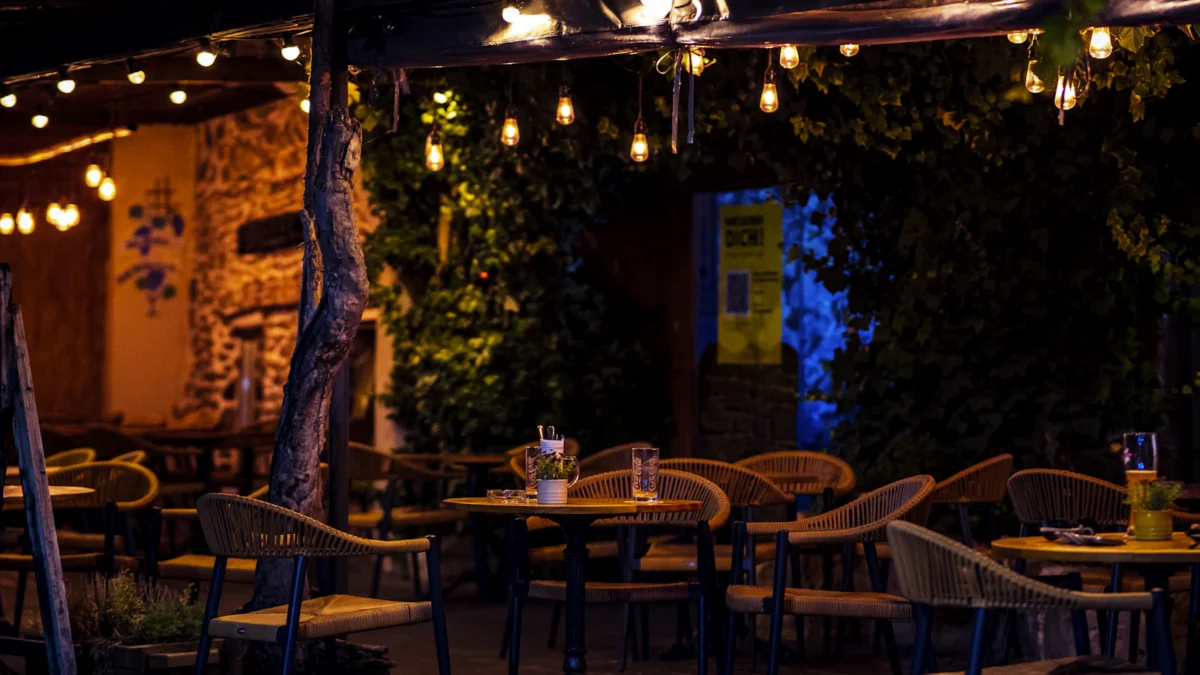
ORA is the term Singapore agencies use for alfresco or outdoor dining space attached to an F&B outlet. URA’s circular on the Singapore River describes ORAs as alfresco or outdoor dining areas. Common examples:
- Tables on a riverside promenade, plaza or open space in front of a development.
- A terrace or rooftop within a private building.
- Seating outside a coffee shop in an HDB estate.
- Tables on a mall’s outdoor frontage or atrium edge.
- A few tables on a shophouse five-foot way or the pavement in front.
The approval route depends on who owns the land under the tables, not on how small the area is. Two tables on state land still need the right permission.
Who approves what
| Where the tables go | Who you deal with | What to expect |
|---|---|---|
| Within a private development (your own lot, a plaza, a rooftop) | URA for planning permission; the building owner or management corporation | ORAs count as gross floor area (GFA). Technical agencies may need to clear the layout. |
| State land (pavements, promenades, open land outside your lot) | URA first, then SLA for a Temporary Occupation Licence | Monthly TOL fee based on area and sector. |
| HDB estates | HDB for your shop and its use; SLA for State land within HDB estates; the town council for common property it manages | Ask who manages the exact spot before you apply. |
| Malls and commercial buildings | The landlord, under your lease or a separate licence | Commercial terms set by the landlord. |
| Any of the above | SFA (licence layout), SPF (liquor), NEA (smoking, noise) | The ORA must fit your other licences. |
ORAs on private property: URA planning
URA’s development control handbook says ORAs are included as GFA. That matters because a building’s GFA is capped. If the development has no GFA left, an ORA may not be possible unless a bonus scheme applies. URA lists three bonus GFA routes:
- LUSH scheme: rooftop ORAs that meet the Landscaping for Urban Spaces and High-Rises guidelines.
- Orchard Planning Area: ORAs next to the Orchard pedestrian mall belt that meet the urban design guidelines.
- Privately-owned public spaces (POPS): ORAs that meet the POPS guidelines.
Along the Singapore River Promenade, URA says the ORA must stay within the development’s boundary, be marked out with items such as planters, and use only retractable awnings fixed to the facade. URA’s 2015 circular on Robertson Quay and Clarke Quay (since superseded, so check the current version) said the size of an ORA is largely set by technical requirements such as fire engine access. It listed clearances from agencies including the Fire Safety Bureau, SLA, NParks, LTA, NEA and PUB.
In practice, the landlord or your architect usually handles the URA submission, because it affects the whole building’s GFA. Ask your landlord early whether an ORA is already approved for your unit, and for how long. URA did not publish a general ORA fee or processing time on the pages we checked. Confirm both with URA or your qualified person.
State land, pavements and five-foot ways
Many alfresco spots sit on state land: the pavement outside a shophouse row, a riverside promenade or open land beside a building. SLA’s State land FAQ is clear: businesses must keep their activities, including seating and display areas, within their own premises. To use state land for an ORA, operators must get URA planning permission first, then apply to SLA for a Temporary Occupation Licence. GoBusiness’s TOL page says applications go through SLA’s TOL portal, and the approved duration is stated on the TOL.
What SLA charges
SLA’s TOL rate table (as at 1 April 2026) lists monthly ORA rates per square metre:
| Sector | First 100 sqm (before GST) | Above 100 sqm (before GST) |
|---|---|---|
| Central | $31.30 psm | $23.30 psm |
| Suburban | $25.70 psm | $19.10 psm |
| Outlying | $21.00 psm | $15.80 psm |
SLA calculates the fee as rate times area, plus GST. On those rates, a 20 sqm ORA in the Central sector would be $626 a month before GST. SLA says it may vary rates case by case, and the rate that applies is the one on the date the TOL starts. The sector depends on the land lot, so check with SLA.
Five-foot ways
The five-foot way in front of a shophouse is a covered public walkway. Do not assume you can put tables on it because it sits in front of your unit. Whether any seating is allowed, and who approves it, depends on the building, the conservation area and the land ownership. Ask URA and SLA before placing furniture there, and keep the walkway clear until you have written approval. Our conservation shophouse guide covers the other rules for these buildings.
HDB estates and malls
HDB shops and coffee shops
SLA’s explainer on temporary state land use says SLA took over management of all State land within HDB estates from HDB on 1 March 2023, including issuing TOLs. HDB still matters for the shop itself: HDB’s January 2026 budget meal revisions refer to a TOL for the ORA of privately-owned coffee shops. Coffee shops that join the budget meal scheme get a discount on that TOL, and must offer budget meals when the ORA TOL is renewed. Common areas such as void decks and corridors may be managed by the town council. Before applying, ask HDB, SLA and the town council which of them manages your spot.
Malls and commercial buildings
In a mall, the outdoor frontage or atrium edge is the landlord’s space. The landlord will usually have its own terms for alfresco seating: rent or a licence fee, hours, furniture standards and cleaning. It may also need to get URA approval for the space. None of this is published centrally. Get the terms in writing before you sign the lease, including what happens if the ORA approval is not renewed.
The SFA licence and your extra seating
SFA licenses the food business, including where customers eat. SFA’s application page says a Food Shop Licence costs $195 and is valid for one year. The layout plan must clearly show the boundaries of the refreshment area. If you plan an ORA, show it on the plan when you apply, or ask SFA how to amend an approved layout later. SFA’s requirements page describes amendment applications on GoBusiness for mini restaurants, for example.
Two other SFA points matter for alfresco dining:
- Pets. From 1 January 2025, outlets that do not serve pet food do not need approval to let customers bring pets when they dine in the ORA. Serving pet food still needs a pet café licence. For cafés built around animals, see how to open a cat café in Singapore.
- Food handling. URA’s Singapore River guidelines say no food preparation is allowed within the ORA there. Plate and garnish in the kitchen, not at an outdoor station, unless your approvals allow it.
Our SFA food shop licence guide walks through the full application.
Liquor, smoking and noise outdoors
Liquor
SPF treats the ORA as part of your licensed premises. SPF’s ORA page says liquor there must stop at the licensed hours or the approved ORA hours, whichever is earlier. If your ORA approval ends before your liquor licence does, move drinkers inside or close the bar outdoors. Our liquor licence guide covers classes and hours.
Smoking
NEA’s food shop smoking rules say smoking is banned in all areas of a food shop, including any ORA, except in smoking corners. NEA stopped accepting applications for new smoking corners on 30 June 2017. Existing corners can stay only until the current licence of that food establishment ends. A new outlet should plan for an ORA with no smoking. Put up clear signs and brief staff on how to ask guests to stop.
Noise
NEA’s noise guide for food shops says music or sound devices should be installed indoors and are not allowed in ORAs without special clearance. Where they are allowed, they should be muted or switched off after 10.30pm. The guide also asks outlets to keep noisy activities such as dragging chairs to a minimum after 10.30pm, fit rubber caps on table and chair legs, and put up signs asking customers to keep their voices down after 10.30pm.
Hours, weather and layout
ORA hours are set in your approval, and they can end earlier than your indoor hours. SPF’s example uses an ORA approved until 11pm. Your approval may differ, so confirm the hours with URA, SLA or your landlord and put them on the staff roster.
Weather is the other constraint. Afternoon heat and sudden downpours can empty an ORA within minutes. Plan for:
- Cover. Umbrellas or awnings, within what your approval allows. On the Singapore River Promenade, URA allows only retractable awnings fixed to the facade.
- Rain moves. A process for moving guests indoors, with spare indoor tables held back on stormy evenings.
- Fans and lighting. Check with the landlord or agency before running cables across a walkway.
- Furniture. Stackable pieces that are quick to bring in at closing, and nothing that blocks a fire access route. Our guide to choosing restaurant chairs, tables and booths includes outdoor furniture.
Outdoor tables are often the first request on a cool evening and the last choice at noon. Track covers by area so you know whether the ORA earns its rent. Our floor plan guide covers spacing, and our table turnover guide shows how to measure how hard each table works.
Running outdoor tables on your POS
Alfresco tables are further from the till and harder to watch. Three things make them easier to run.
Put the ORA on the table map
Add outdoor tables as their own section on the POS table map, numbered to match physical markers. Staff can then see which outdoor tables are open, seated or waiting for the bill. You can also report sales by area and close the section when it rains or when ORA hours end.
QR ordering at alfresco tables
A QR code on each outdoor table lets guests order and pay without waving down staff. That cuts walking and keeps walk-outs down. It also helps at the ORA cut-off: switch the outdoor tables off, or remove alcohol, at the approved time. Our QR ordering guide covers setup.
Handhelds for service outside
Staff taking orders on a handheld send tickets straight to the kitchen and bar instead of walking back to a terminal. Check Wi-Fi coverage at the furthest table, and make sure the POS keeps working if the connection drops outdoors.
How ChaChaCha fits
ChaChaCha, powered by AppsPOS, includes table management, QR ordering (scan, order and pay at the table), split bills and tabs, and a KDS with station routing so outdoor orders reach the right kitchen station. The POS keeps taking orders if the internet drops and syncs later, which matters at the far end of a terrace. Hardware is supplied by AppsPOS as part of a quote-based package; ask us to confirm which handheld devices suit your layout. AppsPOS is approved under the EDGE Grant; see our grant guide, or contact us to plan your floor.