Key takeaways
- Decide the mix early: a retail counter with daily slices and whole cakes, a made-to-order studio for custom cakes, or both. Each needs different space, staffing and cash flow.
- SFA counts bakeries as Food Shops. The Food Shop Licence is $195 a year; a stall inside a coffee shop or food court needs a Food Stall Licence at $32 a year.
- Home-based businesses need no SFA licence, but they cannot sell to licensed food retailers, so you cannot supply cafés from home.
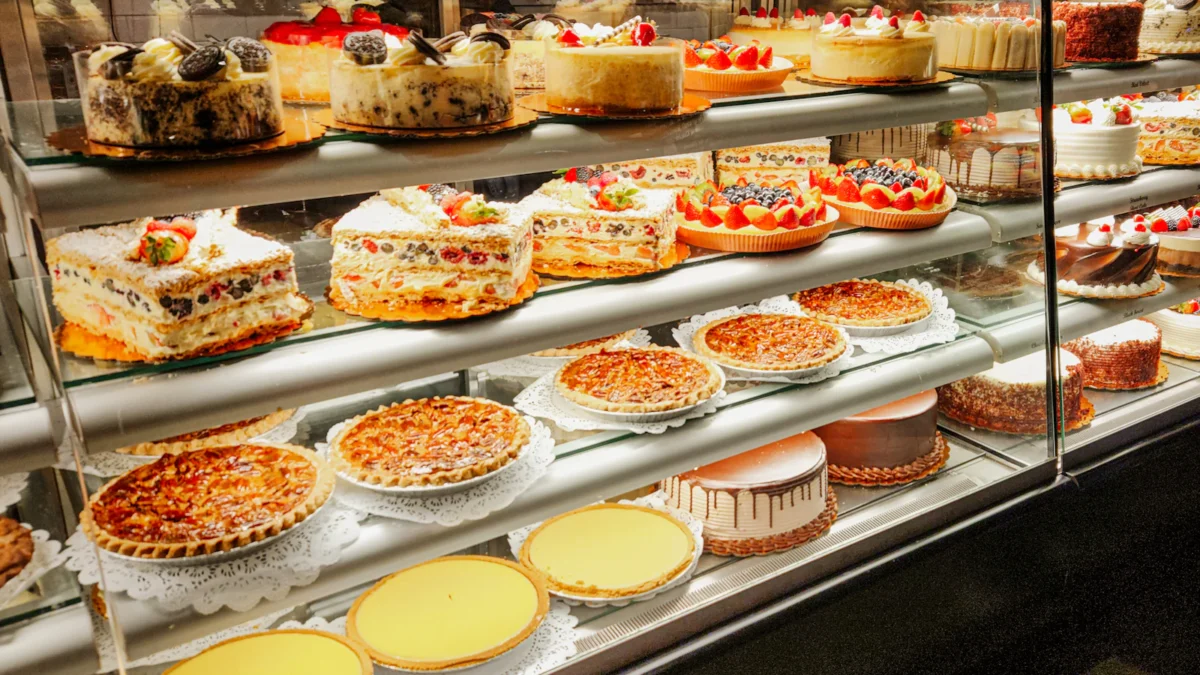
- Cream, custard and fresh fruit cakes need chilled storage and display. SFA advises keeping food not for immediate consumption at 4°C or lower.
- Take custom cake orders with a written spec, collection time and deposit, and track them in one system rather than chat threads.
This guide is general information, not legal advice. Official rules and fees quoted were taken from the agency pages linked below, checked on 28 September 2026. Confirm the current position with each agency before you sign a lease or pay a deposit.
Cakes are a celebration purchase. Birthdays, anniversaries, office farewells and festive gatherings drive most orders, and the customer usually has a date and a picture in mind. A cake shop therefore runs two businesses side by side: a retail counter that sells what is in the chiller today, and an order book for cakes collected later. Our bakery guide covers bread-led shops, and our dessert shop guide covers sit-down dessert cafés. This guide focuses on cakes and patisserie. For fried dough and box pre-orders, see how to open a doughnut shop.
Retail counter, made-to-order or both?
| Model | How it sells | What to plan for |
|---|---|---|
| Retail patisserie | Slices, tarts, entremets and whole cakes from a display chiller | Daily production plan, display chiller, walk-in trade, wastage at closing |
| Made-to-order studio | Custom birthday and celebration cakes ordered days ahead | Order intake, deposits, design approval, collection slots, little walk-in trade |
| Hybrid | A counter for daily sales plus an order book | Production split between both, and a clear cut-off for new orders |
| Café-patisserie | Cakes with coffee and seating | Coffee equipment and table service; see our café guide |
Made-to-order has lower wastage because you bake against confirmed orders, but it depends on marketing and repeat customers. Retail brings walk-in sales and impulse buys, but anything unsold at closing is a loss unless you have a plan for it. Donation is one plan; see our surplus food donation guide for bakeries.
Where to open: home, kiosk, stall or shop unit
- Starting from home. SFA’s home-based business page says home-based food businesses do not need an SFA licence but must follow food laws. They must not offer catering, must not sell to licensed food retailers such as cafés and restaurants, and must not sell at temporary fairs. Many cake makers test demand from home first. Our home-based food business guide covers the rules.
- Kiosk or takeaway counter. SFA’s requirements page lists standalone kiosks and takeaway food carts as Food Shops. A kiosk works for a retail range baked in a separate licensed kitchen, but check where that production happens. For a kiosk that cooks to order, see our waffle and crepe kiosk guide.
- Coffee shop or food court stall. A stall inside a multi-unit Food Shop needs a Food Stall Licence. Space is tight, so this suits a small range rather than full custom work.
- Shop unit. The usual choice for a patisserie with its own kitchen, display and collection counter. Check power for ovens and chillers, and whether the landlord allows the fit-out you need.
SFA licences and fees
SFA’s licence guide lists restaurants, caterers, coffee shops and takeaway kiosks as Food Shops, and its requirements page names bakeries too. The fees page gives these figures:
| Licence | When it applies | Fee |
|---|---|---|
| Food Shop Licence | Your own shop, kiosk or café with its own premises | $195 a year |
| Food Stall Licence | A stall inside a coffee shop, food court or canteen | $32 a year |
| Food Stall Licence (reduced) | Hawker stalls, and canteen stalls in primary and secondary schools and junior colleges | $13 a year |
For a Food Shop, you submit a scaled layout plan showing kitchen equipment, sinks and wash basins, and renovate only after SFA approves it. SFA also says licensed businesses may only sell food prepared on their premises or bought from other licensed businesses, so if you outsource sponges or fillings, buy them from licensed suppliers. Our Food Shop Licence guide covers the application.
Kitchen, chillers and display
A patisserie kitchen is mostly about temperature control and bench space. Typical equipment includes:
- Ovens. Deck or convection ovens sized to your daily bake. Check the power supply before you buy.
- Mixers. A planetary mixer for batters, creams and meringues, plus smaller mixers for small batches.
- Chillers and freezers. Separate space for finished cakes, creams and raw eggs and dairy, plus a blast chiller if you do entremets or mousse cakes. Our guide to commercial fridges and walk-in chillers covers sizing and energy labels.
- Display chiller. The front-of-house showcase. Choose one that holds temperature with the door opening all day.
- Decorating station. Turntables, piping space, and a cool area for chocolate and fondant work.
SFA’s temperature guidance says food not meant for immediate consumption should be refrigerated at 4°C or lower, because 5°C to 60°C is the danger zone for bacterial growth. Cream, custard, mousse and fresh fruit cakes should go straight from assembly into the chiller. PUB says all food establishments need a grease trap (PUB), and SFA’s guidelines require any kitchen hood and duct to be degreased at least once every 12 months (SFA). Our equipment list goes further.
Labelling, allergens and food safety
SFA’s labelling page says labelling rules apply to prepacked food, meaning food packed before it is put up for sale. Food packed loosely on your premises is treated differently, but SFA still expects you to give information such as allergens when customers ask, for example on the menu or a standee. If you pre-pack cookies, cake slices or gift boxes ahead of sale, SFA’s labelling guide lists seven mandatory items in English: name, ingredients including allergens, net quantity, the local business name and address, country of origin, lot identification and directions for use. The last two apply from 30 January 2026. Check with SFA which of your products count as prepacked.
Cakes are heavy in allergens. SFA lists milk, egg, wheat and tree nuts among the most common, and almond flour, hazelnut praline and pistachio are standard in patisserie (SFA). Keep an allergen matrix for every product. See our allergen management guide.
Custom cake pre-orders, deposits and collection
Custom orders are where cake shops lose money quietly: a missed order, a wrong name on the plaque, or a cake nobody collects. Build a clear process:
- Written spec. Size, flavour, filling, design reference, message text, allergies and number of candles, confirmed back to the customer in writing.
- Lead time and cut-off. Publish how many days’ notice you need for each type, and stop taking orders for a date once production is full.
- Deposit. Take a deposit when the order is confirmed and state your cancellation and change policy.
- Collection slot. Give each order a time window so the counter is not flooded on Saturday morning.
- Production list. Print the next day’s orders as a bake and decorate list, and check off each cake as it is boxed.
Online pre-orders for collection reduce back-and-forth on chat and give you a clear record of what was paid.
Menu costing for cakes and slices
Cost each recipe per whole cake, then divide by the number of slices you actually cut. Include the board, box and ribbon, because packaging is a real cost on every whole cake. For custom cakes, add decorating time: a simple message plaque and a sculpted design take very different hours. Food cost percentage is total cost divided by selling price before GST.
Price slices and whole cakes separately. A whole cake sold in advance carries no wastage risk, while a slice in the chiller may end up discounted or thrown away. Our recipe costing template and food waste guide help here. ChaChaCha’s inventory module deducts ingredients by recipe with each sale and gives recipe costing per item.
Manpower: bakers, decorators and counter staff
A cake shop needs production staff who start early and counter staff who handle collections, walk-ins and phone orders. Decorating skill is often the bottleneck for custom work. All food handlers need a valid WSQ Food Safety Course Level 1 (SFA).
If you plan to hire Work Permit holders, MOM’s services sector page says only operators with an SFA Food Shop Licence may employ migrant workers, and food stalls and hawker stalls are excluded. The quota is 35% of your workforce, with a tiered monthly levy:
| Share of total workforce (MOM tier) | Basic-skilled levy per month | Higher-skilled levy per month |
|---|---|---|
| Up to 10% | $450 | $300 |
| Above 10% to 25% | $600 | $400 |
| Above 25% to 35% | $800 | $600 |
See our guides to hiring F&B staff and foreign workers in F&B.
POS setup for a cake shop
- Retail and made-to-order in one system. ChaChaCha’s bakery POS handles counter sales, with custom modifiers for size, flavour, message text and candles.
- Online pre-orders. An online ordering page and QR pre-orders let customers order, pay and collect. For deposits, part-payments and collection-date scheduling on custom cakes, ask us to confirm how your order flow would be set up.
- Kitchen tickets. Orders can print to the decorating station through Epson cloud printing, or show on the kitchen display with prep timers.
- Payments and loyalty. PayNow, PayLah!, NETS, cards and GrabPay, with split payments; loyalty with stamps, vouchers and birthday rewards, which suit a birthday-driven business.
- Delivery. GrabFood integration, and Lalamove for delivering your own online orders.
Compare options in our bakery POS comparison. Pricing is quote-based, and AppsPOS is approved under the EDGE Grant; see our grant guide.
Cake shop opening checklist
- Model chosen: retail, made-to-order, hybrid or café.
- Premises and licence type confirmed; layout approved before renovation.
- Ovens, chillers and display sized to your daily bake and power supply.
- Allergen matrix written; prepacked products checked against SFA’s labelling rules.
- Custom order spec, lead times, deposit and collection policy published.
- Every product costed, including packaging and decorating time.
- POS set up for counter sales, pre-orders and loyalty.
Start-up costs to budget for
Every cake shop is different, so list each category and get written quotes rather than relying on a typical total. The licence fees are from SFA; the rest depends on your unit and model.
| Category | What it includes | Notes |
|---|---|---|
| Licence | Food Shop Licence ($195 a year) or Food Stall Licence ($32 a year) | From SFA’s fees page |
| Rent and deposits | Security deposit, advance rent, fit-out deposit | Negotiate a rent-free fit-out period |
| Renovation | Kitchen works, electrical upgrades, display counter, sinks | Ovens and chillers need adequate power |
| Equipment | Ovens, mixers, blast chiller, chillers, display chiller, decorating station | Often the largest line after renovation |
| Packaging | Cake boards, boxes, ribbons, labels for prepacked items | Budget extra for festive packaging |
| Staff | Bakers, decorators, counter staff, food safety courses | Decorating skill is often the bottleneck |
| Technology | POS, online ordering, payment terminal, label printer | Plan for pre-orders from day one |
| Working capital | Ingredients, wages and rent for the first months | Allow for wastage while you learn demand |
For bread-led shops and central kitchen fees, see our guide to opening a bakery. To estimate the technology line, use the POS cost calculator.
Want to see counter sales and pre-orders in one system? Talk to us for a demo and a quote.