Key takeaways
- Since 1 January 2025, the Good Samaritan Food Donation Act 2024 protects food donors from criminal or civil liability for death or injury from donated food, but only if four conditions are met, according to SFA.
- SFA’s Guidelines for Food Donation list food previously served to consumers, including untouched buffet food, and food past its date mark as not suitable for donation.
- Packaged bread and cakes without cream, custard or meat fillings are generally suitable; bentos, hot food and dairy need extra care with temperatures and time limits.
- Tell the recipient how to handle the food and when to eat it by, and keep records of what you gave.
Last checked against SFA’s food donation page (updated 24 October 2025), SFA’s Guidelines for Food Donation (reissued 31 January 2025) and SG Food Rescue’s website: September 2026. SFA says its guidelines are not an assurance of immunity, so treat this guide as general information.
Why donate surplus food
Every restaurant and bakery ends some days with food it cannot sell. Prevention comes first. Our guide to reducing food waste in restaurants covers ordering, prep and menu design, and our waste management guide covers the rules on segregation and disposal. But some surplus is unavoidable, and donating it is better than binning it.
SFA’s food donation page starts simply: anyone can donate food in Singapore, but food safety is a joint responsibility, and donors must make sure the food they give is safe and suitable to eat. That applies whether you are a small bakery handing bread to a neighbourhood group or a restaurant group with a regular charity partner. Donation also fits into the broader practices in our sustainable restaurant guide.
The Good Samaritan Food Donation Act: what it protects
SFA says that since 1 January 2025, the Good Samaritan Food Donation Act 2024 protects food donors and intermediaries who donate or distribute free food from criminal or civil liability for any death or personal injury resulting from eating donated food. The protection applies only if all four conditions are met:
- The food was not unsafe and not unsuitable when it left your possession or control.
- If the food needed to be handled in a particular way to stay safe, you told the recipient those handling requirements.
- If the food would only stay safe for a limited time, you told the recipient that time limit.
- Before donating, you took all reasonably practicable measures to comply with food safety and hygiene laws when handling the food.
SFA’s Guidelines for Food Donation add that a food donor can be a business, including a restaurant or caterer, giving food away for a charitable or benevolent purpose without receiving money in return. Selling surplus at a discount is not a donation under the Act. The guidelines also say they are guidance only and not an assurance of immunity, so the safest approach is to treat donated food with the same care as food you sell. In SFA’s words: take the same precautions as you would for food that you sell.
What you can and cannot donate
SFA’s guidelines sort food into three groups.
| Group | Examples from SFA’s guidelines |
|---|---|
| Not suitable | Food prepared or reheated at home; food previously served to consumers, including buffet food even if untouched; damaged, swollen or leaking cans; opened or torn packaging; food with an off smell or signs of spoilage; trade show leftovers; animal blood and unpasteurised milk; food past its date mark |
| Generally suitable | Dry goods and non-perishables in intact original packaging; bakery products in a closed bag or carton, not served to the public and not filled with cream, custard or meat; whole fresh fruit and vegetables |
| Suitable with extra care | Pre-packed meals such as bentos; hot prepared food; frozen prepared food, meat or seafood; dairy products |
The buffet rule matters for hotels and restaurants with buffets: food that went out to the buffet line is not suitable for donation, even if no customer touched it. Food held back in the kitchen under proper temperature control is a different case.
The date-mark rule also matters. SFA lists outdated food as not suitable, so keep anything past its use-by, expiry or best-before date out of donations if you want to rely on the Act’s protection.
Bakeries: the easiest place to start
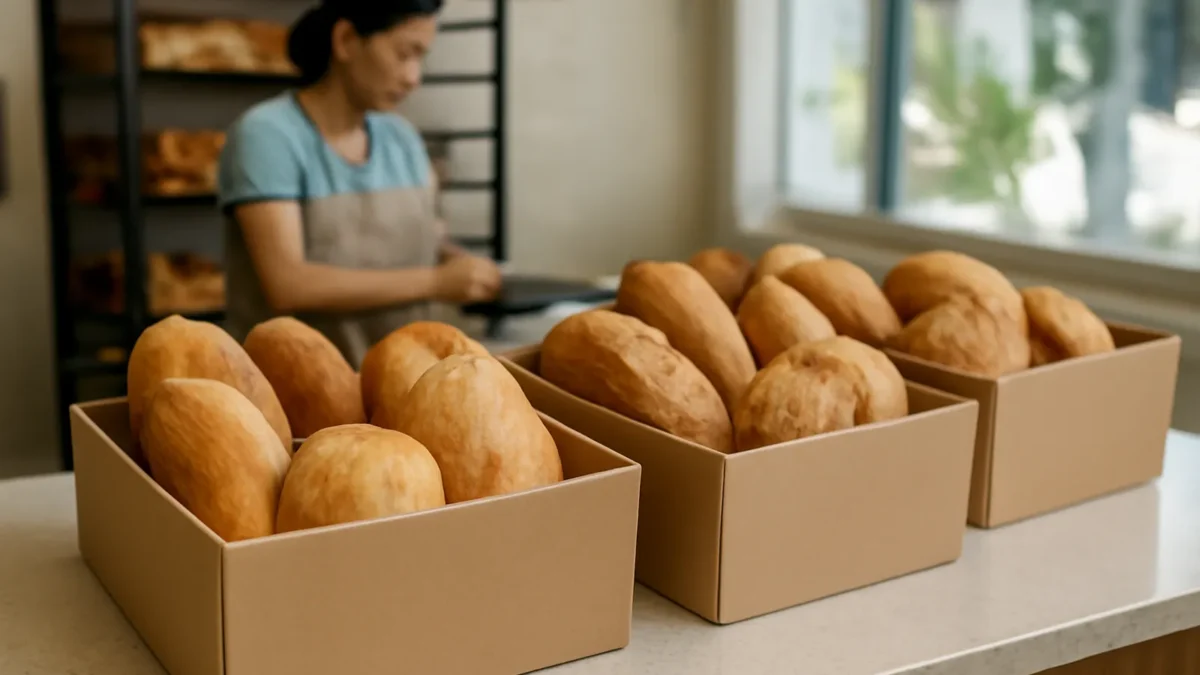
Bread and simple baked goods are among the most donated items, and SFA’s guidelines explain why. Bakery products in a closed bag or carton, not served to the public and not needing time or temperature control, are generally suitable. Its table of checks advises limiting collection to lower-risk baked goods with longer shelf life, such as non-cream cakes, pastries without fillings and plain bread, and verifying the production or expiry date.
For a bakery, a simple routine works:
- At closing, pull unsold plain bread, buns and dry cakes that were never on open display to customers. Keep cream cakes and filled pastries out.
- Bag and label each batch with the product, production date and a consume-by date.
- Store it covered and off the floor until collection the same evening or next morning.
If you are setting up a bakery, build this into your closing checklist from day one. Our guide to opening a bakery in Singapore covers the rest of the set-up.
Restaurants: cooked food, bentos and chilled stock
Cooked food can be donated, but it needs the most care. SFA’s guidelines ask donors to keep frozen food at -18°C or below, chilled food at 4°C or below, and hot food above 60°C. For ready-to-eat or cooked meals, the checks include confirming they are distributed at 60°C or hotter, or, if not eaten immediately, telling recipients to reheat thoroughly to 75°C or above for at least two minutes, once only.
SFA’s footnote on temperature control adds that food kept at room temperature should be eaten within four hours of preparation or cooking. That leaves little time for collection and distribution, so cooked food donations work best with a partner who can collect promptly and hand out food quickly.
Unopened chilled or frozen stock you will not use in time, such as excess dairy or frozen meat nearing its date, can be easier to donate than cooked food, provided it is still within date and kept at the right temperature until handover.
Finding a donation partner
SFA’s guidelines suggest contacting the food charity or food rescue organisation ahead to find out what it can and cannot accept. Partners differ in what they can collect, store and distribute, so ask about cooked food, chilled items, quantities and collection times before you promise anything.
One example is SG Food Rescue, a ground-up group whose operations page describes Veggie Rescue, Fridge Restock and an F&B Rescue programme in which food businesses such as caterers ask the group to collect unsold food. Its contact page says it is fully volunteer-run and may take time to reply, so set up the arrangement well before you need it. SG Food Rescue also runs its own expired food programme; that is separate from what SFA’s guidelines treat as suitable for donation, so keep your own donations within SFA’s list.
Other food charities, community fridges and soup kitchens also accept donations. Ask each one what it accepts, how it handles food safety, and whether it can collect at your closing time.
What information to give the charity and recipients
SFA’s guidelines say that if you donate to a charity or food rescue group, you should be ready to tell its representative, verbally or in writing:
- the source of the food;
- how it was kept free from contamination during storage, preparation and transport;
- how, where and when it was prepared;
- how it was kept at the proper temperature; and
- whether, and for how long, it was out of temperature control.
For recipients, the guidelines suggest details such as food type, condition, expiry date, allergens, storage conditions, reheating instructions and a recommended consume-by period, in language the recipients understand best. A printed label on each bag or tray covers most of this.
SFA also asks donors to use properly trained staff to check food before it goes out, to supervise volunteers, and to keep anyone who is unwell away from handling donated food.
Tracking donations
SFA’s guidelines recommend preparing and keeping delivery notes of food transported and distributed. A simple donation log protects you and helps you cut waste at the source:
| Field | Why it matters |
|---|---|
| Date and time handed over | Shows when the food left your control |
| Items and quantities | Shows what was surplus, so you can adjust production |
| Prepared or production time | Supports the time limit you gave the recipient |
| Temperature at handover (chilled or hot items) | Supports that the food was safe when it left you |
| Handling and consume-by instructions given | Evidence for the Act’s second and third conditions |
| Recipient organisation and person | Traceability if anything goes wrong |
Your sales data does the rest. If the same items appear in the donation log every week, you are overproducing them. ChaChaCha, powered by AppsPOS, gives you item sales reports and recipe-level stock deduction in its inventory tools, so you can compare what you make with what you sell. How donated or written-off items are recorded in stock depends on your set-up, so ask us to confirm. See our bakery POS page for end-of-day routines, or talk to us; pricing is quote-based.