Key takeaways
- Choose a buffet format: self-service line, order-by-tablet (a la carte buffet), hotpot or grill buffet, or a themed or hotel-style spread. Each changes kitchen size, waste and staffing.
- A buffet restaurant needs an SFA Food Shop Licence, listed at $195 a year, with the layout approved before renovation.
- SFA says 5°C to 60°C is the danger zone. Hold hot food at 60°C or higher and cold food chilled, replenish in small batches, and time-stamp trays.
- Price per head by age band and session, set a time limit, and track cost per cover every week.
- Food put out on a buffet is not suitable for donation, according to SFA, so waste control has to happen before food reaches the line.
This guide is general information, not legal advice. Official rules and fees quoted were taken from the agency pages linked below, checked on 28 September 2026. Confirm the current position with each agency before you sign a lease or pay a deposit.
Buffets are popular in Singapore for family celebrations, weekend lunches and group dinners. The model is simple to explain and hard to run well. You set one price, guests eat as much as they like, and your margin depends on how much they eat, how much you throw away and how many seatings you fit in a day. The general steps for opening any restaurant are in our guide on how to open a restaurant in Singapore. This article covers what is specific to a buffet.
Choose your buffet format
| Format | How it works | What to plan for |
|---|---|---|
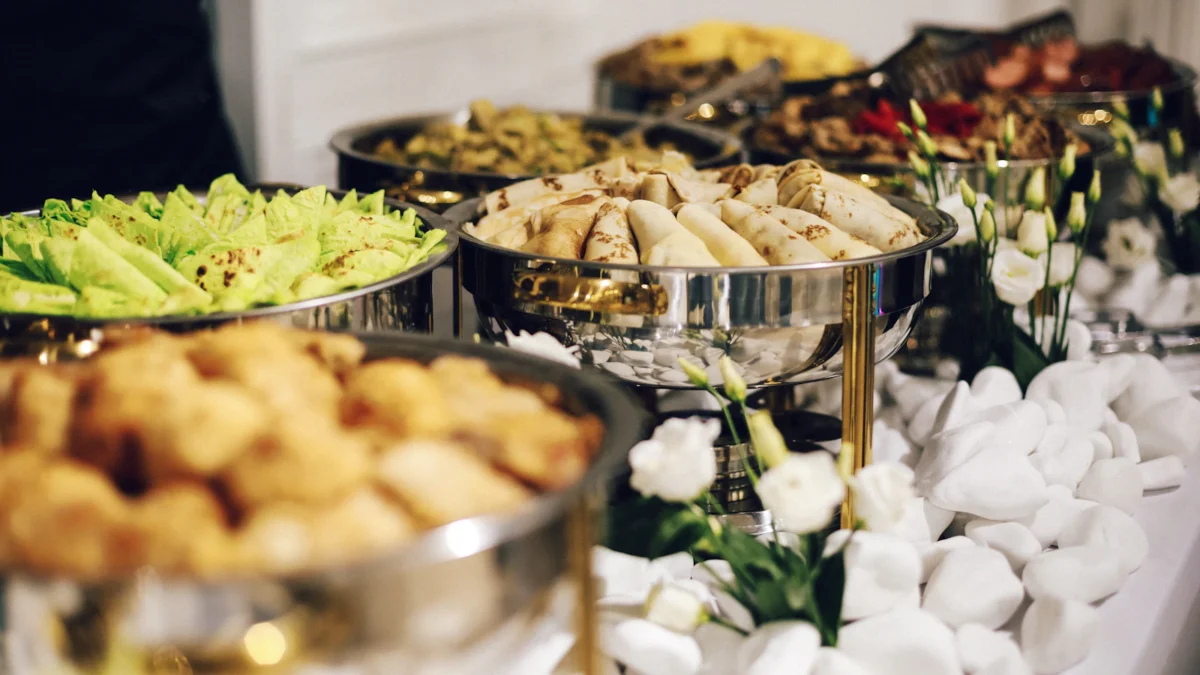
| Self-service line | Guests help themselves from hot and cold stations | Display equipment, constant replenishment, more waste at the end of service |
| Order-by-tablet or QR (a la carte buffet) | Guests order unlimited dishes from their table; the kitchen cooks to order in small portions | Fast kitchen, clear ticket routing, less display waste |
| Hotpot or grill buffet | Guests cook raw meat, seafood and vegetables at the table | Raw food handling, table burners or grills, exhaust; see our hotpot and BBQ guide |
| Themed or international spread | Many cuisines and live stations, often at weekends | Large kitchen, many chefs, higher price per head |
The a la carte buffet has become common because it cuts display waste: food is cooked when ordered, in small portions. A self-service line creates more atmosphere but needs tighter control of what goes out and when.
Licences and premises
SFA’s fees page lists the Food Shop Licence at $195 a year. You apply on GoBusiness with a layout plan drawn to a metric scale, showing kitchen equipment, sinks, wash basins, exhausts and the boundary of the dining area. For a buffet, show the buffet counters and their equipment on the plan. SFA reviews complete applications within 7 working days, and you should renovate only after SFA approves the layout. Our Food Shop Licence guide covers each step.
A buffet needs a large kitchen, lots of cold storage and space for the line or live stations. Check gas, power, exhaust and the grease trap before you sign. PUB says all establishments that handle food need a grease trap (PUB), and NEA’s Code of Practice on Environmental Health requires cooking fumes to be treated with no visible smoke. Fire safety works need SCDF approval with plans from a Qualified Person (SCDF). If you plan to serve beer or wine, see our liquor licence guide.
Food safety on the buffet line
A buffet keeps cooked food out for guests, which is where food safety risk sits. SFA says 5°C to 60°C is the temperature danger zone, and food not eaten straight away should be refrigerated at 4°C or lower or kept hot at 60°C or higher (SFA). SFA’s guidelines for catered buffets are written for functions, but the principles transfer to a restaurant line:
- Four-hour limit. SFA says no food should be kept at room temperature for more than 4 hours from cooking to eating.
- Time stamps. SFA made time-stamp labels or signs mandatory for caterers from 15 February 2012. A time label on each tray in a restaurant helps staff know when to replace it.
- Proper hot holding. SFA notes that the canned fuel under chafing dishes cannot keep food above 60°C. Use heated wells, heat lamps or induction warmers, and check temperatures.
- Small portions, frequent refills. SFA advises displaying small portions of hot food and keeping the rest in warmers until needed.
- Raw apart from cooked. Keep raw food separate from ready-to-eat food, with separate utensils.
Label allergens at each dish. SFA lists milk, egg, fish, crustaceans, soya beans, peanuts, tree nuts and wheat as the most common allergens (SFA). Guests serving themselves cannot ask the chef, so small cards next to each dish help. Our allergen guide has a template. All food handlers need WSQ Food Safety Course Level 1 (SFA).
Per-head pricing and cost per cover
A buffet’s key number is cost per cover: the total cost of food used in a session divided by the number of guests. Price per head has to cover that, plus labour, rent and everything else. This guide gives no market prices; work from your own numbers.
- Age bands. Most buffets price adults, children and seniors differently. Define the ages clearly on the menu.
- Sessions. Lunch and dinner, weekday and weekend, and eve-of-holiday prices often differ because demand and menu differ.
- Premium items. Items such as seafood or carved meats drive cost. Serve them at a station, cooked to order, or limit them per guest rather than leaving them on open display.
- Drinks and add-ons. Decide whether drinks are included. Extras such as alcohol or special dishes add margin.
Track cost per cover by session every week. If a weekend dinner runs over budget, look at which dishes are being eaten most and adjust the mix or the price. Our menu pricing guide covers price changes.
Time limits and table turnover
Most buffets set a dining time, such as a fixed session length, so that tables can be used again. A clear time limit is fairer to guests than being hurried out. State it on the booking confirmation, the menu and at the table, and give a last-order call before the end.
Plan seatings around the time limit. For example, if dinner runs from 6pm to 10pm with a fixed session, you can plan two full seatings per table. Our guide to table turnover rate shows how to calculate it. For a buffet, turnover and cost per cover together decide profit.
Controlling food waste
Waste is the biggest cost leak in a buffet. SFA’s food donation guidelines list food previously served to consumers, including food offered at a buffet even if untouched, as not suitable for donation. So you cannot count on giving leftovers away. Control waste before food reaches the line:
- Forecast covers. Use bookings and past sales for the same session to decide how much to prepare.
- Batch cooking. Cook in smaller batches through service instead of one big batch at the start.
- Smaller trays near closing. Switch to smaller trays in the last hour.
- Measure what is thrown away. Weigh or count what is discarded from each station after service and review it weekly.
- Plate waste policy. Some buffets charge for excessive leftovers. If you do, state it clearly and apply it consistently.
Our guide to reducing food waste has more methods.
Kitchen, staffing and manpower
A buffet needs cooks for production, runners for replenishment and floor staff to clear plates quickly. Live stations add a chef per station. If you hire Work Permit holders, MOM’s services sector page says restaurants count as services and only operators with an SFA Food Shop Licence may employ migrant workers. The quota is 35% of your workforce, with a tiered monthly levy:
| Share of total workforce (MOM tier) | Basic-skilled levy per month | Higher-skilled levy per month |
|---|---|---|
| Up to 10% | $450 | $300 |
| Above 10% to 25% | $600 | $400 |
| Above 25% to 35% | $800 | $600 |
MOM says tiers 1 and 2 will merge from 2028. Our guide to restaurant labour cost covers the rest.
Headcount billing and POS setup
- Headcount at the table. ChaChaCha’s restaurant POS uses table management, so staff can open a table and add adult, child and senior covers as items, with custom modifiers for session and promotions.
- Add-ons and split bills. Drinks and extras go on the same table bill, and split bills handle groups who pay separately.
- A la carte buffet ordering. QR ordering lets guests order dishes from their table, and the kitchen display system routes each dish to the right station with prep timers.
- Time limits. For table timers that show when a session ends, ask us to confirm how it works on your setup.
- Reports. Reports show covers and sales by session, which you need to track cost per cover. Recipe-level stock deduction helps for dishes cooked to order.
Payments cover PayNow, PayLah!, NETS, Visa/Mastercard and GrabPay, with automated reconciliation. Pricing is quote-based; see our grant guide.
- Format and price bands fixed.
- SFA layout approved, showing buffet counters, before renovation.
- Hot and cold holding equipment chosen and tested.
- Time limit, leftover policy and allergen cards written.
- Headcount billing and reports set up before opening.
Want to see headcount billing and QR ordering on your own menu? Talk to us for a demo and a quote.