Key takeaways
- Selling meals you cook to consumers is food retail. SFA lists caterers and takeaway kiosks under Food Shops, which need a Food Shop Licence ($195 a year).
- Supplying meals to gyms, cafés or other food businesses to resell makes you a food processing establishment in SFA’s terms, which needs a different licence.
- SFA says home-based food businesses must not offer catering, which “includes the provision of buffet lines or packed meals”. Check with SFA before running a meal plan from home.
- Prepacked chilled food must carry a date mark such as “USE BY”, at least 3mm high, plus storage directions. Keep chilled meals below 5°C through delivery.
- Claims such as “high protein” or “low fat” must meet HPB’s criteria. Claims that food prevents or cures a condition are prohibited.
Last reviewed: 27 September 2026. This is general information based on SFA and HPB pages. Confirm your set-up with SFA before you start trading.
What a meal prep business is
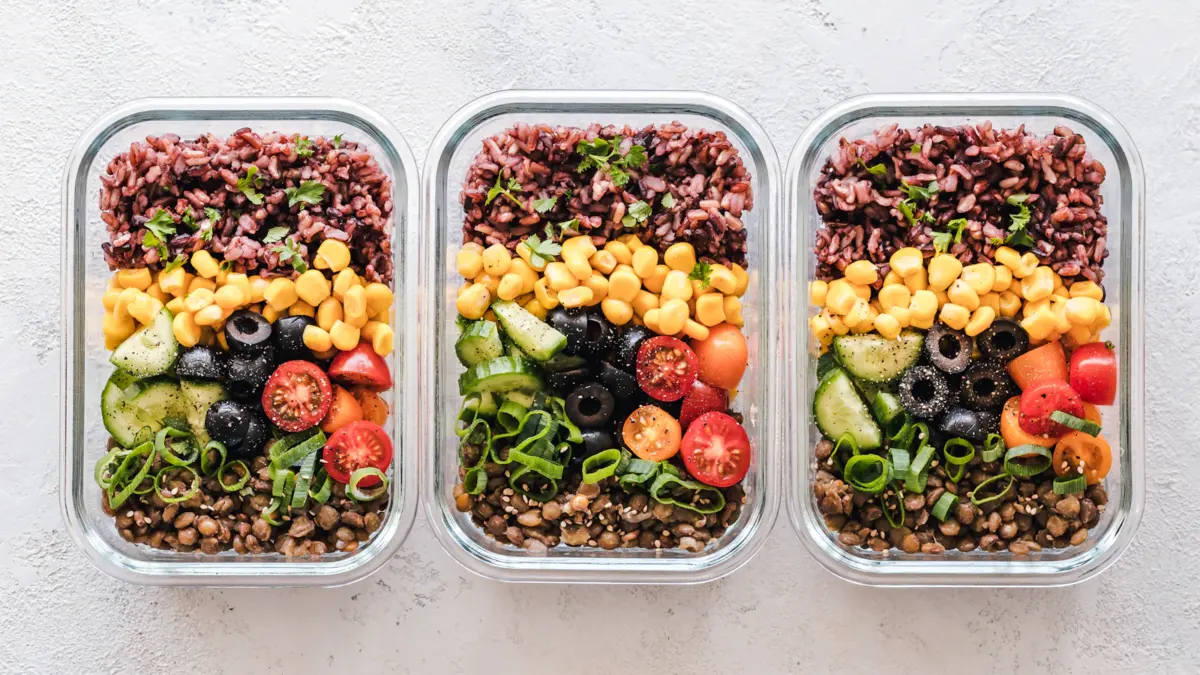
A meal prep business cooks meals in batches, portions them into containers and delivers them, or lets customers collect them, for eating later that day or over the week. Most sell weekly plans of five to ten meals, chilled rather than hot, and many target a specific customer: gym-goers counting macros, busy professionals, families or new mothers.
That model sits between a restaurant, a caterer and a small food manufacturer. Hot daily meal subscriptions are covered in our guide to running a tingkat delivery service. It shares the takeaway side of a restaurant, the volume planning of a catering business and the shelf-life and labelling questions of packaged food. The decisions below follow that order: licence, premises, labels, food safety, then pricing and sales.
Which SFA licence does a meal prep business need?
SFA’s page on businesses that need a licence for food retail says “The activity of preparing and selling food to consumers is known as food retail” and that, in general, you must hold a food retail licence to do it. It lists Food Shops as including “restaurants, caterers, coffeeshops, canteens … food courts and takeaway kiosks”. The Food Shop Licence costs $195 a year. SFA’s pages do not name meal prep as its own category. When you apply on GoBusiness, ask the SFA licensing officer which trade description fits your operation. Our SFA Food Shop Licence guide covers the application.
The line that matters most is who you sell to. SFA’s food manufacturing and storage page states that food retail businesses “are only permitted to sell their food or food products to consumers”. Businesses that supply “their other outlets or other food businesses are considered a food processing establishment, such as a central kitchen”, and need a Licence to Operate a Food Processing Establishment. With that licence, SFA says you can sell to other businesses, such as wholesalers and retailers, as well as consumers.
| Your model | How SFA’s pages describe it | Licence to ask SFA about |
|---|---|---|
| Cook and sell meal plans direct to customers | Preparing and selling food to consumers (food retail) | Food Shop Licence |
| Supply meals to gyms, cafés or offices’ pantries for resale | Supplying other food businesses | Food Processing Establishment licence |
| Both | Selling to businesses and consumers | Food Processing Establishment licence |
This matters for gym partnerships. If you run the gym side, see our guide to opening a gym in Singapore. SFA says retailers that solely sell prepacked food “supplied by SFA-licensed food processing establishments or importers” do not need a food retail licence. If a gym wants a fridge of your meals at reception, it is relying on you holding the right licence.
Starting from home: where the line is
SFA’s requirements for home-based food businesses say they “currently do not require an SFA licence to operate”. But the same page sets limits that bite hard on meal prep:
- Home-based businesses “are not allowed to offer food catering services”, and SFA says “Food catering includes the provision of buffet lines or packed meals”.
- They must not sell food to food retailers, so no gym cafés, cafés or restaurants.
- They must not sell ready-to-eat raw seafood, such as poke with raw fish. To sell poke from licensed premises, see how to open a poke bowl shop.
- They must use legally sourced ingredients.
SFA does not say where a small batch of individual orders ends and “packed meals” catering begins. A weekly plan of boxed meals for many subscribers looks a lot like packed meals, so ask SFA before you sell one from home. HDB and URA also restrict heavy non-domestic equipment, staff and deliveries crowding the lobby. Our home-based food business guide covers those rules. For most meal prep brands, a small licensed kitchen or a shared cloud kitchen is the safer starting point.
Labels, use-by dates and allergens
SFA’s labelling requirements page says labelling rules apply to prepacked food, meaning food “packed in a wrapper or container in advance, before being put up for sale”. Food “prepared upon consumers placing orders, such as … food from a takeaway” is not prepacked. Meal prep falls in between. If you cook to confirmed orders, your meals may be non-prepacked. If you cook stock and sell it from a fridge, they are prepacked. Ask SFA which applies, and label fully either way, because customers will store your meals for days.
For prepacked food, SFA’s Guide to Food Labelling and Advertisements lists seven items that must appear in English:
- Name or description of the food.
- Statement of ingredients, including allergens.
- Net quantity.
- Name and address of the local business responsible.
- Country of origin.
- Lot identification (required from 30 January 2026).
- Directions for use.
Date marking. The guide lists “food which is stored or required to be stored at a chilling temperature to maintain or prolong its durable life” among prepacked foods that must be date-marked. The date must be printed in letters at least 3mm high and must not be altered. “USE BY”, “EXPIRY DATE”, “SELL BY” and “BEST BEFORE” are treated the same under the Food Regulations, and SFA says selling food past its expiry date is prohibited. Where the date depends on storage, you must state the storage direction, such as “Keep refrigerated”.
You are responsible for setting the shelf life. Base it on your own testing and food safety advice, not on what competitors print. For allergens, build a matrix for every recipe, as described in our allergen management guide.
Nutrition and health claims: what you can say
Since 2 May 2024, SFA says nutrition labelling and nutrition and health claims are regulated by the Ministry of Health and the Health Promotion Board. HPB’s nutrition labelling and claims page sets out the rules for packaged food:
- Claims on labels, advertisements and “materials that inform sales” “must not be false, misleading or prohibited” and “must be verifiable based on scientific evidence”.
- To use a claim, check HPB’s list of approved claims and meet its criteria. If you meet them, HPB says you do not need to register or submit lab tests beforehand, but post-market checks apply.
- Prepackaged food carrying a health or nutrition claim needs a Nutrition Information Panel showing energy, protein, fat, carbohydrate and any nutrient you make a claim about.
- Unless specifically permitted, food must not be presented as having “therapeutic or prophylactic action”, or as able to “prevent, alleviate or cure any disease or condition”, or to deliver “an improved physical condition”. Anything that reads as “advice of a medical nature” is also out.
In practice, “high protein”, “low fat” and “reduced sugar” are nutrition claims with defined criteria. Listing calories and macros per meal is useful, but get the figures from a proper nutrient analysis. Avoid lines such as “burns fat”, “lowers blood sugar”, “boosts immunity” or “helps recovery”. HPB’s detailed rules are written for packaged products, and whether they reach non-prepacked meals is not spelled out, so ask HPB. Keep medical-sounding claims off every label, post and menu anyway. For restaurant menus, HPB runs a separate scheme; see our guide to the Healthier Dining Programme.
Cold chain, packaging and delivery
Meal prep food is usually cooked, chilled and eaten a day or more later, so temperature control is the core of the job. SFA’s food safety advisory describes 5°C to 60°C as the danger zone and says ready-to-eat food should not stay in it for more than 4 hours. For meal prep that means:
- Cool fast. Portion into shallow containers and use a blast chiller if you cook in volume, so food spends as little time as possible in the danger zone.
- Keep chilled below 5°C in storage, in the vehicle and at handover. Use insulated boxes with ice packs or a chilled vehicle, and log temperatures at dispatch.
- Follow the delivery standard. SFA’s food delivery page points to Singapore Standard SS 672:2021, which says ready-to-eat meals should be packed in a clean, sanitised area away from raw food, and hot or cold chains “should be maintained, for the duration of the delivery”.
- Tell customers what to do. Print “Keep refrigerated”, the use-by date and reheating instructions on each meal.
Choose packaging that seals well, stacks in a home fridge and can be reheated safely if you tell customers to microwave in it. Our takeaway packaging guide covers materials and suppliers. Delivery can be your own driver, or a courier. ChaChaCha works with Lalamove to deliver your own online orders, and it integrates with GrabFood if you also sell single meals there.
Pricing a meal plan: a costing example
Price each meal from its recipe cost, then add packaging, delivery and payment costs before your margin. The figures below are a hypothetical example for illustration only. Use your own supplier prices and quotes.
| Cost per meal (hypothetical) | Amount |
|---|---|
| Ingredients (from recipe costing) | S$4.50 |
| Container, lid, label and sleeve | S$0.80 |
| Delivery share (S$10 per weekly drop ÷ 5 meals) | S$2.00 |
| Total direct cost | S$7.30 |
| Price per meal in a 5-meal plan at S$70 | S$14.00 |
| Left per meal to cover labour, rent, payment fees, marketing and profit | S$6.70 |
The example shows two things. Delivery is a big cost per meal on small plans, so larger plans or a delivery fee help. And the S$6.70 left must still pay for kitchen rent, staff time, payment fees, wastage and marketing. Work out your monthly fixed costs and how many plans you must sell to cover them. Our food cost guide and menu pricing guide go deeper.
Subscriptions help planning but add risk. Set a clear order cut-off, a pause and cancellation policy, and what happens with missed deliveries. Our guide to subscriptions and meal plans for restaurants covers pricing and prepaid balances. Collect payment before you cook.
Taking orders and payments
Meal prep runs on pre-orders, so your ordering system needs clear cut-offs, collection or delivery slots, and accurate kitchen totals. With ChaChaCha you can:
- Take orders on an online ordering page or mobile app, and use QR pre-ordering (order, pay, collect) for pick-ups.
- Accept PayNow, PayLah!, NETS and Visa/Mastercard, with automated reconciliation. Our PayNow for business guide explains PayNow Corporate.
- Use recipe-level stock deduction and recipe costing, so each order deducts ingredients and you can see the cost of every meal.
- Sell prepaid credit through the e-wallet and stored value feature, and run points, vouchers and WhatsApp campaigns through CRM and loyalty.
- Send kitchen tickets to a kitchen display by station, and sync sales to Xero.
If you want automatic recurring billing for weekly subscriptions, ask us to confirm how that would work for your set-up. Get the same answer in writing from any vendor you compare. Our cloud kitchen POS page covers delivery-first set-ups.
Finding your niche
General “healthy meals” is a crowded pitch. A clear niche makes marketing cheaper and planning easier:
- Fitness. Portioned meals with calories and macros per box, sold through gyms, trainers and fitness communities. Nutrient figures must be accurate, and “high protein” style claims must meet HPB criteria. Supplying gyms for resale needs the food processing licence discussed above.
- Office workers and families. Weekday lunch or dinner plans with reliable delivery windows and simple menus that rotate.
- Confinement meals. A well-known category in Singapore, often ordered for a set period after birth. It needs reliable daily delivery, careful handling for a vulnerable customer and plain descriptions of dishes and ingredients. Do not suggest that meals treat, heal or aid recovery, as HPB prohibits claims that food will prevent, alleviate or cure a condition or give “an improved physical condition”. Take advice on traditional ingredients from qualified people, not marketing copy.
- Dietary preferences. Vegetarian, halal or allergen-aware plans. “Halal” and “gluten-free” are claims with their own rules, so check MUIS certification and SFA’s guidance before using them.
Scaling up, and a launch checklist
Once volumes grow or you start supplying gyms and offices, a dedicated production kitchen may make sense. Our central kitchen guide covers the Food Processing Establishment licence, SFA’s fees, food zones such as JTC’s food hubs, HACCP and laboratory testing. Funding the move? See our F&B business loan guide.
| Step | What to do |
|---|---|
| 1. Model | Decide: direct to consumers, supplying businesses, or both |
| 2. Registration | Register with ACRA; see our registration guide |
| 3. Licence | Food Shop Licence for direct sales; Food Processing Establishment licence if supplying businesses; confirm with SFA |
| 4. Kitchen | Licensed premises with chiller space, blast chilling and a clean packing area |
| 5. Training | WSQ Food Safety Course for food handlers |
| 6. Labels | All seven mandatory items, “USE BY” date at least 3mm high, storage and reheating directions, allergens |
| 7. Claims | Nutrient analysis before any nutrition claim; no medical claims |
| 8. Cold chain | Insulated boxes or chilled vehicle, temperature logs, SS 672:2021 practices |
| 9. Pricing | Recipe costing, packaging, delivery and payment costs; cut-off, pause and refund policies |
| 10. Ordering | Online ordering page, pre-orders, PayNow and cards, kitchen totals by day |
Ready to set up ordering and payments for your meal prep brand? Talk to us for a demo and a quote.