Key takeaways
- SFA says home-based food businesses must not offer catering, which includes packed meals. A tingkat business needs SFA-licensed premises.
- SFA’s Food Shop Self-Checklist sets a minimum 16 sq m kitchen for operations that involve catering, plus vehicle, food safety management and training documents.
- Menu cycles, cut-off times and route density decide whether a tingkat business makes money.
- Cooked food should not sit in the 5-60°C danger zone for more than 4 hours. Plan cooking and delivery times backwards from that.
What a tingkat business is
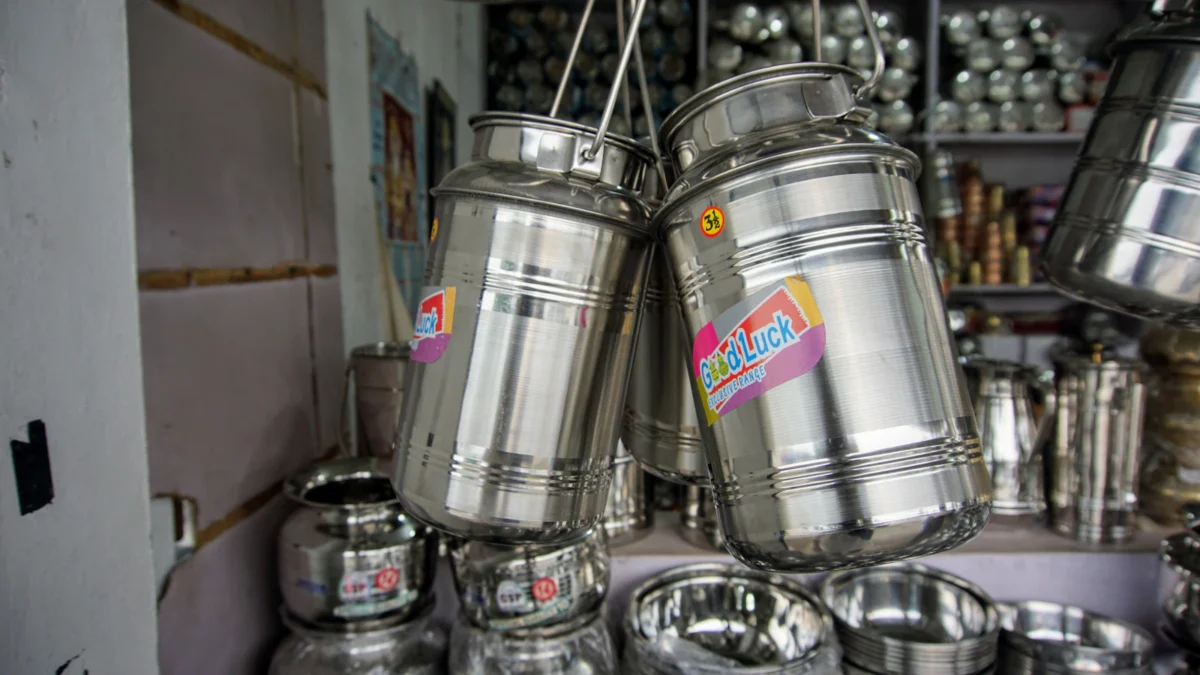
Tingkat meals delivery services send a set of home-style dishes, usually rice, soup, a meat dish and a vegetable dish, to customers on a regular schedule. Customers subscribe by the week or month rather than ordering each meal. The traditional stacked tiffin carrier gave the model its name, although many operators now use disposable or returnable containers.
The appeal for an operator is predictable demand. You know how many meals to cook tomorrow, so buying and prep are tighter than in a walk-in restaurant. The challenge is logistics: cooking a large batch, packing it safely and getting it to many addresses within a short window.
Tingkat sits next to two models we have covered already. A meal prep business sells chilled, portioned meals that customers reheat; a catering business serves events and buffets. Tingkat is daily, hot, family-style food on subscription.
Can you run a tingkat business from home?
No. SFA’s requirements for home-based food businesses say they “must not offer food catering”, and that food catering “includes the provision of buffet lines or packed meals” (SFA home-based food business requirements). Only SFA-licensed businesses may cater, and licensed caterers are not allowed to run catering services from home. Tingkat is packed meals delivered at scale, so it needs licensed premises.
Our home-based food business guide explains what home-based sellers can still do, such as selling baked goods to individual customers. If you are testing a tingkat idea, rent time in a licensed kitchen rather than cooking at home.
The SFA licence and kitchen requirements
SFA’s licensing page lists caterers alongside restaurants and coffeeshops as businesses that need a Food Shop Licence, and notes that catering businesses must be licensed because of the higher food safety risk from their scale (SFA: businesses that need a licence). The Food Shop Licence costs $195 and is valid for one year, and you submit a scaled layout plan showing sinks, wash basins and exhausts (SFA application process).
SFA’s Food Shop Self-Checklist adds requirements that apply to food caterers, in-house kitchens and food shops with catering (Food Shop Self-Checklist):
- Kitchen size. A minimum kitchen area of 16 sq m, excluding the servery, where the operation involves catering (10 sq m otherwise).
- Food Hygiene Officer. A Food Safety Course Level 3 Statement of Attainment for food caterers.
- Delivery vehicle. Photos of the interior and exterior, with the company name, address, contact number and licence number shown on the vehicle body; the vehicle log card or lease; and a vehicle cleaning schedule.
- Food safety management. A process flow diagram and HACCP charts from your FSMS or HACCP plan, identifying critical control points.
- Training or certification. Food Safety Course Level 4 or the WSQ Apply Food Safety Management System certificate if you do not have HACCP certification, or a valid FSMS or HACCP certificate.
- Food handlers. All food workers must pass Food Safety Course Level 1, with a refresher if it was attained more than five years ago.
Confirm with SFA which licence type and conditions apply to your exact model before you sign a lease. Our food safety management system guide explains HACCP plans, and our food hygiene officer guide covers the Level 3 course.
Menu cycles that customers will stick with
Tingkat customers eat your food five or more days a week, so repetition is the fastest way to lose them. Most operators plan a rotating menu cycle:
- Cycle length. A four-week cycle means a customer sees each set about once a month. Shorter cycles are easier to cook; longer ones reduce complaints about repeats.
- Balanced sets. One protein, one vegetable, one soup and rice is the classic format. Rotate proteins so chicken, pork or fish, egg and tofu each appear across the week.
- Dietary tracks. Common options are no-pork, vegetarian, less oil and less salt, or confinement menus. Each extra track adds prep complexity, so start with one or two.
- Batch-friendly dishes. Braises, stews and steamed dishes hold better than crisp fried items that go soggy in a container.
Record each dish as a recipe with quantities, so the cost per set is known and portions stay consistent across cooks. Our recipe costing template helps with that.
Subscriptions, cut-offs and payments
A subscription model only works if the rules are clear. Our guide to coffee passes and meal plan subscriptions covers pricing and GST. Decide and publish:
- Plans. Number of days per week, number of dishes per set and number of people per set.
- Billing. Pay upfront per week or month; a trial week at a slightly higher per-meal price is common.
- Cut-off for changes. For example, pauses and address changes by a set time the day before.
- Public holidays. Whether you deliver, and how skipped days are credited.
- Refunds and pauses. How credits carry over when a family travels.
Collect payment in ways Singapore customers expect. ChaChaCha supports PayNow, PayLah!, NETS, Visa and Mastercard and GrabPay, plus e-wallet or stored-value balances and vouchers, and an online ordering page where customers can order and pay. A stored-value balance suits prepaid plans: the customer tops up, and each delivery draws down. For recurring billing and pause rules specifically, ask us to confirm how we would set it up for you, and get it in writing from each vendor, including us.
Cooking and packing timeline
Because meals are cooked in bulk and eaten later, timing is a food safety issue, not just a service one. SFA’s December 2024 circular says ready-to-eat food should not stay in the 5-60°C danger zone for more than 4 hours, and cooked meat and poultry should reach at least 75°C internally for 2 minutes (SFA advisory). SFA’s temperature guidance notes that large batches, such as stews and gravies, are where bacteria like Clostridium perfringens thrive if food cools slowly, and that rice can carry Bacillus cereus (SFA temperature control).
A practical way to plan is to work backwards from the delivery window:
- Set the latest delivery time for each route.
- Subtract travel time for the whole route, not just the first drop.
- Subtract packing time for the number of sets on that route.
- That gives the time cooking must finish. Cook as close to it as possible and keep hot food above 60°C until packing.
Label each set with the preparation time and a “consume by” time, and tell customers to eat promptly or refrigerate. Our food labelling guide covers what to print.
Delivery routing
Delivery is usually the hardest part of the business to make profitable. What helps:
- Route density. Ten customers in one estate are far cheaper to serve than ten spread across the island. Market by neighbourhood and cap areas you cannot serve on time.
- Fixed windows. A lunch window and a dinner window per area are easier to run than exact times.
- Own drivers or a courier. Own drivers give control and can collect returnable tingkats; on-demand couriers suit overflow and far-flung addresses.
- Containers. Returnable carriers cut packaging cost but need collection, washing and tracking.
ChaChaCha works with Lalamove for delivering your own online orders; our Lalamove guide explains how restaurants book and pay for it. For route planning and scheduled daily drops, ask us to confirm what fits your volume. Our restaurant delivery operations guide covers packing stations and hand-over.
Food safety in transit
SFA says delivery businesses must ensure food is transported in a way that does not compromise food safety, and points to Singapore Standard SS 672:2021 on delivering ready-to-eat food (SFA food delivery requirements). The standard is voluntary, but SFA notes it applies to self-delivery by food outlets too. Its principles include packing in a clean area separated from raw food, and maintaining hot or cold chains for the whole delivery.
In practice that means insulated carriers or hot boxes, clean vehicles on a written cleaning schedule (which SFA’s checklist asks caterers to submit anyway), and drivers who understand not to leave meals in a hot car between drops.
Pricing and launch checklist
Price per set must cover ingredients, packaging, kitchen rent, labour and delivery. Delivery cost per set falls as route density rises, which is why early marketing should concentrate on a few areas. We do not quote market prices here because tingkat prices vary widely by menu and area; check competitors’ published price lists yourself.
- SFA-licensed kitchen of the right size for catering, with an approved layout.
- FHO, Level 1-trained food handlers and a HACCP-based food safety plan.
- Delivery vehicle marked and documented, with a cleaning schedule.
- Four-week menu cycle with costed recipes.
- Published plans, cut-offs, holiday rules and refund terms.
- Payment and ordering set-up, and a delivery route plan by area.
When you are ready to take subscriptions and payments, talk to us about the ordering and payment set-up.