Key takeaways
- Pick two platforms you can keep up with, rather than five you post on once a month. For most Singapore restaurants that means Instagram plus one video-first platform.
- Plan content around a few repeatable pillars (the food, the people, behind the scenes, offers, and your guests) so you are never staring at a blank screen.
- If you invite a food influencer to a tasting, ASAS guidance says the post needs a sponsorship disclosure. Put that in writing before the visit.
- Never offer discounts or freebies in exchange for Google reviews. Google’s policy prohibits it and removes such reviews.
- Measure with unique links, per-channel promo codes and voucher redemptions in your POS reports, not likes alone.
Social media is where many diners in Singapore decide where to eat next: a friend’s Instagram story, a TikTok walking through a hawker centre, a Xiaohongshu note about a new café in Tanjong Pagar. For a restaurant, that is an opportunity and a trap. It is easy to post a lot and learn nothing about whether it brought anyone through the door.
This guide is about the social side of marketing specifically. For the wider picture, including search visibility, partnerships and delivery, see our restaurant marketing guide for Singapore.
Choosing your platforms
We have not quoted usage figures here because platform numbers shift quickly and vary by source. Instead, here is how each platform tends to work for F&B, so you can match it to your audience.
| Platform | How it tends to work for restaurants | Good for |
|---|---|---|
| Photos, Reels and Stories; the profile often acts as a second menu that people check before visiting | Cafés, dessert bars, brunch spots, anything visual; a tidy grid and pinned posts for menu, location and hours | |
| TikTok | Short vertical video with discovery driven by the algorithm rather than followers, so a new account can reach people | Hawker and casual dining, “how it’s made” clips, founder stories, food trends |
| Pages, groups and events; useful for community groups, events and older diners | Neighbourhood restaurants, family dining, catering, event announcements | |
| Xiaohongshu (RED) | Chinese-language lifestyle notes mixing photos and text, often searched like a review site | Outlets popular with Chinese-speaking diners, visitors and newer residents; Chinese menus and bilingual staff help here |
| Lemon8 | Lifestyle posts in a magazine-like, image-and-text format, including food and café guides | Aesthetic cafés and dessert concepts that suit “guide” style posts |
A practical rule: choose one image-led platform and one video-led platform, and repurpose content between them. A 20-second Reel can go to TikTok, a carousel can be adapted into a Xiaohongshu note with Chinese captions, and your Facebook page can carry events and announcements. Keep your Google Business Profile up to date too, since it is often what people see when they search your name; our Google Business Profile guide covers the setup.
Content pillars: what to post
Content pillars are the four to six themes you rotate through. They stop every post being “promo” and give staff a simple brief.
- The food. Signature dishes, new items, seasonal specials, the moment of a pour, a crack or a sizzle. This is the core.
- How it’s made. Prep, the wok, the dough, the 5am stock. People trust food they can see being made.
- The people. Your chef, the uncle who has worked the fryer for 15 years, a new barista’s first latte art. Ask staff for consent before featuring them.
- Guests and community. Reposted guest content (with permission), regulars, nearby office crowds, events you join.
- Offers and news. Set lunches, festive menus, loyalty rewards, opening hours for public holidays. Keep this to a minority of posts.
- Useful information. How to order via QR, where to park, how to book for a group, what is halal-certified or vegetarian if applicable.
When promoting offers, keep the terms clear. The Competition and Consumer Commission of Singapore’s Guidelines on Price Transparency, in effect since 1 November 2020, cover drip pricing, price comparisons, discounts and the use of the word “free”. A “1-for-1” or “free dessert” post should state its conditions, such as days, minimum spend or dine-in only, rather than hide them in a comment.
Filming tips and posting cadence
Shooting on a phone
You do not need a production crew. You do need consistency and a few habits.
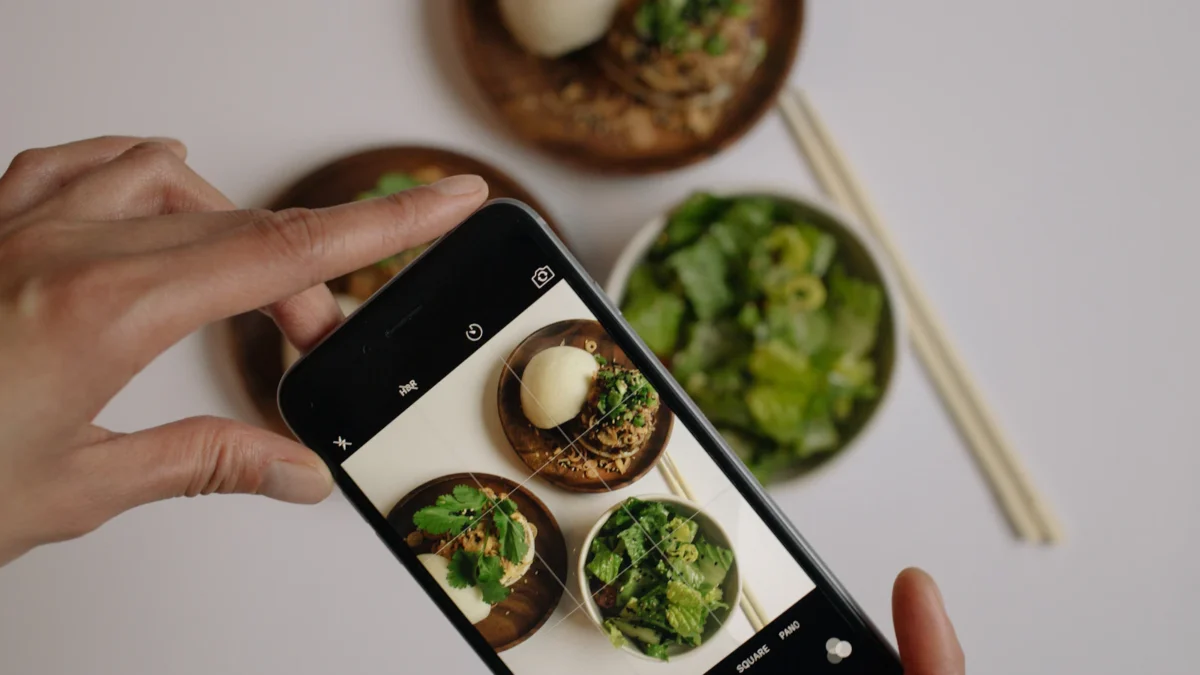
- Shoot vertical (9:16) for Reels, TikTok and Stories. Leave space at the top and bottom for the platform’s buttons and captions.
- Use daylight. Shoot near a window during quiet hours. Turn off overhead lights that cast a yellow tint.
- Hook in the first moments. Start with the most satisfying shot, such as the cheese pull or the flame, and explain afterwards.
- Keep clips short and cut often. Several 1 to 3 second shots usually hold attention better than one long take.
- Add on-screen text and captions. Many people watch without sound. For a bilingual audience, consider English and Chinese text.
- Record clean sound when it matters: the sizzle, the crunch, a short line from the chef. Avoid background music you do not have the right to use; use the platform’s licensed audio library.
- Batch your filming. One hour before service, once a week, can produce a week’s worth of clips.
- Protect guests’ privacy. Avoid filming identifiable diners without their agreement.
How often to post
There is no magic number, and we are wary of figures that claim one. What matters is a cadence you can sustain for months. A realistic starting point for a small team:
- Two to four feed posts or videos a week on your main platform.
- Stories on most service days: today’s special, a sold-out notice, a queue update.
- One repurposed post a week on your second platform.
- Reply to comments and messages within the day, especially questions about hours, bookings and allergens.
If you are short on time, a scheduling tool and an AI assistant for drafting captions can help; see AI tools for restaurants in Singapore. Check every caption before it goes out, particularly prices, dates and dietary claims.
Working with food influencers: disclosure rules
Inviting creators to a tasting can put a new outlet in front of the right audience quickly. It also brings disclosure obligations. The Advertising Standards Authority of Singapore (ASAS) issued Guidelines on Interactive Marketing Communication and Social Media on 29 August 2016; they are read with the Singapore Code of Advertising Practice (SCAP). The key points for restaurants:
- Marketing must be identifiable. The guidelines say marketing communication must be identified as such and distinguished from personal opinion. Where there is a connection between the endorser and the marketer, such as a commercial relationship, complimentary samples or special invitations, it must be fully disclosed.
- Food tastings count. ASAS’s guidance notes say disclosure is required when a client solicits a review by providing a product or service at its own expense, and list “preview events, product launches and food tastings” as examples.
- How to disclose. Disclosures should appear as early as reasonably possible: in the picture or caption for images, visibly within the video for video formats, and audibly for audio. Examples include “This post was sponsored by…”, “I would like to thank (client) for their invitation”, “We were a guest of…”, or, where space is short, “#sponsored”, “#sp”, “#adv” or “#endorsed”.
- No fake engagement. The guidelines say marketers must not boost engagement through fraudulent means, such as buying bulk likes or creating fake accounts, and must not dress up marketer-created content as coming from an impartial source.
- What doesn’t need a disclosure. Per the guidance notes, your own posts on your own channels, platform-labelled boosted posts, and genuine unpaid shares do not need one.
A simple influencer brief
- Choose creators whose audience lives or works near you, not just those with the biggest following.
- Agree in writing: what is provided (meal, fee, or both), deliverables, posting window, disclosure wording, and whether you can reuse their content.
- Give each creator a unique promo code or voucher so you can see redemptions. Our guide to working with food influencers covers briefs, costs and disclosure.
- Let them be honest. Scripted praise tends to read as an ad anyway, and ASAS guidance is clear that the commercial relationship must be shown.
Paid social: the basics
Organic reach is unpredictable, so a small paid budget can make sure the right people see your best content.
- Boost what already works. Put money behind a post that performed well organically rather than a new, untested ad.
- Target by location. A radius around your outlet, or around nearby offices for lunch, usually beats broad interest targeting for a single outlet.
- Pick one objective per campaign: profile visits, messages, or clicks to your online ordering or booking page.
- Test small and compare. Run two versions (different first shot, different offer) for a week, then keep the winner.
- Send people somewhere useful. A link to your menu, pre-order page or online ordering page converts better than a link to your homepage.
Check each platform’s current advertising policies before running food or alcohol ads, as rules for alcohol promotion in particular are stricter.
User-generated content and reviews
Posts by real guests are often more persuasive than anything you make. Encourage them without crossing any lines.
- Make it easy to share. A signature dish that photographs well, a small table card with your handle, good lighting at one or two tables.
- Ask before you repost and credit the creator.
- Don’t pay for reviews. Google’s Maps user-generated content policy says merchants must not “offer incentives – such as payment, discounts, free goods and/or services – in exchange for posting any review”, must not discourage negative reviews or selectively solicit positive ones, and must not pressure guests to leave reviews on the premises. Incentivised reviews are removed. You may ask for genuine reviews without incentives.
- Respond to criticism calmly. A measured public reply often matters more to future guests than the original complaint. See how to handle negative restaurant reviews.
Rewarding loyalty is different from buying reviews. Points, stamps and birthday rewards for repeat visits are fine; tying a reward to a review is not. Our loyalty programme ideas cover schemes that work.
WhatsApp broadcasts: only with consent
WhatsApp is often the channel with the most direct response, because customers actually read it. See how to run WhatsApp broadcasts for a restaurant. It is also covered by Singapore’s data protection and Do Not Call rules. Only send promotional broadcasts to people who have opted in, record when and how they consented, and give an easy way to opt out. Our PDPA guide for F&B businesses explains consent wording and the DNC Registry checks.
Good broadcasts are short, useful and infrequent: a new menu, a festive pre-order deadline, a member-only voucher. Segment where you can, so lunch regulars are not getting weekend brunch offers.
Measuring what actually works
Likes and views tell you whether content is interesting. They do not tell you whether it filled seats. Link social activity to sales:
- Tracked links. Use UTM-tagged links in your bio, ads and influencer posts so your online ordering or booking analytics show which platform sent the visit.
- Unique codes per channel. One voucher code for TikTok, one for Instagram, one per influencer. Redemptions show up in your POS.
- POS reports. Compare sales of a featured dish before and after a campaign, and redemption counts by voucher.
- Ask at the counter. “How did you hear about us?” noted for a fortnight is crude but revealing.
- Review monthly. Keep what brings redemptions and repeat visits; drop what only brings likes.
Where ChaChaCha fits
ChaChaCha’s CRM and loyalty module includes vouchers, points and stamps, stored value, birthday rewards and WhatsApp marketing, so you can issue a code for each campaign, message opted-in members, and see redemptions in the POS reports. With QR ordering and an online ordering page, the link in your bio can go straight to ordering. If you want to know how a specific campaign setup would work in your outlet, ask us to confirm before you launch.
A 30-day content plan
A starting plan for a small restaurant posting on one main platform plus Stories. Swap in your own dishes and events.
| Week | Main posts (3 a week) | Stories and extras | Measure |
|---|---|---|---|
| Week 1: Signature | Hero dish video; how the hero dish is made; chef introduction | Daily special; hours and location pinned; poll “which dish next?” | Profile visits, link clicks |
| Week 2: People and place | Staff feature; “a day at our outlet” video; guest repost (with permission) | Behind the scenes at prep; queue or seating update | Saves, shares, messages |
| Week 3: Offer | Launch a set lunch or member voucher with clear terms; creator tasting post (disclosed); FAQ post on ordering | Countdown to offer end; WhatsApp broadcast to opted-in members | Voucher redemptions by code in POS |
| Week 4: Community | Local collaboration or event; guest favourites carousel; month’s best dish recap | Thank-you post; ask for genuine reviews (no incentives) | Redemptions, new loyalty sign-ups, sales of featured dish |
At the end of the month, compare the codes and reports against the effort each post took, and plan the next month around what worked.
Sources
- ASAS: Guidelines on Interactive Marketing Communication and Social Media, full guidelines (PDF) and guidance notes (PDF)
- CCCS: Guidelines on Price Transparency
- Google: Maps user-generated content policy: prohibited and restricted content
Guidelines and platform policies were checked in September 2026 and can change. This is general information, not legal advice.