Key takeaways
- Kueh is made fresh, early, and mostly sold the same day. Production planning and wastage control decide whether the shop makes money.
- A retail shop needs an SFA Food Shop Licence, listed at $195 a year. SFA says businesses that supply other food businesses count as food processing establishments, which need a separate licence.
- Kueh sold loose over the counter is not prepacked, but boxed kueh sold ready-packed must meet SFA’s labelling rules.
- Chinese New Year, Hari Raya and other festivals can bring large pre-orders. Take deposits, set cut-offs and plan production from confirmed orders. Our Ramadan and Hari Raya guide for F&B outlets covers that season in more detail.
- Keep kueh out of the 5°C to 60°C danger zone for no more than 4 hours, as SFA advises for ready-to-eat food.
This guide is general information, not legal advice. Official rules and fees quoted were taken from the agency pages linked below, checked on 28 September 2026. Confirm the current position with each agency before you sign a lease or pay a deposit.
Traditional kueh, from kueh lapis and ondeh-ondeh to ang ku kueh, kueh salat and kueh dadar, is part of daily life in Singapore. People buy it for breakfast, for tea, for prayers and for festivals. For the café side of local breakfast, read how to open a kaya toast and local breakfast café. A kueh shop can sell direct to customers, supply coffee shops and caterers, and take large festive orders. The general steps for a baked-goods business are in our guide on how to open a bakery in Singapore. This article covers what is specific to kueh.
Choose your kueh business model
| Model | How it works | What to plan for |
|---|---|---|
| Retail shop | Make and sell kueh from your own shop, often with takeaway boxes | Food Shop Licence, display, morning queue, daily wastage |
| Market or hawker stall | Sell kueh from a stall, often alongside other snacks | Limited production space; many stalls buy from licensed makers |
| Wholesale maker | Supply coffee shops, caterers and other retailers | Food processing licence, delivery rounds, standing orders, credit terms |
| Hybrid | Retail shop plus supply to a few trade customers | Check which licences cover both activities |
Many kueh makers start at home. Our home-based food business guide covers what is allowed. Once you open a shop or supply other businesses, you need the right SFA licence. Peranakan kueh also fits well in a sit-down Nyonya restaurant; see our Peranakan restaurant guide.
Licences: retail shop or food processing
SFA’s requirements page lists bakeries and other shops as Food Shops. SFA’s fees page lists the Food Shop Licence at $195 a year and the Food Stall Licence at $32 a year. You apply on GoBusiness with a layout plan, and SFA reviews complete applications within 7 working days.
Supplying other businesses is different. SFA’s food manufacturing licensing page says food retail businesses may only sell to consumers, and businesses that supply food to their other outlets or to other food businesses are treated as food processing establishments, such as central kitchens. Food processing establishments must be licensed before they prepare food for distribution to wholesalers and retailers; SFA gives flour confectionery factories as an example. SFA’s fees page lists an application fee of $147.20 and an annual licence fee for other processed food establishments that starts at $180 for premises below 200 m² and rises with floor area. Confirm with SFA which licence covers your exact mix of retail and wholesale.
SFA also says licensed businesses cannot buy food from home-based or online food businesses (SFA), so coffee shops cannot legally buy kueh from a home kitchen. All food handlers need the WSQ Food Safety Course Level 1 (SFA).
Early-morning production
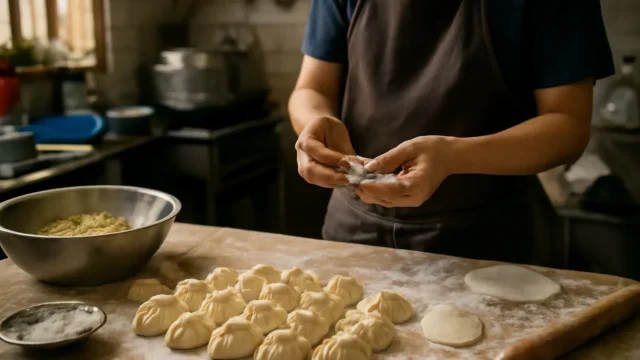
Kueh is at its best on the day it is made, and customers buy early. Most kueh shops start production before dawn so trays are ready when doors open. Plan the morning like this:
- Night before. Soak glutinous rice, prepare fillings such as grated coconut with gula melaka, and check stock.
- First shift. Steam, bake and assemble in an order that suits your equipment: steamed kueh first, layered kueh that need time to set, then quick items.
- Trade deliveries. Pack and send coffee shop orders before the breakfast rush.
- Top-ups. A smaller second batch of best sellers for late morning or afternoon tea.
Use sales by item and day of week from your POS to set production quantities. After a few weeks you will know how many trays of each kueh you sell on a Monday compared with a Saturday.
Short shelf life and food safety
Many kueh are made with coconut milk, fresh grated coconut, eggs or custard fillings, which spoil quickly in Singapore’s heat. SFA says 5°C to 60°C is the temperature danger zone and food not eaten straight away should be refrigerated at 4°C or lower (SFA). SFA’s advisory to food businesses adds that ready-to-eat food should not stay in that zone for more than 4 hours.
- Record when each tray is made and set a sell-by time for display at room temperature.
- Keep custard- and coconut-filled items chilled if they will be held longer, and tell customers how to store them.
- Cool steamed kueh quickly before packing, and avoid stacking warm trays.
- Decide what happens to unsold kueh at closing, and record wastage by item. Our guide to donating surplus food in Singapore covers one option.
How long each kueh keeps depends on its ingredients and handling, so test your own products and set conservative sell-by times. Our guide to reducing food waste covers end-of-day planning.
Labelling and allergens
SFA’s labelling page says labelling requirements apply to prepacked food, meaning food packed in advance before it is put up for sale. Food weighed, counted or packed in front of the customer, or sold loose, is not prepacked, but businesses should still give information such as allergens on request. SFA notes that amended labelling rules took effect on 30 January 2026.
So kueh picked from a tray into a box at the counter is treated differently from gift boxes you pack in the morning and stack on a shelf. Our packaged food labelling guide explains what a label must show. SFA lists milk, egg, peanuts, tree nuts, soya beans and wheat among the most common allergens (SFA). Kueh often contains eggs, peanut fillings, wheat flour or soy, so keep an allergen list for every item.
Festive pre-orders
Festivals are peak season. Nian gao and kueh bangkit for Chinese New Year, kueh for Hari Raya open houses and offerings for prayers can bring orders far above normal trade. Our festive season playbook covers the calendar. For a kueh shop:
- Publish a festive menu with box sizes, prices and a clear order cut-off date.
- Take a deposit or full payment when the order is placed.
- Give each order a pick-up date and time slot, and cap slots to what you can produce.
- Plan production and extra staff from confirmed orders, not estimates.
SFA’s advisory warns that busy festive periods are when hygiene lapses happen, and that working beyond capacity can compromise food safety. Set a cap and stick to it. Our pre-order and pick-up guide covers deposits and time slots.
Wholesale to coffee shops
Supplying coffee shop drinks stalls, caterers and canteens can smooth out daily sales. Before you take trade customers, check the licence point above, then agree:
- Standing daily orders with a cut-off for changes, usually the afternoon before.
- A trade price list that still covers your costs after delivery.
- Delivery windows before the breakfast trade.
- Payment terms and a clear invoicing routine.
- What happens to unsold kueh; avoid sale-or-return deals unless you have priced for them.
Our guide to selling wholesale to cafes and restaurants covers pricing tiers, credit terms and invoices in detail, and our kopitiam guide explains how coffee shops run.
POS setup and opening checklist
- Counter sales. ChaChaCha’s bakery POS handles single pieces, mixed boxes and gift boxes with custom modifiers, and English and 中文 interface.
- Pre-orders. The online ordering page and QR pre-order (order, pay, collect) take festive orders with payment upfront.
- Sales data. Reports by item and day help you set daily production and cut wastage; recipe costing shows the margin on each kueh.
- Payments and loyalty. PayNow, PayLah!, NETS and cards, plus points, stamps and vouchers for regulars.
For trade invoicing and standing orders for coffee shops, ask us to confirm how that is set up. The POS keeps taking orders if the internet drops. Pricing is quote-based, and AppsPOS, which powers ChaChaCha, is approved under the EDGE Grant; see our grant guide.
- Business model chosen, and licence type confirmed with SFA.
- Production schedule and staff hours set for early mornings.
- Sell-by times, storage rules and allergen list for each kueh.
- Labels ready for any prepacked boxes.
- Festive menu, cut-offs and deposit rules published ahead of the season.
Equipment and space for kueh production
Kueh is mostly steamed, with some baked and fried items, and most of it is made before dawn. Plan equipment around your busiest festive week, not an average day.
- Steamers: multi-tier commercial steamers for kueh lapis, kueh salat and ang ku kueh. Steaming capacity usually sets your daily output.
- Ovens: for baked kueh such as kueh bangkit, baked tapioca cake and pineapple tarts at festive times.
- Burners and woks: for cooking fillings such as grated coconut with gula melaka, and for frying.
- Mixers and grinders: for batters and rice or glutinous rice flour if you grind your own.
- Moulds and trays: ang ku kueh moulds, square steaming trays and cutters, with spares for peak days.
- Chillers: for coconut milk, fillings and finished items held longer than a few hours.
- Cooling racks and packing bench: kueh must cool before packing, so allow space away from the steamers.
- Display: covered display trays, with chilled display for custard or coconut items.
Check power, gas, ventilation for steam and the grease trap before you sign a lease. For counter sales, festive pre-orders and daily sales reports, see our bakery POS page.
Want to see festive pre-orders and daily sales reports for a kueh shop? Talk to us for a demo and a quote.