Key takeaways
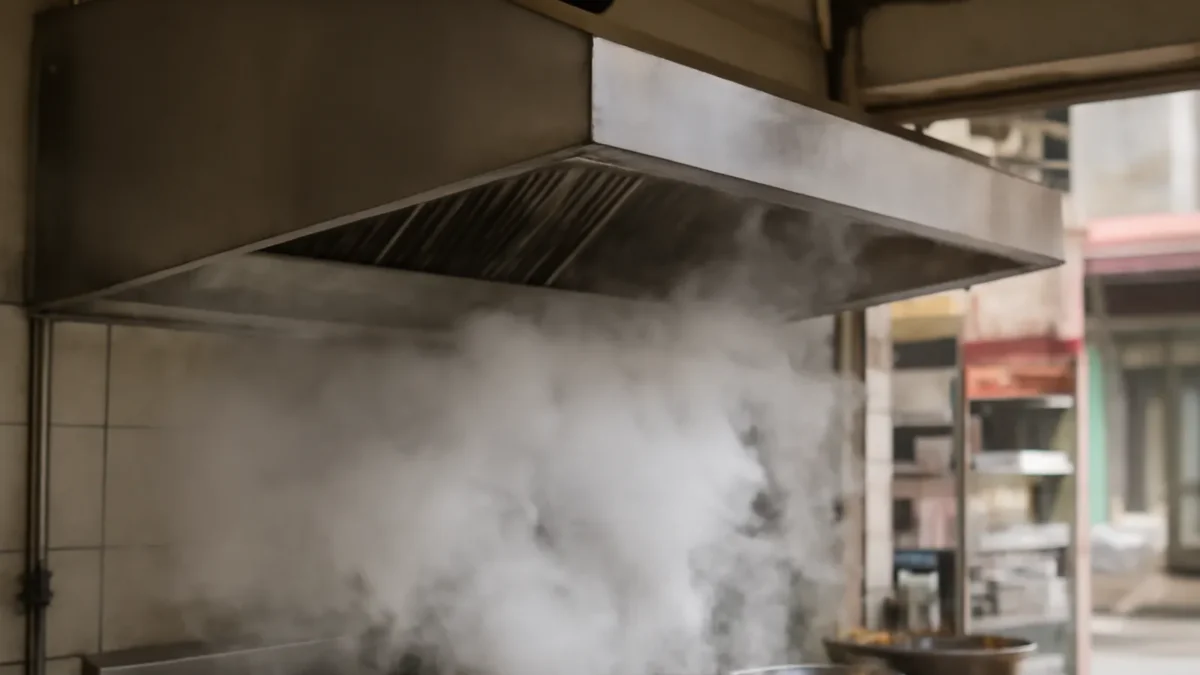
- NEA’s code of practice expects cooking fumes to be treated by an air cleaning system with no visible smoke, and exhausted away from adjacent buildings.
- A dirty or failing exhaust is the usual cause of smoke and smell complaints. SFA expects the full duct and hood to be degreased and cleaned at least once every 12 months.
- For noise, the joint NEA, HDB, SPF and URA good practice guide asks food shops to keep noisy activities to a minimum after 10.30pm.
- Respond to the first complaint quickly, fix the cause, and keep records. Most escalations start with a complaint that was ignored.
Where complaints come from
Restaurants share walls, back lanes and air with homes and offices. The complaints that reach operators, landlords and agencies usually fall into a few groups:
- Smoke and cooking fumes from the kitchen exhaust outlet, especially from woks, grills and charcoal.
- Smells from cooking, grease traps, refuse bins and drains.
- Noise from exhaust fans, compressors, music, guests, crockery washing, deliveries and staff in the back lane.
- Grease and dirt on nearby surfaces, windows and walls.
- Pests attracted by poorly managed refuse.
Late opening hours and outdoor seating raise the risk. Our guides to late-night restaurants and outdoor dining cover those situations in more detail.
Who handles what
Residents do not need to know which agency is responsible. The government’s OneService app was launched to make it easier to submit municipal feedback, and feedback is routed to the relevant agency or Town Council. Depending on the problem and the premises, it may reach:
- NEA, which sets environmental health standards, including the design and operation of kitchen exhaust systems.
- SFA, which licenses food shops and inspects exhaust maintenance, refuse and noise mitigation as part of licensing.
- HDB, as landlord of HDB shops, which sets tenant requirements for exhaust, smell and noise control.
- URA, which decides where restaurant use is approved.
- Your landlord or mall management, which may act under the lease before any agency does.
Whichever route a complaint takes, the fixes are the same: deal with the source.
Smoke and cooking fumes: what NEA expects
NEA’s Code of Practice on Environmental Health (2025 edition) sets out requirements for food shop kitchen exhausts. The key operating requirements are:
- All fumes from the cooking range must be extracted immediately and treated with an air cleaning system that captures particulate matter, grease, oil and water vapour, with no visible smoke and fumes exhausting.
- Treated air is to be exhausted outdoors above the roof. Where that is not practical, an alternative outdoor discharge point may be used, but it must not face adjacent buildings.
At design stage, the code also asks for exhaust ducts and outlets near residential premises to be screened from view, and for outlets to be sited more than 5m from cooling towers. If your outlet discharges towards a neighbour’s windows, that is often the root of the problem, and a better filter alone may not solve it.
NEA’s code of practice for environmental control officers notes that a washable baffle grease filter is commonly used together with other air cleaning equipment: electrostatic air cleaners for smoke, or activated carbon filters or ozone for gaseous pollutants. The right combination depends on your cooking. Ask a qualified ventilation contractor to assess your system against your menu.
Signs your exhaust is the problem
The same NEA code of practice for environmental control officers lists the signs of a poorly maintained kitchen exhaust. They make a useful checklist:
- Smoky air in the kitchen.
- Oil on walls, ceilings and surfaces.
- Foul odour or lingering cooking smells.
- A rattling noise from the fan, or a strange noise when the motor starts.
- Excess moisture build-up.
- Damaged filters.
Maintenance matters as much as design. SFA’s guidelines for licensed food retail premises say the entire exhaust duct and kitchen hood, inside and out, should be degreased and cleaned at least once every 12 months by a specialist, with records kept. SFA officers check the exhaust and ask for the records during inspections. Grease build-up is also a fire risk; our restaurant fire safety guide covers that side. Heavy wok or grill cooking may need cleaning and filter changes much more often than once a year.
Noise: the good practice guide
SFA’s guidelines say licensed food premises must mitigate noise adequately, for example by fitting silencers or attenuators to air-conditioning compressors and exhausts. The Good Practice Guide for Noise Mitigation for Foodshops, developed jointly by NEA, HDB, SPF and URA, sets out practical measures:
- Keep equipment in good working order, and fit silencers or noise attenuators to compressors and exhausts where needed.
- Keep noisy activities to a minimum after 10.30pm, including clanging utensils, washing crockery, deliveries and dragging chairs.
- Keep back doors adjoining residential developments closed, and stop staff and customers from smoking or talking loudly in the back lane.
- Fit rubber caps to table and chair legs.
- Install music and sound devices indoors. They are not allowed in outdoor refreshment areas unless special clearance is obtained.
- In premises that are not enclosed, and in any outdoor area where devices are allowed, mute or switch them off after 10.30pm. Use directional speakers pointed away from homes.
- Put up signs asking customers to keep their voices down after 10.30pm.
The guide notes that authorities may require an operator to engage a noise consultant where warranted.
HDB shops and shophouses
HDB shops. HDB’s Renovation Guide for Shop Tenant/Owner (December 2025) makes eating house and takeaway tenants responsible for installing the grease separator and exhaust, and for maintaining grease traps, exhaust hoods and sewerage pipes, with records produced to HDB on request. Tenants must install and maintain a kitchen exhaust with a smell-control mechanism, such as UV or an electronic air cleaner, and exhaust dampers or silencers for noise control. The duct and hood must be degreased and cleaned at least once every 12 months, or more often under heavy use. The guide also limits outdoor refreshment areas so they are not bigger than the internal refreshment area.
Shophouses. Shophouses often sit next to or below homes. URA’s criteria for restaurant use list locations where a new restaurant is unlikely to be approved, and say change-of-use applications for shophouse restaurants elsewhere are considered individually. If you are taking on a shophouse, plan the exhaust route to roof level early. Our guide to opening in a conservation shophouse covers flues and approvals.
Handling a complaint when it arrives
Whether a complaint comes from a neighbour at the door, your landlord or an agency, respond the same way:
- Acknowledge it quickly. Thank the person, take their contact details and say when you will get back to them.
- Find the cause. Stand where the neighbour stands, at the time they complain. Smell and noise are often worst at particular times, such as the dinner rush or closing.
- Check your records. When was the exhaust last cleaned? When were filters changed? Has anything changed in the kitchen or menu?
- Fix what you can now. Clean filters, move bins, close the back door, turn music down.
- Plan the bigger fixes. Get a contractor’s assessment for exhaust treatment or silencers, with a timeline.
- Report back. Tell the neighbour what you have done. Many complaints stop here.
- Keep a log. Date, complaint, cause, action and outcome. If an agency or landlord follows up, your log shows you acted.
If someone complains in person or online, keep calm and courteous. Our guide to handling complaints covers the conversation.
Preventing escalation
- Introduce yourself to immediate neighbours before you open, and give them a number to call.
- Schedule exhaust cleaning to your cooking volume, not just the annual minimum, and keep the certificates.
- Manage refuse: covered bins, regular collection and a clean bin area. SFA’s guidelines ask for enough covered refuse bins.
- Brief staff on back-lane behaviour, closing noise and deliveries after 10.30pm.
- Plan late deliveries and cleaning to avoid noisy hours where you can.
ChaChaCha, powered by AppsPOS, helps with the operational side. Hourly sales reports show when your kitchen is busiest, so you can time filter changes and closing tasks, and a kitchen display with station routing keeps the kitchen organised. Talk to us about setting up your outlet.