Key takeaways
- Choose between a fast ayam penyet or nasi bakar counter and a sit-down restaurant with a wider regional menu. They need very different kitchens and staffing.
- SFA lists the Food Shop Licence at $195 a year and the Food Stall Licence at $32 a year.
- Decide on halal early. MUIS certification affects suppliers, staffing and whether you can serve alcohol or allow dogs on the terrace.
- Buy specialist Indonesian ingredients from licensed importers, or register with SFA to import them yourself.
- Design for delivery: fried items and sambal travel well if packed separately.
This guide is general information, not legal advice. Official rules and fees quoted were taken from the SFA, MUIS, HPB and MOM pages linked below, checked on 28 September 2026. Confirm the current position with each agency before you sign a lease.
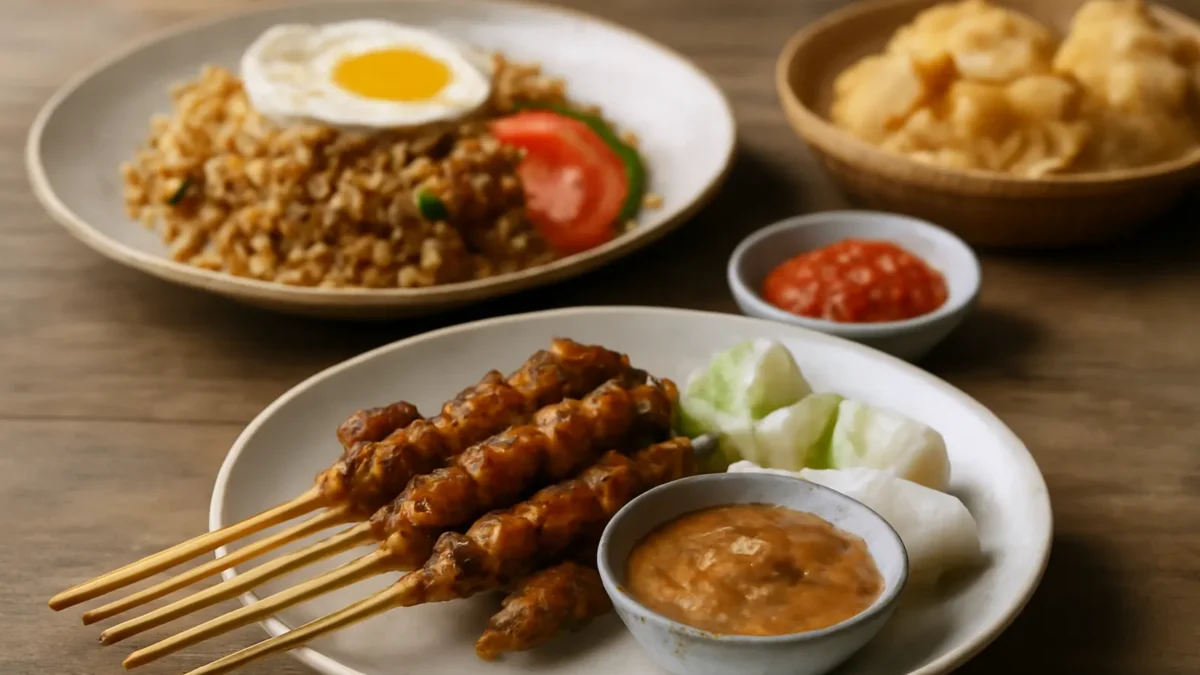
Indonesian dishes such as ayam penyet, bakso, soto ayam, nasi goreng and rendang already have a loyal following in Singapore. The challenge is standing out: the sambal has to be memorable, the fried chicken consistent and the prices right for a crowded lunch market. Weighing Thai food as well? See how to open a Thai restaurant in Singapore. Our guide to opening a fried chicken shop covers fryer capacity and combo pricing. The general steps are in our guide on how to open a restaurant in Singapore. This article covers what is specific to an Indonesian concept. Planning a Filipino menu instead? Read our Filipino restaurant guide. For Nyonya cooking, see our Peranakan restaurant guide.
Choose your format: ayam penyet counter or sit-down
| Format | Typical menu | What to plan for |
|---|---|---|
| Ayam penyet or penyet counter | Smashed fried chicken, fish or tempeh with rice, sambal, tofu and greens | Frying station, fast counter or QR ordering, strong delivery trade |
| Warung-style stall | Nasi campur, soto, bakso, a few rice dishes | Soup and noodle station, small display, hawker or coffee shop rent |
| Sit-down restaurant | Regional dishes: Javanese, Padang, Balinese, Manadonese, sharing plates | Wider kitchen, table service, group dining, possibly a drinks list |
A penyet counter is simpler to systemise: a few proteins, one or two sambals and fixed sides. A regional restaurant needs skilled cooks but can charge more per head. For a display-case Padang concept, see our nasi padang guide.
Where to open
- Hawker centre. NEA runs a monthly e-Tender. Its Becoming a Hawker page says applicants must be Singapore Citizens or PRs aged 21 or above, with a maximum of two cooked food stalls per person.
- Coffee shop or food court. Good for penyet counters near offices and estates.
- Mall unit. Suits family sit-down concepts; check the landlord’s rules on exhaust and frying. Our mall restaurant guide covers leases.
- Shophouse. Suits a regional restaurant with character; check approved use and exhaust routes.
Deep frying and charcoal-style grilling for sate or ikan bakar create smoke and grease. Our guide to opening a satay stall covers charcoal grilling rules. Check exhaust capacity and the grease trap before you sign; our grease trap guide explains PUB’s requirements.
Licences and food safety basics
SFA’s fees page lists the Food Shop Licence at $195 a year and the Food Stall Licence at $32 a year ($13 for hawker stalls). You apply on GoBusiness with a scaled layout plan, SFA reviews complete applications within 7 working days, and you renovate only after approval. SFA’s requirements page says food handlers must meet the WSQ Food Safety Course Level 1 requirement at the point of application.
Two food safety points matter for Indonesian menus. SFA’s December 2024 advisory says to cook meat and poultry to an internal 75C for 2 minutes, which matters for thick pieces of fried chicken, and not to keep ready-to-eat food between 5C and 60C for more than 4 hours, which matters for pre-fried items and fresh sambal. SFA also lists peanuts, soya beans, fish and crustaceans among the 8 most common allergens; peanut sauce, tempeh, tofu, terasi (shrimp paste) and fish crackers are common in Indonesian food, so keep an allergen matrix for every dish.
Halal choices: certified, or not
Many Indonesian dishes are naturally pork-free, and a large share of your likely customers will look for halal assurance. You have two clear options:
- MUIS certification. Restaurants fall under Eating Establishment Category 2 and stalls under Category 1. The MUIS conditions (version 4.1, effective 9 March 2026) require at least 2 permanent Muslim staff for Category 2, one appointed Halal Assurance Officer, or 1 for Category 1. Higher-risk ingredients such as meat, sauces and flavourings need halal certificates from MUIS or a MUIS-recognised body. MUIS’s fee schedule lists a $159 application fee and $775 a year for a restaurant up to 186 sqm, before GST, and its process page puts new applications at about 6 weeks from complete documents.
- Not certified. Some concepts serve pork dishes such as Balinese babi guling, or alcohol, and will not qualify. Do not use wording or symbols that could suggest a certification you do not hold. If you want to describe an uncertified menu as pork-free, ask MUIS how to word it.
Decide before you choose suppliers: switching to certified suppliers later means re-costing every dish. Our guides to opening a halal restaurant and halal certification go into more detail.
Sourcing Indonesian ingredients
Much of what you need is available locally: chicken, fish, tofu, tempeh, chillies, shallots, lemongrass, galangal and candlenuts. Specialist items such as kecap manis, terasi, certain rice varieties, keropok and branded sambals are usually bought from importers and wholesale distributors, who handle the permits.
If you import directly, SFA’s import fees page lists registration to import processed food products as free and the meat and fish products licence at $84 a year, with a Cargo Clearance Permit for every consignment. Imported meat must come from approved sources. Our import licence guide explains when direct import is worth it. For halal-certified outlets, check every imported product’s halal certificate before the first order. Keep a second supplier for your signature sambal ingredients so a shortage does not take the main dish off the menu; see our supplier management guide.
Kitchen: frying, sambal and grill stations
- Frying station. Pre-marinate and par-cook chicken so final frying is quick and consistent. Filter and change oil on a schedule, and log it.
- Sambal station. Sambal is your signature. Standardise the recipe by weight, make it in batches, cool and chill it quickly, and label each batch with the date and time.
- Grill. Sate and ikan bakar need a grill with proper extraction; confirm what is allowed in your unit with your qualified person and landlord.
- Soup and noodles. Soto and bakso need a stock pot station and a clear flow to the pass.
Our kitchen layout guide covers workflow.
Delivery-friendly menu design
Penyet dishes are well suited to delivery if you plan for it. Our delivery operations guide covers the full set-up; for Indonesian food specifically:
- Pack sambal, kecap and peanut sauce in separate sealed tubs so fried items stay crisp.
- Use vented containers for fried chicken and a separate compartment for rice.
- Offer a short delivery menu of dishes that travel well; soups need leak-proof containers.
- Show the spice level clearly and offer a mild option.
- Price delivery items to cover platform commission; our delivery pricing guide explains how.
Iced drinks such as es teh manis or es campur count as freshly prepared beverages. HPB’s Nutri-Grade page says drinks graded C or D must carry the mark next to the drink on physical and online menus, including delivery listings.
Costing and staffing
Cost each plate from its recipe: protein, rice, sambal portion, tofu, tempeh, greens and packaging for takeaway. Our recipe costing template shows the method. Cooking oil is a significant cost for a penyet concept, so track it as an ingredient.
If you plan to hire Work Permit holders, MOM’s services sector page says restaurants and coffee shops qualify but food stalls and hawker stalls do not. The quota is 35% of your workforce, with monthly levies from $300 to $800 depending on skill level and tier. Our foreign workers guide covers eligible source countries.
POS setup for an Indonesian restaurant
- Orders and modifiers. ChaChaCha’s restaurant POS supports custom modifiers for spice level, protein choice and extra sambal, with kitchen tickets in English or Chinese.
- Kitchen display. The kitchen display system routes fried items to the fryer and soups to the soup station, with prep timers and order prioritisation.
- Delivery. GrabFood integration, plus an online ordering page with Lalamove for delivering your own orders; see delivery integration.
- Ordering and payments. QR ordering, a self-order kiosk option for busy counters, and PayNow, PayLah!, NETS, Visa/Mastercard and GrabPay with split payments.
- Stock. Recipe-level stock deduction and recipe costing per menu item.
Pricing is quote-based. AppsPOS, which powers ChaChaCha, is approved under the EDGE Grant; see our grant guide.
Indonesian restaurant opening checklist
- Format chosen: penyet counter, warung stall or sit-down restaurant.
- Unit checked for exhaust, grease trap and frying or grill use.
- SFA layout approved; food handlers trained.
- Halal decision made and suppliers chosen to match.
- Sambal and marinades standardised by weight; allergen matrix done.
- Delivery menu and packaging tested; drinks graded for Nutri-Grade.
- POS set up with modifiers, station routing and GrabFood.
Want to see spice levels, station routing and GrabFood orders on one screen? Talk to us for a demo and a quote.