Key takeaways
- You can run an economic rice stall in an NEA hawker centre (through NEA’s monthly tender), in a coffee shop, food court or canteen (by agreement with the operator), or as a mini restaurant with its own seating.
- SFA’s Food Stall Licence costs $32 a year, or $13 for hawker and school canteen stalls. Everyone who handles food needs the WSQ Food Safety Course Level 1.
- MOM does not allow food stalls or hawker stalls to hire Work Permit holders under the services sector rules, so plan staffing around local workers and hawker assistants.
- Price by combination, with a clear board, and set up quick POS buttons so each plate takes seconds to ring up.
Last checked against NEA, SFA, MOM and HDB pages: September 2026. Check current requirements with each agency before you commit to a stall.
What makes an economic rice stall different
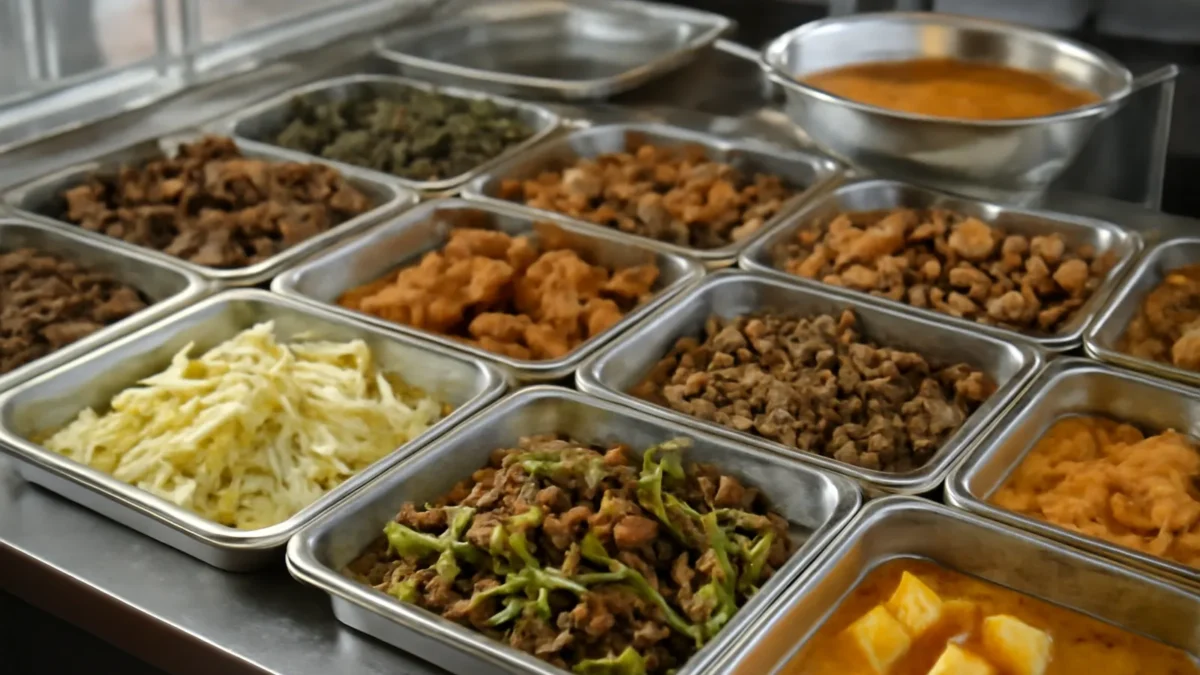
Economic rice, or cai png, is one of the most familiar meals in Singapore: a plate of rice with a customer’s choice of dishes from a long display. For the Malay counterpart, see how to open a nasi padang or Malay restaurant. For Filipino rice meals, see how to open a Filipino restaurant. It differs from most hawker concepts in three ways that shape the business:
- Many dishes, cooked in batches. Instead of cooking each order, you cook a large range of dishes in advance and keep them topped up. Planning quantities is the main skill.
- Pricing by combination. Each plate is different, so the price depends on how many and which dishes the customer picks. It needs a system that is quick, consistent and easy for customers to understand. Yong tau foo stalls price by pieces in a similar way; see our yong tau foo stall guide.
- Speed at the counter. Customers choose as they go, so the queue moves at the speed of the person scooping and the person taking payment.
If you are new to hawker trade, read our guide to starting a hawker stall first. This article focuses on what is specific to economic rice.
Where to open: hawker centre, coffee shop or canteen
NEA hawker centres. NEA offers stalls through a monthly tender on its E-Tender system. Successful bidders receive a Letter of Offer, sign the tenancy agreement on Hawkers Online, collect the keys and prepare the stall before the tenancy starts. NEA’s eligibility rules include that no individual may rent more than two cooked food stalls in NEA-managed markets and hawker centres. Some centres are run by NEA-appointed operators with their own application process. Our hawker centre numbers break down who runs each centre.
Coffee shops, food courts and canteens. Here you rent a stall from the operator. For schools, see our guide to school canteen stalls. The terms, such as rent, profit share, operating hours and whether the operator sells drinks, are commercial and vary widely. Get them in writing. Coffee shops are also a natural home for economic rice. HDB’s revised Budget Meal Initiative (January 2026) requires participating coffee shops to offer one economy rice (with two vegetable dishes and one meat), one halal meal, one breakfast item and two budget drinks. If your coffee shop operator participates, you may be asked to supply the budget economy rice option, so agree the details and price with the operator before you sign.
Mini restaurants. SFA describes mini restaurants as stalls within food courts, coffee shops, eating houses or canteens that are responsible for their own dedicated seating area. They need a layout amendment by the main operator and a Food Shop Licence application by the stall operator. Our kopitiam guide explains how coffee shops are run from the operator’s side.
Licences and training
According to SFA’s fees page, a Food Stall Licence costs $32 and is valid for one year, and hawker stalls and school canteen stalls pay a reduced fee of $13. For a stall inside a coffee shop or food court, you submit your tenancy agreement, the stamp duty certificate for it, and a layout plan showing where the stall sits. SFA says it processes applications within three working days once the documents are complete.
In NEA-managed centres, NEA helps stallholders apply for the Food Stall Licence as part of tenancy administration. In centres run by NEA-appointed operators, you apply to SFA yourself. NEA also says a cooked food stall must have the Food Safety Course Certificate before the licence can be issued.
SFA’s food handler rules say only trained food handlers may handle food, and each must pass the WSQ Food Safety Course Level 1. The first retraining is due within five years, then every ten years. Licensees must register their food handlers with SFA. Untrained staff, such as a cashier, must not help prepare food.
If you want to sell halal food and are not Muslim, NEA’s tenancy rules say stalls selling halal cooked food operated by non-Muslims must obtain halal certification from MUIS. Other licences, such as for beer, depend on what you sell. NEA’s Hawkers e-Adviser on GoBusiness lists what applies.
Staffing the stall
An economic rice stall needs at least a cook and a counter person during service, and often extra hands for early-morning prep. Check hiring rules before you plan your costs. MOM’s services sector Work Permit rules cover restaurants, coffee shops and food courts but exclude food stalls and hawker stalls, and only operators holding an SFA food shop licence may employ migrant workers under them. In practice, most economic rice stalls are staffed by the owners, family members and local workers.
In NEA hawker centres, NEA says you must register hawker assistants and any joint operator through Hawkers Online. Confirm your staffing plan with NEA or the coffee shop operator before you sign.
Dish count, prep and holding
The number of dishes is a trade-off. More choice draws customers, but every extra dish adds prep, waste risk and space. Many stalls settle on a core set that appears every day, plus a smaller set that rotates. Work out yours on paper before opening:
- Split dishes by type: vegetables, eggs and tofu, meat, fish and seafood, and fried items. Customers expect a balance, and the split affects your food cost. A fully meat-free stall or restaurant is covered in how to open a vegetarian restaurant in Singapore.
- Plan batch sizes by day part. Lunch and dinner peaks need full trays. Cook smaller batches for quiet hours so food does not sit too long.
- Plan the tray rotation. Decide which dishes are topped up and which are replaced with a fresh tray, and how long each can stay on display.
- Record what is left. Note leftovers and waste each day by dish. After a few weeks you will know which dishes to cook less of.
Follow SFA’s food safety guidance on keeping cooked food hot or cold, and train staff on it. Discuss holding times with your food safety trainer and confirm your practices meet SFA requirements.
Pricing by combinations
Economic rice pricing needs to be fair, fast and consistent between staff. The most common approach is a price for a base plate plus a set number of dishes, with extra dishes and premium items priced separately. Build your pricing like this:
- Group dishes into bands, for example standard vegetables, standard meat, and premium items such as fish, prawns or large cuts.
- Cost each band using the average cost per scoop of the dishes in it.
- Set combination prices for the popular plates, such as one meat and two vegetables, and a price per extra dish in each band.
- Show it clearly. A simple price board by combination avoids disputes and speeds up the counter.
Review costs regularly. If one premium dish costs much more than others in its band, move it up a band rather than letting it eat your margin.
Keeping the queue moving
At lunch, your queue speed sets your takings. The bottlenecks are usually choosing, scooping and paying. Ideas that help:
- Arrange the display in the order most people choose: vegetables first, then protein, then gravy.
- Have one person scoop and another price and take payment during peaks.
- Offer cashless payment, which is often quicker than handling change. Our guide to whether to stop taking cash weighs up going fully cashless.
- Pre-pack popular combinations for takeaway during the busiest hour.
POS set-up: quick buttons for mixed dishes
A POS built for a restaurant menu can slow an economic rice counter down if each dish is a separate item. Set it up around the way you price:
- Create combination buttons, such as “1 meat 2 veg”, as single items at their set price.
- Use modifiers for extra dishes by band, so the cashier taps the combination and then adds extras.
- Keep the most common combinations on the first screen.
- Track takeaway and dine-in separately if your prices differ.
Equipment for an economic rice stall
An economic rice stall cooks many dishes in batches and holds them through service, so the kit is about volume and holding, not cooking to order. Check what the stall already has, and its power and gas supply, before you buy.
- High-pressure burners and large woks for stir-fried vegetables, eggs and meat dishes. Gas work must be done by licensed personnel.
- Commercial rice cookers or warmers sized for your lunch peak, with a spare so one batch can cook while another is served.
- Heated display or bain-marie to keep cooked dishes at 60°C or above, as SFA advises for food not eaten straight away.
- Chillers for raw meat, fish and prepared vegetables, with thermometers you can read.
- Stockpots and braising pots for curries, gravies and soups.
- Trays, ladles and tongs, with separate utensils for raw and cooked food.
- Takeaway supplies: containers, bags and a place to pack orders at peak.
- Payment and ordering: an SGQR code, a cash float, and a POS with combination buttons if more than one person takes payment.
For POS options built for small counters, see our hawker POS page.
ChaChaCha supports custom modifiers, English and Chinese interfaces, and payments including PayNow, NETS and cards. It also keeps taking orders if the internet drops. Its reports show which combinations sell at which times, which helps you plan batch sizes. For more on hawker set-ups, see our hawker POS page and our comparison of the best hawker POS systems. If you want help setting up combination buttons, contact us.