Key takeaways
- Check the approved use of the unit before you sign anything. URA’s approved-use search costs $54.50 per unit, and HDB units need HDB’s consent for your trade.
- Malls usually add turnover-linked rent (GTO) and daily sales reporting to the base rent. HDB shops come with strict trade and subletting rules. Shophouses need a planning check, because the usual shop conversion authorisation does not cover them.
- Budget for more than rent: deposits, fit-out approvals, electrical load upgrades and stamp duty of 0.4% of total rent on leases of up to four years.
- Negotiate the fit-out period, renewal terms and reinstatement before you sign. After signing, you have much less leverage.
Last checked against URA, HDB and IRAS pages: September 2026. Rules and fees change, so confirm each point with the agency before you commit.
Three kinds of retail space, three sets of rules
Most small retailers in Singapore choose between three types of unit. Each has a different landlord, a different rent structure and a different set of approvals.
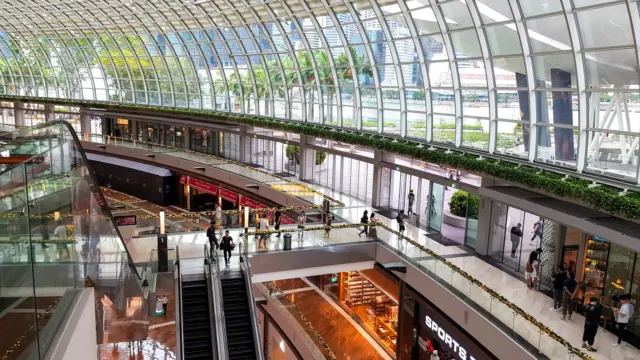
- Mall units. These are in shopping centres run by a private landlord or REIT. You get managed footfall, air-conditioning and marketing, and you give up some control. Leases often include turnover rent and reporting duties.
- HDB shops. These are in neighbourhood centres and void decks. They are either let directly by HDB, often by tender, or sublet from a private owner of an HDB shop. The rent is usually lower. HDB’s own rules on trades, subletting and renovation apply whoever your landlord is.
- Shophouses. These are two- or three-storey terrace buildings, many in conservation areas. They have street frontage and character, and private landlords. Allowed uses vary floor by floor and street by street.
The right choice depends on who your customers are and how they arrive. A boutique that relies on browsing traffic may need a mall. Once the unit is settled, our guide to the best POS for fashion boutiques covers variants, stock and online sales. See how to open a clothing boutique for location and stock planning. A neighbourhood minimart lives on HDB residents. A concept store that customers seek out can make a shophouse work. Before you commit, our official retail sales data shows how each retail industry is trading. If you are still planning the business, start with our guide on how to open a retail shop in Singapore.
Check the approved use before you sign
A unit is only useful if your trade is allowed there. URA’s definition of a shop is broad. In its Considerations for Property Use page, URA defines shops as premises whose “primary purpose is the sale of goods or foodstuff by retail or provision of services”, and lists beauty salons and travel agencies as examples alongside furniture and department stores.
Three checks cover most cases:
- Approved use of the unit. URA’s Enquiry on Approved Use e-service costs $54.50 including GST per enquiry, per unit. You only need the address. If the record is in URA’s online database, you get an instant reply. Otherwise URA searches its records and replies within 10 working days, so start early.
- Commercial buildings. URA’s authorisation conditions let a unit switch between shop, showroom and restaurant without planning permission in standalone commercial buildings such as shopping centres, and in some commercial podium blocks. The unit must already be approved as commercial floor area. The building must have no special planning conditions on use. The change must be for an individual unit, and you must meet other agencies’ licensing requirements. URA’s page last updated in June 2026 says party-walled shophouses and shopflats are excluded.
- HDB premises. URA says no planning permission is needed for HDB commercial premises, but you must check with HDB to obtain its consent.
Ask the landlord or agent for the approved use in writing, then verify it yourself. “The last tenant sold the same thing” is not an approval.
Renting a mall unit: base rent, GTO and service charges
Mall leases are rarely a flat monthly figure. Expect some combination of:
- Base rent, a fixed monthly amount per square foot.
- Gross turnover (GTO) rent, a percentage of your sales above a threshold, or whichever is higher of base rent and a turnover percentage. The percentage and structure are set in each lease, so compare actual quotes rather than rules of thumb.
- Service and promotion charges for common areas, air-conditioning and mall marketing.
- Sales reporting duties. GTO leases usually require daily or monthly sales data, often sent automatically from your POS to the mall’s system.
GTO reporting is a practical issue, not just a legal one. If your till cannot send sales data in the format the mall needs, you may face manual reports or penalties under the lease. Our guide to mall GTO sales reporting explains how the integration works and what to ask the mall’s tenancy team. Many terms in our commercial lease guide for F&B, such as fit-out periods and reinstatement, apply to retail tenants too.
Mall rents and GTO rates are private and vary widely by mall, level and frontage. We have not quoted figures here. Get at least two written offers so you have real numbers to compare.
Renting an HDB shop: the rules that follow the unit
HDB publishes terms and conditions for its commercial tenants and owners who apply to rent out a unit or change a tenancy (the version we checked is dated January 2025). Several points matter to a retailer:
- Every trade needs HDB’s approval and must meet other agencies’ requirements. Storage, wholesale and industrial trades are not permitted in HDB commercial premises.
- Trade conditions from the tender stick. If a unit was let for a specific trade, any new trade must comply with those conditions. HDB’s example is a unit let only for “Office” use, where no change of trade will be considered.
- Liquor is not permitted in standalone HDB void deck shops, kiosks and Civil Defence Shelters, including for new tenants taking over those units.
- Subletting is limited. An HDB tenant may rent out no more than 50% of the trading area, to only one subtenant, with HDB’s prior written approval. If you are that subtenant, you depend on the main tenant’s approval and tenancy.
- Assignment is not permitted for tenancies that started on or after 16 October 2013. A tenant who wants to leave must return the unit to HDB for re-tender. Be wary of anyone “selling” you an HDB tenancy.
- Common areas such as the corridor outside need the Town Council’s prior written consent before you use them.
When a tenant rents out part of an HDB unit or a tenancy changes hands, HDB’s terms describe fresh terms of one, two or three years. Where a fresh term applies, rent is revised to the prevailing market rent or stays at the existing rent, whichever is higher. When a fresh tenancy agreement is signed, HDB lists what to bring: one month’s rent plus GST, one month’s service and conservancy charges plus GST, a one-month deposit, and stamp fees. Private limited companies, limited partnerships and LLPs need a personal guarantor who is a Singapore citizen.
Shophouses: frontage, character and planning checks
Shophouses suit concept stores, galleries and lifestyle brands that customers will travel to. They also carry more planning risk than mall units.
- Use varies by location and storey. URA directs you to its Allowable Use for Shophouses tool on URA SPACE to check whether shop use is allowed at a given shophouse. This covers conservation areas such as Chinatown, Little India, Kampong Glam and Boat Quay, as well as other shophouses.
- The shop conversion shortcut does not apply. Because party-walled shophouses are excluded from URA’s authorisation for switching between shop, showroom and restaurant, check the specific unit before assuming you can change its use.
- Conservation rules affect fit-out. Facades, signs and structural changes in conservation areas have their own guidelines. Your designer or Qualified Person should confirm what is allowed before you commit to a look.
Shophouse leases are private contracts, so terms vary more than in malls or HDB estates. Read the repair and maintenance clauses closely. Older buildings can need more upkeep, and the lease decides who pays.
Fit-out, electrical load and handover
Fit-out is where rental plans usually run over budget. HDB’s terms spell out steps that apply to many retail units in some form:
- Renovation approvals. HDB requires tenants to engage a Qualified Person to get prior written approval from HDB, the Fire Safety & Shelter Department and the Building and Construction Authority before starting renovation. Malls have their own fit-out manuals and approval steps on top of any statutory ones.
- Electrical load. A Licensed Electrical Worker must apply for any increase in electrical load. HDB says this depends on whether extra load is available. Power-hungry trades such as a self-service laundromat need this checked before you sign. If it is not, you must operate within the existing load. Check this before you plan chillers, lighting displays or kitchen equipment.
- Handover condition. Agree what state the unit is handed over in (bare, or with existing fittings) and whether you get a rent-free fit-out period. Get both in writing before you sign.
Leave time in your opening plan for approvals, contractor work, and POS and network installation. Your till, card terminal and receipt printer need power points and data points in the right places. It is cheaper to plan these on the layout drawing than to add trunking later.
Stamp duty and the other costs of signing
Leases in Singapore attract stamp duty. According to IRAS, duty is calculated on the higher of the contractual rent and the market rent:
| Lease period | Lease duty (average annual rent above $1,000) |
|---|---|
| 4 years or less | 0.4% of total rent for the lease period |
| More than 4 years, or indefinite | 0.4% of 4 times the average annual rent |
Leases with an average annual rent of $1,000 or less are exempt. As an illustration using round numbers, a three-year lease at $6,000 a month has total rent of $216,000, so duty would be $864. Your lease should say whether the tenant or landlord pays it. Use IRAS’s calculator for your actual figures.
Other costs to set aside before opening day:
- security deposit, as set out in the lease (HDB asks for one month for its own tenancies; private landlords set their own terms)
- agent’s commission, if the lease says the tenant pays it
- fit-out, signage and reinstatement provisions
- insurance required by the landlord
- POS hardware, software and payment terminals. Our POS cost guide covers typical line items.
Lease terms to negotiate
Once you have picked a unit, the lease decides your costs for years. Points worth negotiating:
- Term and renewal option. A three-year term with an option to renew protects the value of your fit-out. Agree how renewal rent is set.
- Rent-free fit-out period, especially for bare units.
- GTO definition. Check what counts as turnover. Ask whether refunds, delivery sales, gift card sales and GST are included or excluded.
- Reinstatement. Agree in writing what condition you must return the unit in, and record its condition with photos on handover.
- Exclusivity and trade mix. In a mall, ask whether the landlord will lease a nearby unit to a direct competitor.
- Early termination and diminution clauses. Find out what happens if the mall renovates or footfall collapses.
Have a lawyer review the lease. The cost is small next to three years of rent.
Setting up the till before opening day
Each type of unit puts different demands on your POS:
- Malls need sales data reporting that meets the lease, clean end-of-day reports and reliable card and QR payments at peak times.
- HDB shops often have older customers who pay with NETS and cash, alongside PayNow.
- Shophouses may have patchy mobile coverage at the back of the unit, so a till that keeps working offline matters.
ChaChaCha is a Singapore POS powered by AppsPOS. Our retail POS keeps taking sales if the internet drops and syncs later. It accepts PayNow, PayLah!, NETS, Visa/Mastercard and GrabPay, handles split payments, and supports staff permissions, reports and Xero integration. AppsPOS is listed as a NETS Certified Vendor. For the GTO data format your mall needs, or retail stock features such as purchase orders and transfers, ask us to confirm before you sign the lease. Get it in writing from every vendor, including us.