Key takeaways
- Decide your hours early. Running 24 hours or late into the night affects your lease, staffing, rostering and costs more than almost any other choice.
- A standalone prata shop needs an SFA Food Shop Licence ($195 a year). If you want halal certification, MUIS’s Eating Establishment Scheme applies, and the certificate is valid for one or two years.
- Skilled prata cooks are the core of the business. MOM allows Work Permit cooks from Non-Traditional Sources such as India for food shop licensees, subject to an 8% sub-quota and a $2,000 minimum fixed monthly salary.
- Drinks such as teh tarik often matter as much to the margin as the prata itself. Price them deliberately and make sure your POS can handle a fast takeaway queue.
Last checked against SFA, MUIS and MOM pages: September 2026. Levy rates and work pass rules change, so confirm with MOM before you hire.
The prata shop model
A prata shop is usually an informal, high-volume outlet selling roti prata and related dishes, such as murtabak, thosai and rice sets, with a large drinks menu. For a Malay food concept, see our guide to opening a nasi lemak stall. Many are open very late or around the clock and serve a mix of dine-in customers, takeaway and delivery. The model depends on three things:
- Skilled prata cooks who can stretch, flip and cook dough quickly and consistently.
- Long hours, which spread rent across more trading time but raise labour and utility costs.
- Drinks, which add a large share of the bill with little extra prep.
Our guide to opening an Indian restaurant covers the wider cuisine, and many of its points apply here too.
Choosing your hours: 24-hour, supper or daytime
Your trading hours shape the whole business. Before you commit, check that your lease, the landlord and any HDB or URA conditions on the premises allow the hours you want. Then work through the staffing maths.
MOM’s rules on hours of work say employees covered by Part 4 of the Employment Act should not generally work more than six consecutive hours without a break, cannot work more than 12 hours a day except in specific circumstances, and may work at most 72 overtime hours a month. Overtime is paid at least 1.5 times the hourly basic rate within 14 days after the end of the salary period. A 24-hour shop therefore needs at least three shifts of cooks and front-of-house staff, not two long ones.
Many operators start with extended evening and supper hours and move to 24 hours only when late-night demand is proven. Look at nearby shops, check foot traffic at different times of night, and work out whether sales after midnight cover the extra staff and utilities. Our guide to running a late-night restaurant covers the practical side, including security and cash handling.
Licences and food safety
A standalone prata shop is a food shop. SFA says the Food Shop Licence costs $195 and is valid for one year. The application includes a layout plan, a review, a pre-licensing inspection and final approval, and you must pay within 28 days of the payment notice or the application lapses. If you are running a prata stall inside a coffee shop instead, you need a Food Stall Licence ($32 a year) or, for a stall with its own seating, a Food Shop Licence as a mini restaurant.
SFA requires every food handler to pass the WSQ Food Safety Course Level 1, with the first retraining within five years and then every ten years. Licensees must register food handlers with SFA. Plan training dates before opening, especially if you are hiring cooks from overseas.
If you plan to serve alcohol, you will need a separate liquor licence from the police. Most prata shops do not, particularly if they are halal-certified.
Halal considerations
Many prata shops are halal or Muslim-owned, and halal status affects who will eat with you. Halal certification in Singapore is issued by MUIS. Its scheme list places restaurants, stalls in food courts and similar outlets under the Eating Establishment Scheme. MUIS’s page on the certification process says applicants should read the Halal Certification Conditions, pass the Halal Competency Assessment and apply through GoBusiness. Certificates are valid for one or two years, and renewal is submitted automatically 120 days before expiry.
If your stall is in an NEA hawker centre, NEA says stalls selling halal cooked food that are operated by non-Muslims must obtain halal certification. Certification also shapes your supply chain, since ingredients and suppliers must meet MUIS’s conditions. MUIS fees and processing times depend on the scheme, so check them with MUIS. Our halal restaurant guide explains the process in more detail.
Skilled labour: hiring prata cooks
A good prata cook takes time to train, and experienced cooks are in demand. Plan for this early. Under MOM’s services sector Work Permit rules, restaurants and coffee shops qualify, but food stalls and hawker stalls do not, and only operators holding an SFA food shop licence in the company’s name may employ migrant workers. The standard source countries are Malaysia, China and North Asian sources.
MOM’s Non-Traditional Sources (NTS) Occupation List allows firms to hire Work Permit holders from countries including India, Bangladesh, Sri Lanka and Myanmar for listed occupations. Food services workers on the list include cooks, kitchen assistants, food and drink stall assistants and waiters. The firm must hold a valid SFA Food Shop licence in its ACRA-registered name, keep NTS workers within a sub-quota of 8% of its workforce, and pay each one a fixed monthly salary of at least $2,000.
All Work Permit hiring is capped by the services sector quota of 35% and subject to a monthly levy. MOM’s current services sector levy rates are:
| Share of total workforce | Basic-skilled (monthly) | Higher-skilled (monthly) |
|---|---|---|
| Up to 10% | $450 | $300 |
| Above 10% to 25% | $600 | $400 |
| Above 25% to 35% | $800 | $600 |
MOM says the first two tiers will merge from 2028, at $600 for basic-skilled and $400 for higher-skilled workers. Quota depends on your local workforce, so plan local hires too. Our foreign workers guide covers quota calculations.
Dough prep and kitchen flow
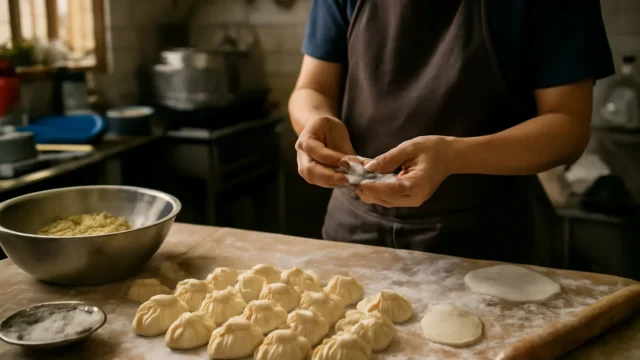
Prata quality depends on the dough, and the dough depends on routine. Most shops mix and portion dough well ahead of service and rest it before stretching. Treat dough prep as a scheduled task with a set quantity for each day part, based on your sales history, rather than something the night cook works out.
- Standardise recipes and portions, including dough ball weight, so the product and your food cost stay consistent between cooks.
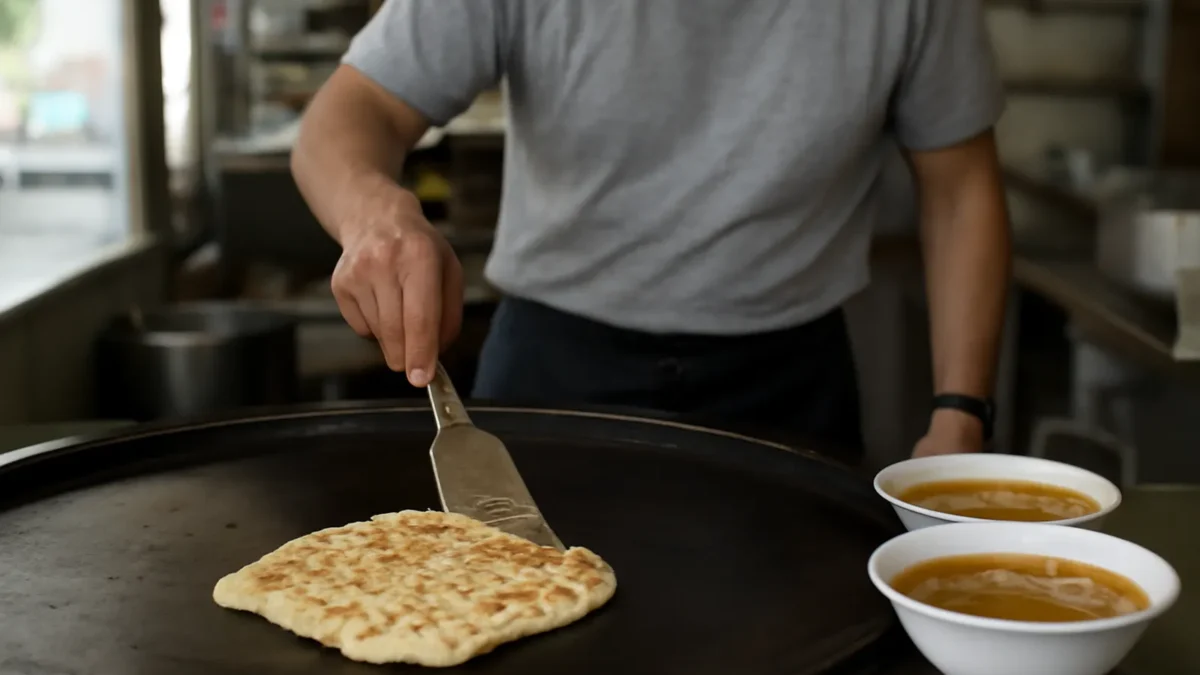
- Put the griddle where customers can see it. Flipping prata is part of the appeal, and it keeps the cook close to the counter.
- Separate the curry and drinks stations from the griddle so one bottleneck does not hold up the others.
- Plan storage for dough, fillings and curries, and follow SFA’s food safety rules on keeping them at safe temperatures.
Drinks: where the margin often sits
Teh tarik, kopi, milo and cold drinks are ordered with almost every meal, take little prep, and use low-cost ingredients. That makes them important to your overall margin. Treat them properly:
- Cost each drink by recipe, including condensed milk, evaporated milk, sugar, ice and cups for takeaway.
- Offer size options and hot and cold versions as modifiers rather than separate items.
- Train staff to ask about drinks with every order.
- Price takeaway drinks to cover the cup, lid and bag.
Watch your drinks sales per order as a key number. If it falls, it may point to slow drinks service or staff not offering drinks.
POS for high-volume takeaway
Prata shops take many small orders, often with modifications, such as egg, onion, cheese, extra crispy or curry on the side, and a lot of takeaway. Your POS needs to keep up:
- Quick buttons for your most common orders and modifiers for add-ons and drink sizes.
- Kitchen tickets or a kitchen display, so the griddle, curry and drinks stations each see their part of the order.
- Fast payment with PayNow, NETS and cards.
- Delivery orders coming into the same flow as counter orders.
- Reliable operation late at night, when support may be harder to reach.
ChaChaCha supports custom modifiers, a kitchen display system with station routing, Epson cloud printing to multiple printers, and payments including PayNow, PayLah!, NETS and cards. It keeps taking orders if the internet drops and syncs later. Customers can order and pay by QR, and GrabFood orders come into the same system. See our restaurant POS page for details, or contact us to talk through a set-up for your shop.